AI Voice Agent vs Chatbot: Which One to Choose in 2026?
Date
Aug 31, 26
Reading Time
7 Minutes
Category
AI Voice Agents
Share


TL;DR
- The AI voice agent vs chatbot decision is not simply voice versus text. The real distinction is what the system can accomplish after a conversation begins.
- Chatbots work best for routine, text-based requests such as FAQs, order tracking, application updates, and simple booking confirmations.
- Voice agents suit urgent, emotional, or multi-step interactions requiring natural conversation, backend access, and actions such as booking, canceling, or updating records.
- An “agent” is not automatically better. Poorly designed autonomous systems can loop, misunderstand exceptions, and create worse experiences than a simple bot with a clean human handoff.
- Choose based on customer channel, whether requests need answers or actions, urgency, budget, launch timeline, and expected growth.
- Most businesses ultimately need both: chat for routine digital volume and voice for phone-based or complex interactions. Start with chat if uncertain, then add voice where the data supports it.
Most people treat the AI voice agent vs chatbot question like it's one choice inside conversational AI: pick your input, type or talk, and call it a day.
That's not the real question. And getting it wrong isn't cheap. Not even close.
Buy the wrong one and the setup cost is the least of it. You end up with customers stuck talking to something that can't solve their problem, a team that stops using it inside six months, and an awkward call with your CFO about why the upgrade didn't move a single number.
But the AI agent vs. chatbot question has almost nothing to do with voice or text. It's about what the tool can do once someone starts talking to it, not how they talk to it.
Voicebot vs Chatbot: What Each One Handles
Quick definitions first. Half the chatbot vs AI voice agent differences debate comes from people skipping this part.
A chatbot is text first. It answers one message at a time off a script and can't step outside it. Order status. FAQs. That's text-based support, and it's most of the job. Ask it something outside the script, and you're stuck till it hands you to a human.
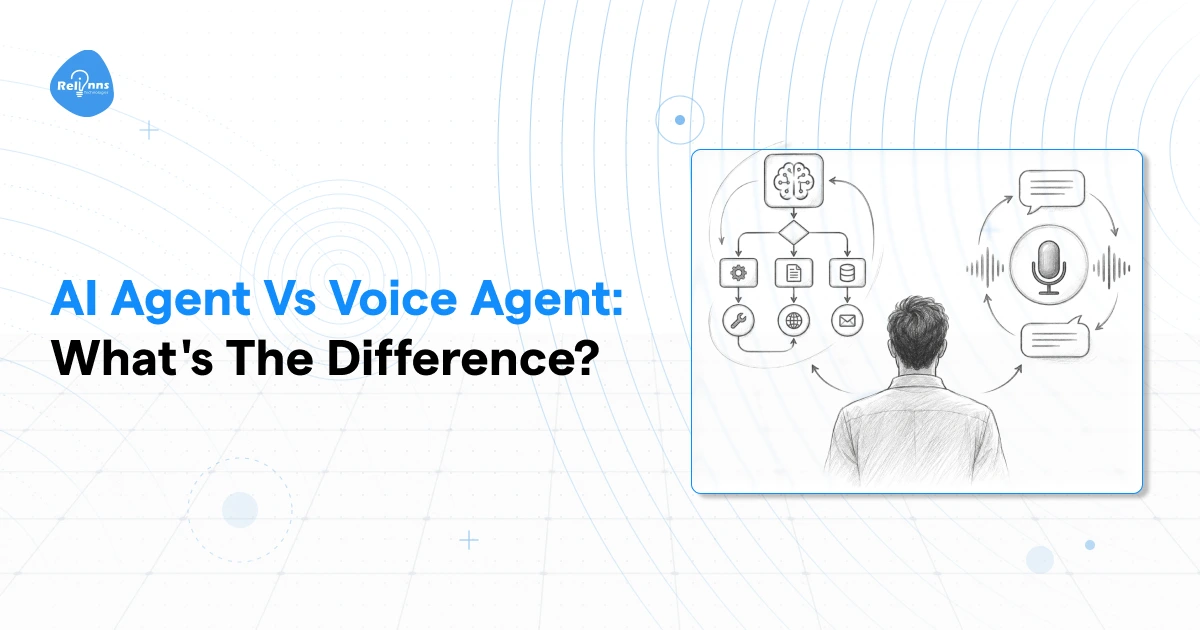
A voice agent runs on different logic. It's phone-based automation that reasons across the whole call instead of reacting line by line, and it can do things instead of describing them. Book the appointment. Update the record.
A chatbot talks. A voice agent talks and acts.
That covers the difference in one line.
BotPenguin runs as a chatbot across websites, WhatsApp, Instagram, Telegram, and SMS from one dashboard, live for over 50,000 businesses in 193 countries. That's a chatbot doing its job well. Not every problem needs a voice agent.
And most people still draw the AI agent vs chatbot line in the wrong spot. Mic versus keyboard.
That's not it.
Autonomy Is the Real Dividing Line
Most of the chatbot vs AI voice agent differences people argue about start in the wrong place. Typing versus talking. Both sit under the same conversational AI umbrella. The resemblance ends there.
A chatbot can take voice input too, by the way. Its main channel is text. But that was never the real line.
The real line is reactive against autonomous. A scripted bot answers one message and stops, waiting for the next one. An autonomous AI agent runs on a loop instead, checking things and acting without anyone nudging it forward again. Some call this a voicebot instead of a voice agent. The distinction is worth knowing about.
A chatbot can even be built to run that same loop, which is the part most people miss. The AI agent vs chatbot split comes down to whether something reacts or keeps going on its own, not which product you bought.
Most marketing wants you to believe voice equals smart. It doesn't. I've heard voice systems that are just an IVR system with a nicer voice actor. And I've seen chatbots pull order history and rebook a delivery slot without a human touching it.
Channel decides how you reach the tool. Autonomy decides what it can do once you're through.
So if autonomy wins, the smart move is always to buy the agent, right? Not quite.
Is "Agent" Just a Buzzword?
If autonomy is the whole story, the AI agent vs chatbot question should be simple. Buy the smarter one. Every time.
That's not what I see in production.
I watched an agent rollout stall on a return exception nobody had trained it for. It looped the same question three times, then dropped the caller to voicemail. A basic scripted bot would've punted to a human at message two and saved the call.
Half of what gets marketed as agentic AI right now is scripting with better branding. A genuine autonomous AI agent should handle the case it wasn't built for by asking a sharp follow-up or handing off clean. Most don't.
That gap is closing though. Pre-built agent tooling in 2026 stands up faster than it did two years back, and that shifts the old build-versus-buy math.
Data quality decides the outcome. So does how well the thing hands off to a human. The label on the box means nothing.
Comparing AI voice agent vs chatbot costs comes down to two different bills. Voice needs telephony, speech-to-text, text-to-speech, and noise handling on top of everything a chatbot needs. That's what phone-based automation costs before you've resolved one ticket, and if voice is the right call, check how it holds up as volume grows before you sign.
Chatbots skip most of that weight. Cheaper to launch. Easier to push across channels.
Cost and hype aside, the real test is where each one wins in an actual business. Industry by industry, and it's less obvious than you'd think.
Where Each One Wins
Healthcare, insurance, ecommerce, logistics. Four different industries, and the same split shows up in every one of them.
What decides it is whether the moment in front of the customer is urgent or routine, not which industry it happens in. Run the AI voice agent vs chatbot question through any one of them, and the same pattern holds.
Take healthcare first. A hospital's front desk drowns in appointment calls, and over 60% of those are things phone-based automation can handle without a person touching them. Diagnostic labs have it worse. I've seen chains where 40 to 60% of every inbound call is some version of "is my report ready yet." One lab chain runs a voice agent that fields hundreds of those calls a day, and a human never has to pick up for most of them. Chat still earns its keep here, mostly on FAQs and booking confirmations that don't need a voice at all.
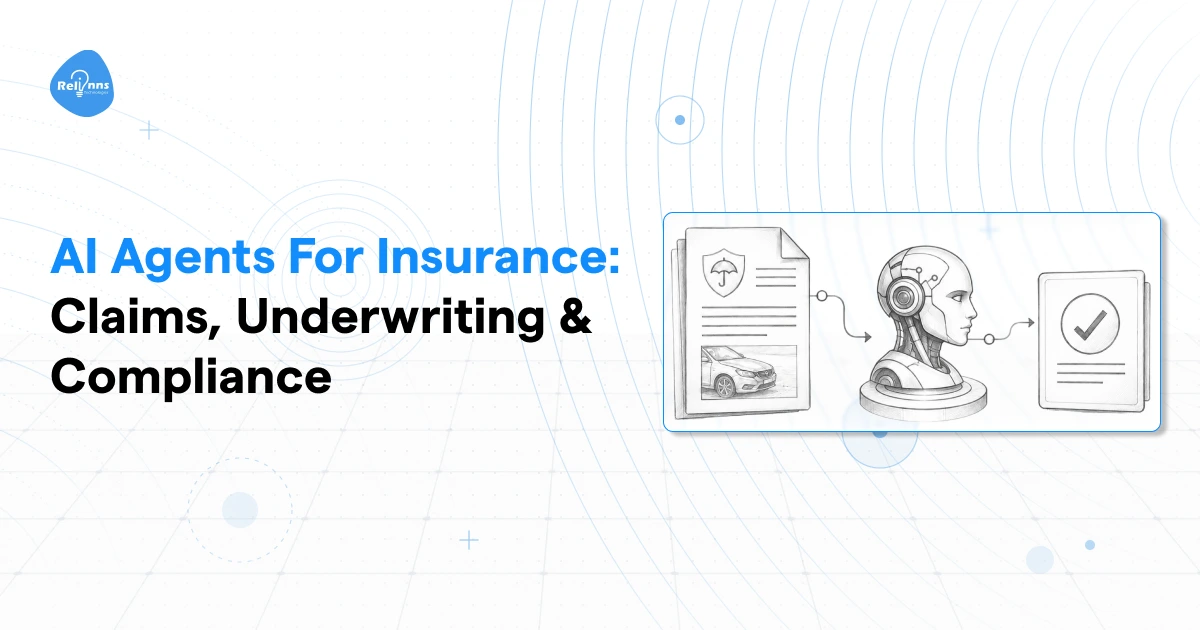
Insurance runs on the same logic. Claims intake spikes right after something bad happens: an accident, a hospitalization, sometimes a life insurance claim after a death in the family. Those calls need a voice, not a form. Policy FAQs and application status checks don't. Chat handles those fine.
Most people figure ecommerce belongs to chat entirely, since most of what floods a support inbox is some version of "where's my order." Mostly true, and that's text-based support doing exactly what it should. But it's not the whole story. Step into retail that still takes phone orders, a QSR chain on a Friday dinner rush, say, and voice wins clean, no matter how good the app is.
Logistics splits the exact same way. Routine tracking, chat's fine. A delivery that failed and needs sorting out right now, that's a phone call, not a text thread.
That's the same AI agent vs chatbot decision, playing out four different ways depending on where the call lands.
Urgency decides the split, not the industry.
Good starting point. But your business is a specific case, not an average. That's a different question, worth answering next.
How to Decide If You're Not Technical
You don't need to write a line of code for this call. You need five honest answers about how your business runs, and that's where the ai voice agent vs chatbot debate stops being theoretical and starts being yours to settle.
Here's what I'd ask, sitting across the table with your call logs open.
How do customers actually reach you right now? Phones ringing off the hook points to phone-based automation. Mostly web and app traffic points to chat. Weighing outbound calls too? That's a different build.
Do most queries need an answer, or an action? Answering fits a chatbot; that's text-based support doing its job. Booking, canceling, updating an account- that's an autonomous AI agent's job.
How urgent or emotional is the average call? Claims, health, money- people want an actual voice. Routine tracking and FAQs don't carry that weight.
What's your real budget and timeline? Chat launches faster and cheaper. Voice needs more setup, more patience.
How fast is your volume growing? Pick whatever won't need a rebuild the next time it doubles.
None of this needs an engineer in the room. It needs someone who already knows the business, which is what a COO or a head of claims already is. That's the ai agent vs chatbot decision in practice, not in a slide deck.
Expert Tip: If you're still unsure, start with chat. It's cheaper to test, and what customers actually ask tells you fast whether voice is worth building next.
One thing worth separating out: sales calls behave differently than support calls, so if lead qualification is part of this, weigh it on its own. And if the real worry under all this is whether it replaces your team, it won't, not how you're picturing it.
Run through these five honestly and you won't get a clean single answer. Most companies don't. They land on both.
Why the Smartest Teams Run Both
"Both" isn't fence-sitting. It's usually the right call.
Chat soaks up the routine volume: FAQs, browsing, anything that doesn't need urgency. Voice takes what's left, the urgent stuff, the multi-step problems, whatever happens over the phone because that's where the customer already is. And nobody sane rolls out full autonomy on day one either.
Start with something that answers off your knowledge base and hands off clean. Add the agentic AI piece, actions instead of just answers, once the easy stuff earns trust.
Custom builds make that staging easier since you're not locked to one vendor's roadmap. Relinns builds the voice side on Retell AI and chat, WhatsApp included, plus the deeper automation, on BotPenguin. One team handling both halves of the ai voice agent vs chatbot decision instead of stitching two vendors together as you scale.
That's the real ai agent vs chatbot answer. Run both, stage the rollout, and let the data show you where to push next.
Two questions come up right before anyone signs off on this.
Quick Answers, Then a Decision
Can a chatbot and a voice agent run together? Yes, and most companies that get this right end up doing exactly that. Chat covers the web. Voice covers the phone. Same backend underneath both, same data, same account history.
Will a voice agent replace your team? No. What this phone-based automation does is take the repetitive share off their plate, the password resets, the where's my order, the appointment confirmations, so your people spend their day on the calls that need a person.
The question inside this whole ai voice agent vs chatbot debate is simple. Which tool matches the problem in front of you, not which one talks or types. That's the real chatbot vs ai voice agent differences underneath everything else in this piece.
Talk to us about building the voice side once you know which problem you're solving.