AI Agent Orchestration: How Multi-Agent Systems Work
Date
Oct 24, 26
Reading Time
7 Minutes
Category
AI Agents
Share


Answer Box
AI agent orchestration is the coordination layer that enables several specialized agents to work toward one shared goal. It assigns tasks, passes context, manages handoffs, and resolves conflicts between agents. Orchestration becomes useful when one agent cannot handle the workflow efficiently. Architecture explains one agent. Orchestration coordinates several agents.
AI agent orchestration becomes useful when one agent can no longer manage the workflow efficiently. A single agent may handle one toolset, one workflow, and one narrow objective.
More complex systems often need several agents with different roles. Orchestration decides which agent should act, when control should move, what context should transfer, and how shared state is maintained.
It also helps prevent repeated handoffs, conflicting decisions, and coordination loops.
What Is AI Agent Orchestration?
AI agent orchestration is the coordination layer that manages how several specialized agents work toward one shared goal.
AI agent workflow automation uses orchestration to coordinate tasks, handoffs, and actions across multiple agents.
It controls:
- Task assignment
- Routing
- Delegation
- Context transfer
- Shared state
- Completion tracking
- Conflict handling
Without coordination, agents may operate independently without knowing what others have completed or what should happen next.
How Orchestration Differs From Single Agent Architecture
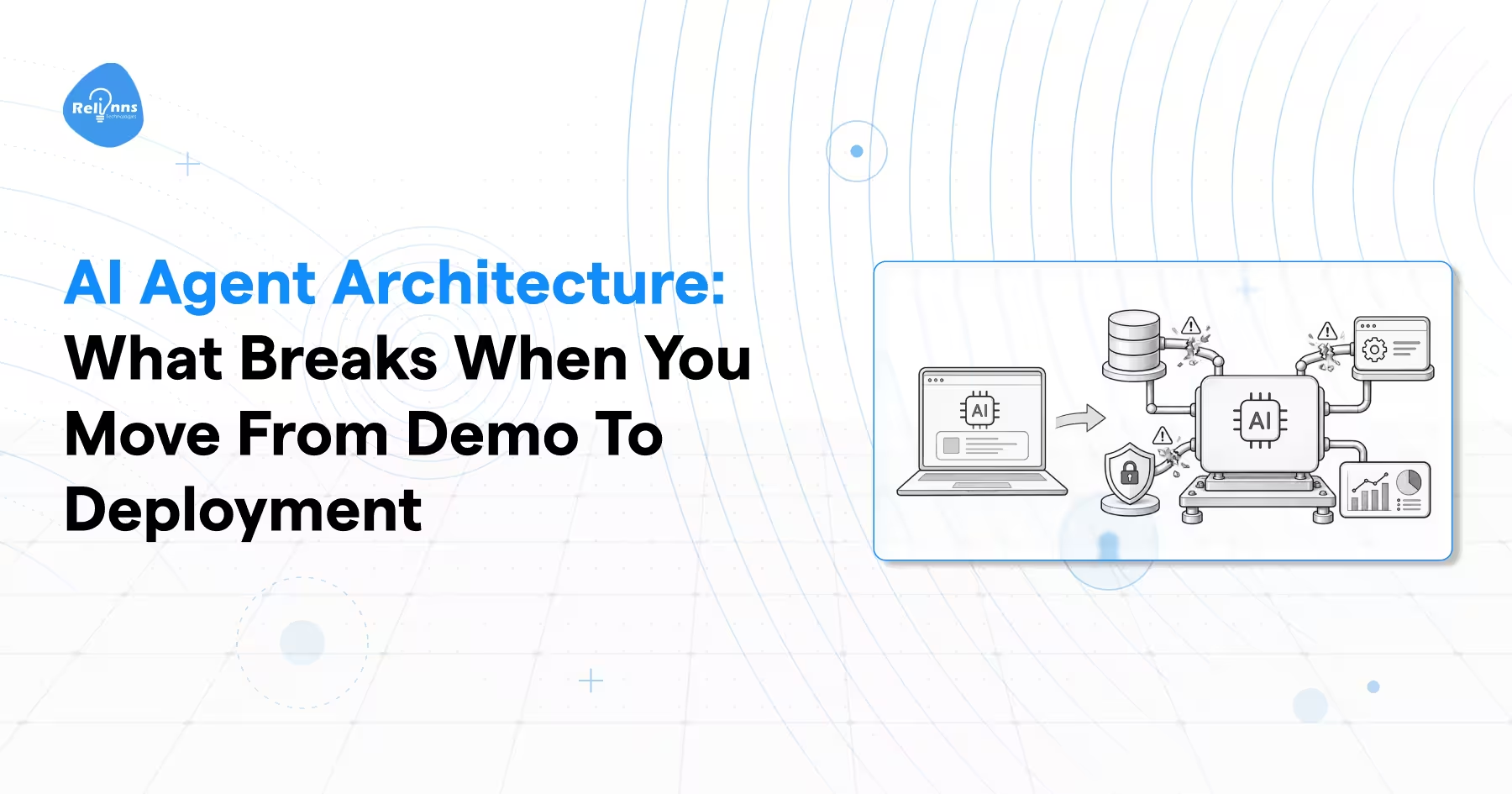
AI agent architecture describes how one agent is structured. It covers reasoning, memory, tools, models, and execution logic.
Orchestration focuses on interactions between several agents.
A single agent can still use multiple tools, retrieve information, maintain memory, and complete several workflow steps. That does not automatically make it an orchestrated system.
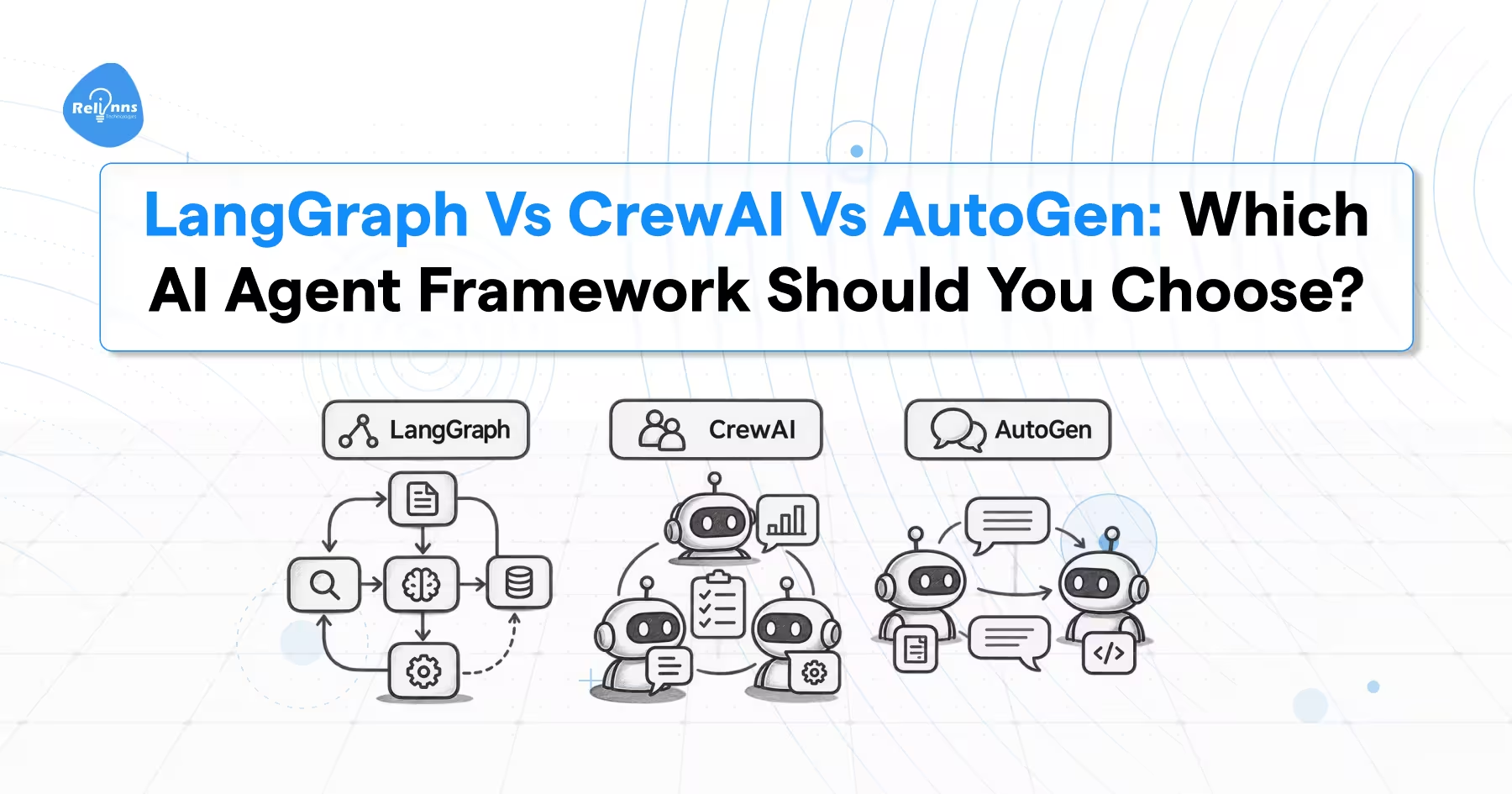
The libraries used to implement these systems are another layer entirely. See AI agent frameworks for that implementation decision.
When Multiple Agents Become a System
Several agents inside one application do not automatically form a coordinated system.
Coordination logic needs to define:
- Agent roles
- Handoff conditions
- State ownership
- Task dependencies
- Completion conditions
- Failure handling
This logic turns separate agents into a functioning system.
Multi-Agent Systems: Coordination Patterns
Coordination patterns define how work moves between agents. The right structure depends on how specialized the agents are, whether control should remain centralized, and how much agents depend on each other's work.
Supervisor Agent Pattern
The supervisor agent pattern places one agent in charge of the overall task.
The supervisor:
- Receives the main request
- Selects the specialist agent
- Transfers the required context
- Collects results
- Decides whether another agent is needed
- Determines when the task is complete
This pattern works well when the workflow needs clear hierarchy and central control.
Its main weakness is concentration of responsibility. Poor routing by the supervisor can affect the entire workflow.
Router Pattern
A router classifies the request and sends it to the most appropriate specialist.
Routing may happen once or at several stages.
This works well when:
- Task categories are distinct
- Agent responsibilities are clear
- Requests can be classified reliably
The router also needs fallback logic for requests that do not match an expected category.
Hierarchical Coordination
Hierarchical coordination introduces multiple levels of control.
A higher-level agent can divide a larger objective into smaller responsibilities. Lower-level agents complete those tasks and return their results.
This can support large workflows with nested responsibilities, but every additional layer adds state transfers, model calls, latency, and potential failure points.
Peer Coordination
Peer coordination allows agents with similar authority to communicate directly.
There is no permanent supervisor. An agent may transfer work based on another agent's capability or the current state of the task.
This requires controls for:
- Conflicting decisions
- Circular handoffs
- Repeated delegation
- Unclear ownership
- Missing completion conditions
Without explicit stopping rules, peer workflows can continue transferring work without producing a final result.
Handoffs, Shared State, and Context Transfer
Reliable coordination depends on transferring the right information without copying the complete conversation or workflow history into every agent.
What an Agent Handoff Should Contain
A useful handoff should include:
- Current goal
- Work already completed
- Relevant user context
- Important tool results
- Workflow constraints
- Remaining task
- Expected output
Passing too little information causes agents to repeat work or make decisions without enough context.
Passing everything creates higher token usage, irrelevant noise, slower processing, and greater risk of conflicting instructions.
The receiving agent should get the minimum context required to complete its assigned task correctly.
Managing Shared State
Some information needs to persist when control moves between agents.
Shared state may include:
- User information
- Workflow progress
- Tool results
- Intermediate decisions
- Approval state
- Completion status
Every important state value should have defined ownership.
If several agents can update the same field without rules, one may overwrite newer information or act on stale data.
Preventing Loops and Deadlocks
Coordination systems also need rules for workflows that fail to progress.
Useful controls include:
- Maximum handoff count
- Termination conditions
- Agent ownership boundaries
- Retry limits
- Escalation paths
- Completion checks
An agent should not repeatedly send work back to another agent because neither accepts responsibility.
A reliable orchestration system needs explicit rules for when to stop, not only rules for what happens next.
Agent-to-Agent (A2A) Interoperability
Agents built by different teams, frameworks, or platforms may eventually need to participate in the same workflow.
Agent-to-agent interoperability provides a structured mechanism for discovering capabilities, exchanging tasks, and returning results across those boundaries.
What Agent-to-Agent Communication Means
Agents may need to:
- Discover another agent
- Understand its capabilities
- Submit a task
- Receive structured results
- Maintain relevant context
The receiving agent should also provide enough status information for the original workflow to decide whether to continue, retry, escalate, or finish.
Agents as Tools vs Conversational Handoffs
Agent as a Tool
One agent invokes another for a specific capability while retaining control of the workflow.
This works when coordination should remain centralized.
Conversational Handoff
Control transfers more directly to another agent. The receiving agent continues the task using the supplied context.
This works when the specialist needs greater independence.
Why Standards Matter
Google describes the Agent2Agent protocol, or A2A, as an open standard for interoperability between agents built using different languages and frameworks. Agent Cards expose capabilities, while structured messages and tasks provide common communication mechanisms. (Google Developers Blog)
Standards can reduce custom integration work and make capability discovery, structured task exchange, and cross-platform coordination easier.
The specifications continue to evolve, so production teams should verify the current protocol and tooling before making it a critical dependency.
When Is Multi-Agent Orchestration Worth It and When Is It Overengineering?
Several agents are not automatically better than one.
Multi-agent orchestration is worth the added complexity when dividing responsibilities creates meaningful gains in specialization, access control, parallel execution, or system ownership.
Multi-agent overengineering becomes a concern when that added complexity does not provide a meaningful benefit.
Use Multiple Agents When Responsibilities Are Truly Distinct
Multiple agents can make sense when the workflow involves:
- Different business domains
- Separate permission boundaries
- Different data access
- Different models or tools
- Independent specialist workflows
- Tasks that can run in parallel
A research agent and an execution agent may require different tools and permissions. Keeping them separate can make both responsibilities and access controls clearer.
Keep One Agent When the Workflow Is Still Simple
One agent is usually preferable when:
- Tasks use the same context
- The same tools are used throughout
- Steps are tightly connected
- One agent can reason through the entire task
- Handoffs create more complexity than value
Do not split one coherent workflow into several agents simply because the system supports it.
If you are still designing the initial agent, how to build an AI agent provides the single agent development path before orchestration becomes necessary.
Calculate the Coordination Cost
Orchestration adds:
- More model calls
- More latency
- More state management
- More failure points
- Greater observability needs
- More testing complexity
The additional agents should therefore solve a real architectural problem.
If specialization or parallel execution does not offset the coordination cost, the simpler system is usually easier to operate.
How Do You Orchestrate AI Agents Reliably?
Reliable orchestration starts with clear ownership, predictable handoffs, controlled state, and explicit stopping conditions.
| Step | What to Do |
|---|---|
| Step 1 | Define agent responsibilities |
| Step 2 | Choose the coordination pattern |
| Step 3 | Define handoff contracts |
| Step 4 | Control shared state |
| Step 5 | Add termination and retry rules |
| Step 6 | Observe the whole system |
| Step 7 | Test coordination failures |
Step 1: Define Agent Responsibilities
Give every agent a clear job.
Document:
- Inputs
- Outputs
- Allowed tools
- Data access
- Completion criteria
Avoid overlapping ownership.
Step 2: Choose the Coordination Pattern
Choose between supervisor, router, hierarchy, or peer coordination based on how work actually moves.
The pattern should follow workflow requirements rather than novelty.
Step 3: Define Handoff Contracts
Specify:
- Context transferred
- Required fields
- Expected output
- Error handling
- Return conditions
The receiving agent should never have to guess what happened previously or what it must return.
Step 4: Control Shared State
Define where state lives, who can modify it, which agent owns each field, and how stale information is handled.
This prevents inconsistent decisions across agents.
Step 5: Add Termination and Retry Rules
Set:
- Maximum retries
- Maximum handoffs
- Completion conditions
- Escalation rules
These controls prevent infinite loops and repeated failed actions.
Step 6: Observe the Whole System
Track:
- Agent selected
- Handoff sequence
- Tool calls
- Latency by agent
- Failures
- Retry count
- Final outcome
AI agent monitoring provides the production visibility needed to understand where coordination fails or changes.
Step 7: Test Coordination Failures
Test:
- Wrong routing
- Missing context
- Failed handoffs
- Agent disagreement
- Tool failures
- Stale shared state
Failures discovered here should become test cases within AI agent evaluation.
Reliable orchestration means failures can be detected, reproduced, and corrected rather than disappearing inside interactions between agents.
Final Thoughts
AI agent orchestration is useful when several agents genuinely need to coordinate around one larger objective.
A reliable system needs clear roles, dependable routing, structured handoffs, controlled shared state, termination rules, observability, and failure handling.
The key decision is whether splitting the workflow creates better control, specialization, or scalability than one well-designed agent.
If additional agents only increase latency, state complexity, and failure points, one agent may remain the better architecture.
Frequently Asked Questions
What Is AI Agent Orchestration?
AI agent orchestration is the coordination layer that manages how several specialized agents work toward one objective. It controls routing, delegation, context transfer, shared state, handoffs, completion tracking, and how the system handles failures between participating agents.
What Are Multi-Agent Coordination Patterns?
Multi-agent coordination patterns define how work moves between specialized agents. Common approaches include supervisor, router, hierarchy, and peer coordination. The right pattern depends on responsibility boundaries, workflow dependencies, and how much centralized control the system requires.
How Do Agents Hand Off to Each Other?
Agents hand off work by transferring the context another agent needs to continue. This normally includes the current goal, completed work, relevant user context, tool results, workflow constraints, remaining responsibilities, and the output expected from the receiving agent.
What Is Agent-to-Agent Communication?
Agent-to-agent communication allows separate agents to discover capabilities, exchange tasks, transfer relevant context, and return structured results. It becomes useful when agents built by different teams, frameworks, languages, or platforms need to participate in one coordinated workflow.
When Should You Not Use a Multi-Agent System?
Avoid using several agents when one agent can complete the workflow using the same context, tools, and permissions. Extra agents introduce routing, latency, state management, testing, and failure points that may provide no meaningful operational benefit.