Building a Recommendation System: Architecture, Models, and Tradeoffs
Date
Mar 06, 26
Reading Time
10 Minutes
Category
Generative AI
Share


Your Netflix queue isn’t a lucky guess; it’s engineered just for you.
Every playlist, shopping pick, or trending post is shaped by data, not magic.
Most people never see the careful work behind these everyday choices. Teams spend months building a recommendation system that feels almost human.
But what really goes into making these systems personal, useful, and fast?
This guide focuses on the system design and engineering behind building recommendation systems. We’ll dive into architecture, workflows, and technical choices. You’ll get clear steps, key patterns, and practical insights, all in simple language.
Recommendation Systems: Concepts Every Builder Should Know
Understanding recommendation systems is key for anyone looking to personalize user experiences.
These systems help users discover items they may not find on their own. They power product suggestions, streaming playlists, social feeds, and more.
Before building one, it’s important to know the main concepts and how these systems fit into the broader world of search and discovery tools.
Core Objective of a Recommendation System
The main goal of a recommendation system is to deliver relevant items to each user.
Think about an e-commerce site. Instead of making shoppers search for every product, the system suggests shoes or gadgets based on what they’ve browsed or bought earlier.
This not only saves time for users but also guarantees higher sales for businesses.
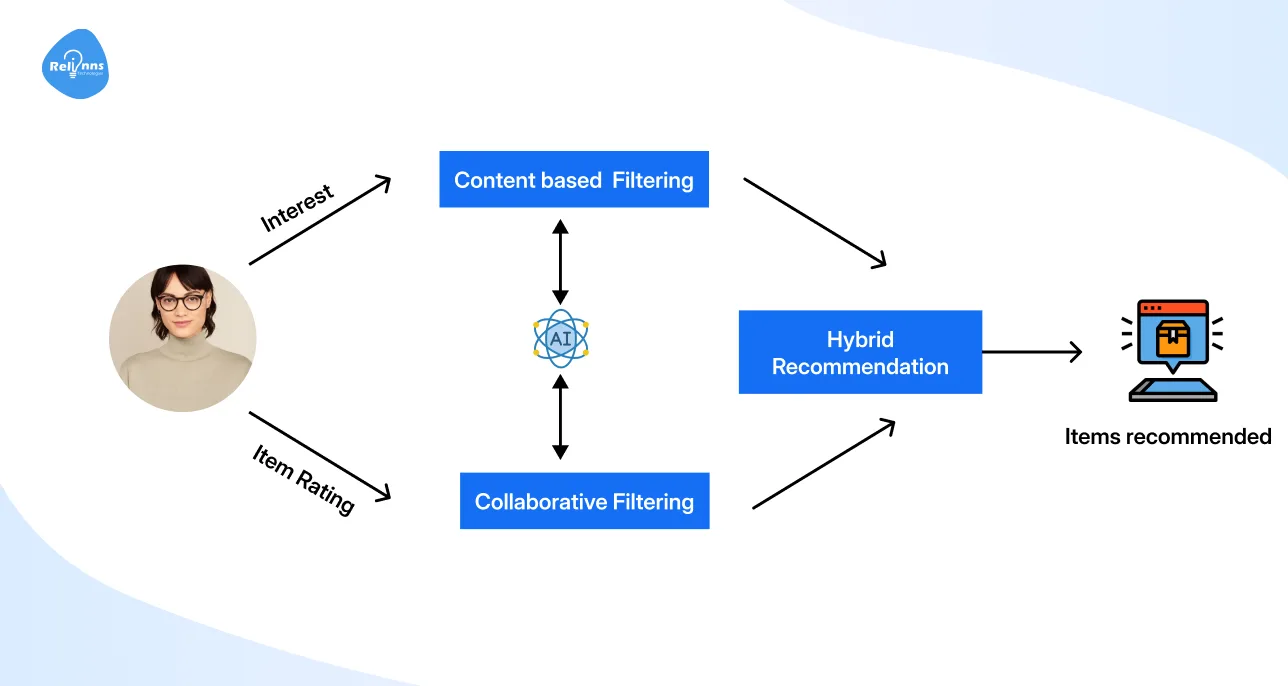
The Basic Building Blocks of a Recommendation Engine
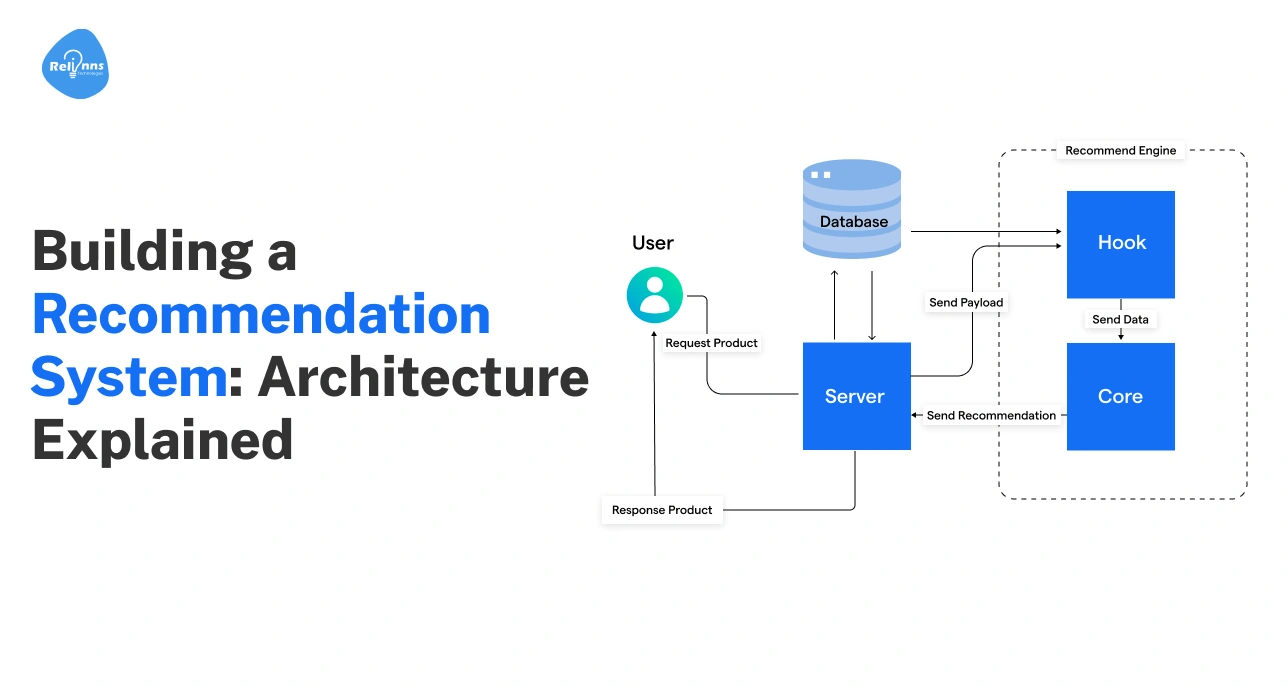
A recommendation engine is made up of several core parts:
- Data Collection: Gathers user actions, preferences, and item details
- Candidate Generation: Narrows down a large pool of items to a smaller set likely to interest the user
- Ranking: Sorts these candidates to decide which are most relevant
- Serving: Delivers the final recommendations to the user interface
Together, these building blocks deliver personalized experiences, like your favorite content creator's video on your go-to streaming platform.
Recommendation vs Search Systems
Recommendation and search systems both help users find items. The difference?
Search responds to explicit queries (“red skirt”), while recommendation suggests items proactively (“Videos You Might Like” on YouTube) based on user behavior, preferences, or context.
Recommendations work in the background; search waits for user input.
Retrieval vs Ranking: Two Core System Phases
Every recommendation engine has two main steps: retrieval and ranking.
Both are crucial, but they serve different purposes.
| Phase | What It Does | Why It Matters |
| Retrieval | Pulls a small set of possible items from a huge catalog | Keeps things fast and manageable for the next step |
| Ranking | Sorts and scores those items to pick the best for each user | Ensures users see the most relevant recommendations |
Together, these phases help the system quickly find and show the right items to each user.
Recommendation Systems vs Search Systems in System Design
System design for recommendation focuses on personalization and prediction, often using machine learning.
Search systems, on the other hand, are designed around keyword matching, relevance, and fast retrieval. Recommendation architectures must handle more user-specific data and dynamic updates.
Examples:
- Netflix recommendations update as you watch more shows (dynamic, personalized).
- Google search returns results for your typed query (static, query-driven).
Key Takeaway: Recommendation architectures are dynamic and personal. Search systems are fast and query-focused.
Common System Design Patterns in Recommendation Engines
Some common patterns in recommendation systems include:
- Content-based filtering: Recommends items similar to those the user liked
- Collaborative filtering: Suggests items liked by similar users
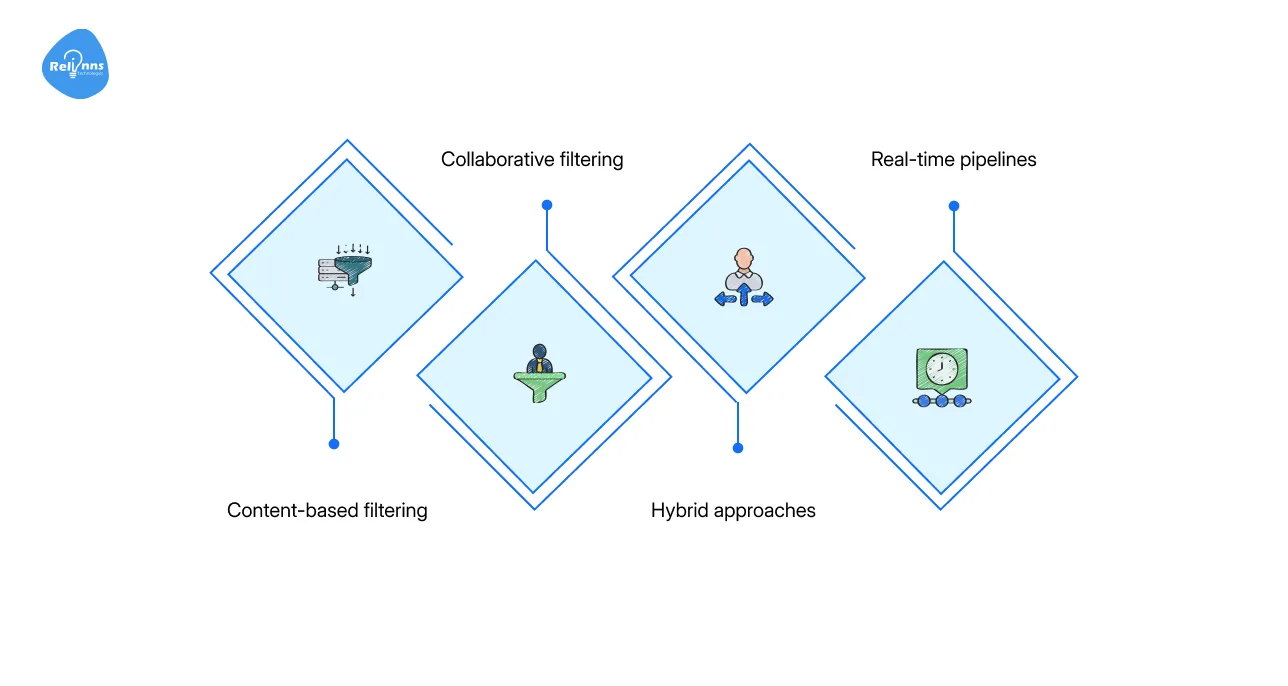
- Hybrid approaches: Combine multiple methods for better results
- Real-time pipelines: Process data and update recommendations on-the-fly
Knowing these concepts is the foundation for designing or improving a recommendation system that truly adds value.
Organizations looking to optimize user experiences often partner with AI strategy experts like Relinns Technologies to implement recommendation systems that balance relevance, speed, and responsible AI practices for real-world applications.
Key Components of Recommendation System Architecture
A recommendation system is made up of several key parts. Each component plays a unique role in turning raw data into useful recommendations.
Here’s what makes up a modern recommender system:
- Data Collection Layer: Gathers info from users and items (like clicks, ratings, or purchases). More variety means better results.
- Feature Engineering and Feature Store: Turns raw data into clear, useful signals for ML models. This step helps models spot patterns fast and keep them accessible for training and serving.
- Candidate Generation Strategies: Quickly finds a shortlist of items for each user, using methods like collaborative filtering or trending lists. This keeps only the most promising recommendations.
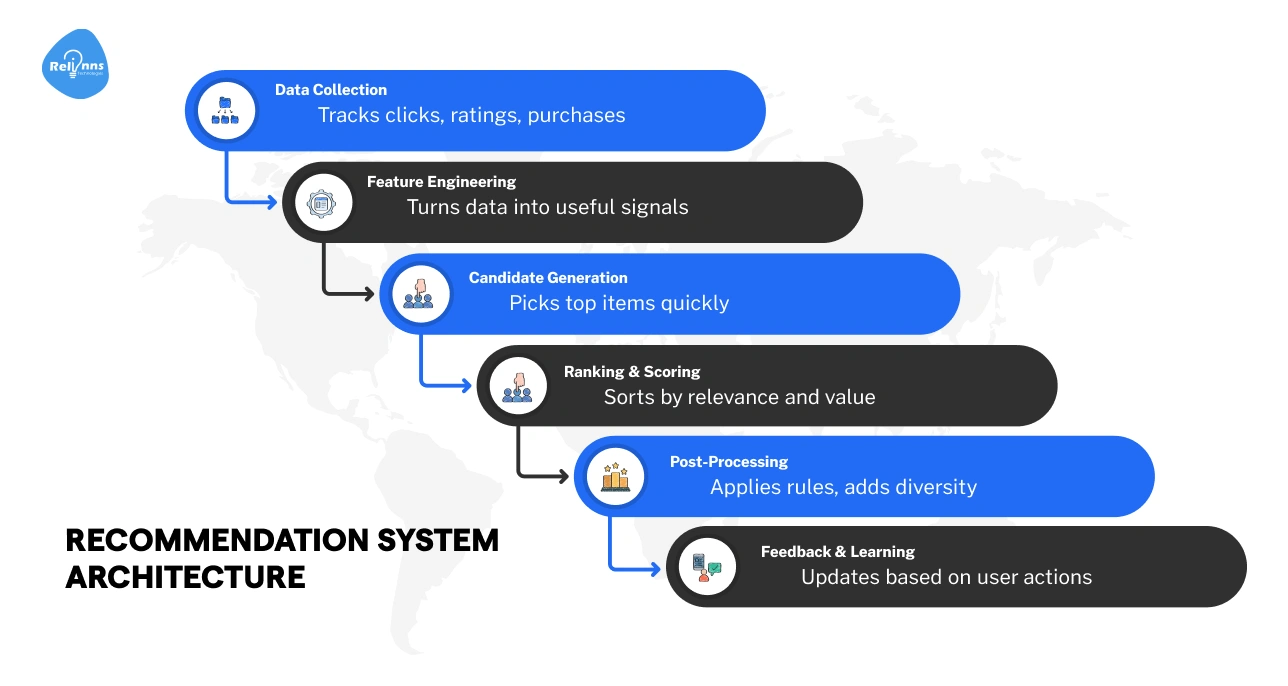
- Filtering, Ranking, and Scoring Pipelines: Scores each candidate by how relevant it is to the user. Machine learning or simple rules help sort and show the best options first.
- Post-processing and Business Rules: Tweaks the final list for business needs (like hiding out-of-stock items or highlighting sponsored content). Also adds diversity so users see a mix of results.
- Feedback Loop & Continuous Learning: Watches user actions (clicks, skips, or purchases). Uses this feedback to keep recommendations fresh and tuned to user behavior.
How the Entire System Works Together (End-to-End Flow)
Data moves from collection, to features, to candidate selection, then ranking and post-processing, before reaching the user.
Feedback from user interactions then flows back, completing the learning cycle.
Each layer works together to deliver the right content to each user, adapting as new data comes in.
How to Build a Recommendation System: Step-by-Step
Building recommender systems is a structured process.
You move from defining your problem to deploying a solution. Each step matters for accuracy and user satisfaction.
Here’s a quick overview of how to build a recommender system:
| Step | Description |
| Use Case & Metrics Selection | Clarify goals and success measures for building your system. |
| Data Prep & Preprocessing | Gather and clean relevant data. |
| Recommendation Approach | Select filtering or hybrid methods. |
| Baseline Model | Build a simple model for comparison. |
| Candidate Generation | Identify possible recommendations. |
| Ranking Model Training | Prioritize top results for each user. |
| Evaluation & Offline Testing | Measure model quality before launch. |
| Deployment & Monitoring | Launch system and track performance. |
Now, let’s break down each step in detail to understand what it involves and why it matters.
Defining Your Use Case and Metrics
Start by outlining what your recommendation system must achieve.
Are you recommending products, content, or connections?
Define clear metrics like click-through rate, conversion, or engagement. This shapes your entire project.
Preparing Data and Preprocessing
Collect historical user interactions, item details, and context data.
Clean and format everything. Remove duplicates, handle missing data, and encode features as needed.
Good data is the foundation of building recommender systems.
Choosing the Right Recommendation Approach
Select between collaborative filtering, content-based, or hybrid models. The choice depends on your data and goals.
Hybrid models often balance strengths and weaknesses.
Building a Baseline Model
Create a simple model first (like recommending popular items).
This gives you a benchmark to measure improvement.
Implementing Candidate Generation
Narrow the pool of possible recommendations using fast, rule-based, or model-driven filtering.
This step makes the next phase efficient.
Training the Ranking Model
Use machine learning to score and sort the best candidates for each user.
Features might include item attributes, user history, and context.
Evaluation and Offline Testing
Test your model with historical data.
Use metrics like precision, recall, or NDCG to judge quality before deploying.
Deployment and Real-Time Monitoring
Deploy your model to production.
Set up dashboards and alerts to monitor system health, latency, and user feedback. This closes the loop for continuous improvement.
With the building process clear, let’s now explore the different types of recommendation systems and how they differ in design and logic.
Types of Recommendation Systems (System Design Perspective)
Not all recommendation systems work the same way.
Each uses a different method to suggest the right content or products. Knowing the main types helps you pick the best fit for your needs.
| Type | What It Does | Examples |
| Content-Based Filtering | Recommends items like those you already enjoyed; focuses on item features and user history | Netflix suggests movies similar to ones you’ve watched. |
| Collaborative Filtering | Suggests items liked by people with similar tastes; relies on user behavior and preferences | Amazon shows “Customers also bought” products. |
| Hybrid Models | Blends two or more methods for smarter, more accurate results | Spotify mixes your past listens with trending tracks. |
| Knowledge-Based Systems | Uses what you tell the system or domain rules to give recommendations | Trip planners suggest hotels based on your preferences. |
| Context-Aware Systems | Takes into account context (like time, location, or device) for relevant, timely suggestions | Food apps recommend lunch spots near you at noon. |
In Summary:
- Content-based filtering is great for new users with clear interests.
- Collaborative filtering shines when you have lots of user data.
- Hybrid models are common in building recommender systems for accuracy.
Choosing the right type depends on your data, goals, and user experience. If you’re learning how to build a recommendation system, start by matching these types to your use case.
For a deeper look at how AI powers modern recommendation engines, read our AI complete guide here.
Algorithms and Modeling Techniques for Recommendation Systems
Some algorithms seem to read your mind, while others stick to the basics.
The best recommendation systems blend smart logic with user behavior to deliver spot-on suggestions.
Here’s a quick rundown of the most popular approaches:
- Popularity and Rule-Based Models: Super quick. Show off trending or most-viewed items. Great for speed, but feels generic (no personal touch).
- Matrix Factorization: Uncovers hidden user-item connections (like magic behind ratings). Powers' collaborative filtering. Fantastic for personalization, butit needs lots of data to shine.
- k-Nearest Neighbors (kNN): Suggests items like those you or similar users loved. Simple and intuitive. Works well for smaller data, but slows down as your catalog explodes.
- Deep Learning Models: Use powerful neural networks to spot complex patterns in user behavior, text, or images. Handles huge, messy data but demands more computing power and expertise.
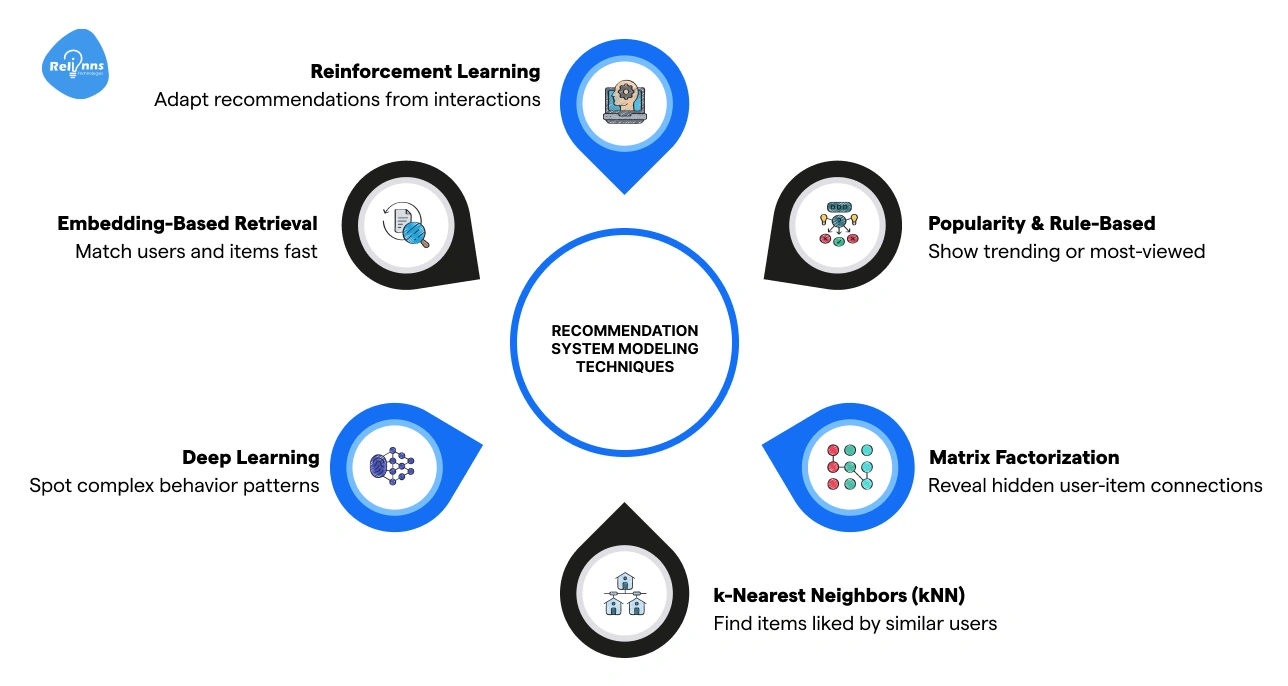
- Embedding-Based Retrieval Models: Turns users and items into compact vectors for lightning-fast matches. Perfect for massive platforms with millions of choices.
- Reinforcement Learning for Recommendations: Learns from every click and skip. Constantly adapts to your changing tastes. Ideal for interactive, real-time experiences.
Each method brings its own wow factor; businesses must choose what fits their goals and data.
Evaluating Recommendation System Performance in Production
Continuous evaluation ensures recommendations remain accurate and impactful.
Offline Evaluation Metrics for Model Quality
Use historical data to validate performance before deployment:
- Precision and recall
- F1-score
- Mean Average Precision (MAP)
- Normalized Discounted Cumulative Gain (NDCG)
These measures ranking accuracy and relevance safely offline.
Online Evaluation Metrics in Production
Track real-world impact after launch:
- Click-through rate (CTR)
- Conversion rate
- Session length and engagement
- Revenue impact
- Latency
These reflect actual user behavior and business outcomes.
A/B Testing and Experimentation Infrastructure
Controlled experiments guide data-driven improvements.
- Compare new vs existing models.
- Split live traffic reliably.
- Ensure statistical significance.
This ensures changes deliver measurable impact before full rollout.
Monitoring Model Drift and Performance Degradation
Models must adapt as user behavior evolves.
- Track metric drops.
- Detect data shifts.
- Set automated alerts.
Early detection prevents silent performance decline.
Balancing Short-Term Metrics with Long-Term User Value
Sustainable systems optimize beyond immediate clicks.
- Monitor retention and satisfaction.
Avoid over-optimizing for clicks. - Support sustainable growth.
A balanced strategy protects long-term engagement and trust.
Infrastructure and Scaling Considerations for Recommender Systems
Designing infrastructure for a recommendation system means balancing speed, scale, and reliability.
Systems must handle vast data, serve results quickly, and adapt to changing patterns.
Below is a table highlighting key infrastructure and scaling aspects to consider:
| Component | Why It Matters |
| Batch vs Real-Time Systems | Batch lowers cost with periodic updates. Real-time enables instant personalization but needs low-latency infrastructure. |
| Feature Stores & Data Pipelines | Keep features consistent across training and serving. Prevent data mismatch and improve reliability. |
| Model Serving & Inference | Optimize APIs, caching, and load balancing to reduce latency and handle traffic spikes. |
| Vector Databases | Power fast similarity search for embedding-based retrieval at scale. |
| Data Drift Handling | Monitor metrics and retrain models to maintain accuracy as user behavior changes. |
Each area impacts system speed, flexibility, and user experience. Selecting the right infrastructure is essential for scalable, accurate recommendations.
Generative AI in Modern Recommendation Systems
Generative AI, like large language models (LLMs), is reshaping recommendation engines. These systems can now understand users better, deliver smarter suggestions, and personalize results more closely.
Here’s how generative AI is powering today’s recommendations.
Using LLMs for Intent Understanding
LLMs dig into user queries and reviews to spot real intent.
This improves accuracy over simple keyword matching. They capture nuance, sentiment, and contextual meaning effectively.
Embeddings and Vector Search for Semantic Retrieval
AI turns content into vectors, so systems find items that “mean” the same thing, not just look similar.
This enables scalable semantic retrieval across large catalogs.
Conversational Recommendation Systems
LLMs enable real-time, interactive conversations.
Users get instant, tailored suggestions as they chat. Dialogue-based systems refine results through iterative interaction.
Personalization with Contextual Prompts
Prompts use past actions or context, making recommendations fit each moment.
Dynamic prompts adapt suggestions to the user context instantly.
Risks and Limitations of Generative AI in Recommendations
AI can introduce bias, errors, or privacy risks. Ongoing checks and safeguards are critical. Human oversight remains essential for trustworthy AI systems.
As generative AI matures, recommendation systems will evolve from simple ranking tools to adaptive, conversational decision assistants.
Design Tradeoffs and Common Pitfalls in Recommendation Systems
Every recommendation system brings hard choices.
Here’s a breakdown of the key design tradeoffs and common pitfalls that developers must understand when building and optimizing recommendation systems:
Accuracy vs. Scalability
- Problem/Tradeoff: High-accuracy models are complex and slow at scale.
- Solution: Use simpler models or optimize only the slowest parts to balance speed and accuracy.
Relevancy vs. Diversity
- Problem/Tradeoff: Overly relevant recommendations show users similar content, causing fatigue.
- Solution: Mix in diverse items to keep recommendations interesting and engaging.
Exploration vs. Exploitation
- Problem/Tradeoff: Only recommending proven items misses new trends and fresh content.
- Solution: Blend reliable favorites with new or trending options to stay current.
Latency, Freshness, and Real-Time Demands
- Problem/Tradeoff: Complex systems slow down response and make data outdated.
- Solution: Build fast pipelines and update data often for quick, fresh results.
Data Privacy and Ethical Considerations
- Problem/Tradeoff: Using sensitive data and biased algorithms damages trust.
- Solution: Prioritize privacy and audit algorithms for fairness and compliance.
Understanding these tradeoffs helps teams build recommendation systems that are not just accurate, but also scalable, fair, and sustainable.
Many companies partner with AI strategy and engineering experts like Relinns Technologies to navigate complex recommendation system tradeoffs and build scalable, production-ready solutions that balance accuracy, performance, and responsible AI practices.
Real-World Examples of Recommendation Systems
Recommendation systems are widely used across industries to guide user decisions.
Here are practical examples showing how different platforms apply recommendation engines to improve engagement:
| Use Case | How Recommendations Work | Primary Goal |
| Ecommerce | Suggest products using browsing history, purchases, and similar user behavior | Increase conversions and order value |
| Streaming | Recommend content based on watch history and viewing patterns | Improve engagement and retention |
| Social Media | Rank posts using likes, comments, and interaction signals | Show relevant content first |
| Marketplace | Match users based on location, availability, and preferences | Improve matching speed and efficiency |
| SaaS Platforms | Personalize dashboards, features, and content from usage data | Boost adoption and long-term usage |
These examples show how recommendation systems drive engagement, efficiency, and growth across industries.
Final Thoughts
Recommendation Systems Shape What People See, Buy, and Watch Every Day. They Are Now a Core Part of Digital Products.
A good system improves user experience and drives measurable results. But success requires clean data, clear goals, and continuous testing.
Teams must balance accuracy, speed, fairness, and privacy. Start simple. Track metrics. Improve over time. When built thoughtfully, recommendation systems increase engagement, boost revenue, and build user trust.
The real impact comes from making smart trade-offs and refining the system as user behavior evolves.
Frequently Asked Questions (FAQs)
What is a Recommendation System?
A recommendation system suggests relevant items to users based on behavior, preferences, and context, helping improve engagement and conversions across platforms.
How do Recommendation Systems Work?
They collect user and item data, generate candidate items, rank them using models, and deliver personalized recommendations to the user interface.
How to Build a Recommender System from Scratch?
Define the use case, gather data, choose an approach, build a baseline, evaluate performance, and iterate to improve accuracy and relevance.
Which Model is Best for My Use Case?
The best model depends on your data, goals, and context. Test content-based, collaborative, and hybrid models to find the optimal fit.
How do You Evaluate a Recommendation System?
Use offline metrics like precision, recall, and NDCG, alongside online metrics like CTR, conversion rate, and retention to measure real-world performance.
How to Handle Scalability and Real-Time Needs?
Use efficient data pipelines, distributed computing, caching, and approximate nearest neighbor search to support fast, real-time recommendation systems.
What are the Common Challenges in Recommendation Systems?
Challenges include cold-start problems, balancing relevance and diversity, latency, data drift, and maintaining privacy and ethical standards.
Can AI Improve Recommendation Systems?
AI and LLMs enhance recommendations through intent understanding, semantic retrieval, conversational interfaces, and adaptive, personalized suggestions in real time.