Private RAG Software for EU DMA & GDPR Compliance
Date
Apr 01, 26
Reading Time
11 Minutes
Category
Generative AI
Share


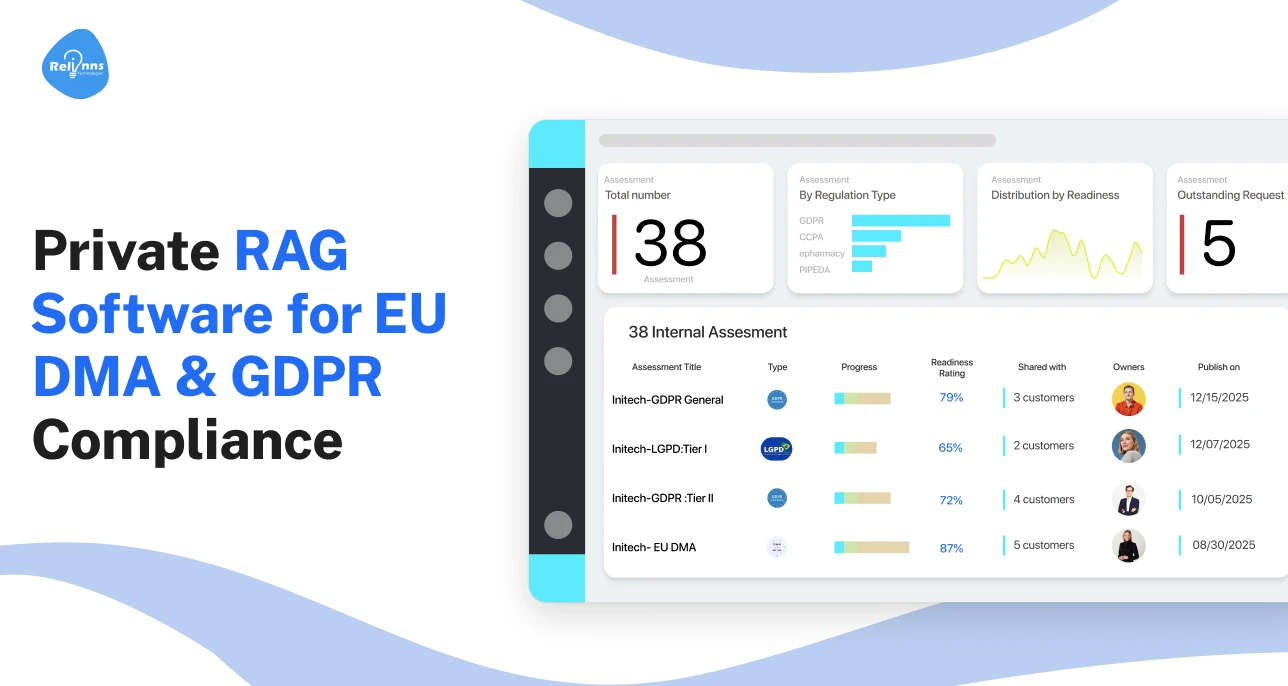
Having a smart AI tool alone won’t win deals. It’s equally important for it to be compliant.
In the EU, the fastest AI can also be the most dangerous one to use. Companies want speed and innovation, but regulators want answers.
With GDPR and the Digital Markets Act, the balance has shifted. Today, AI is no longer judged solely by what it can do, but by how safely it handles data.
This is where many teams get caught off guard.
Public LLMs feel convenient, but they hide serious compliance gaps around data use, auditability, and control. What once looked like a shortcut now looks like a liability.
This guide explains how private RAG software helps EU enterprises meet GDPR and DMA requirements without slowing down AI adoption.
What is Private RAG Software? (Explained for Compliance Teams)
Private RAG software comes up often in EU AI compliance discussions, but the term is rarely explained in a practical way.
This section clarifies what it means and why it matters for enterprise data control.
Simple Definition of RAG
RAG combines a language model with document retrieval.
Instead of depending only on what the model was trained on, it pulls answers from approved enterprise data.
The AI responds based on what it is allowed to access. This distinction is critical for compliance.
What “Private” Actually Means in Enterprise AI
“Private” simply means the enterprise stays in control.
If you have a private RAG system, your data is not used to train shared models.
Access is restricted to approved users. Storage, processing, and permissions are defined by your organization, not the AI vendor.
Public AI Tools vs Hosted RAG vs Private RAG Software
Choosing between public AI and a private setup isn't just about features. It’s about who controls the data and how much risk the organization takes on.
Key Takeaways:
- Public AI tools work well for general tasks, but these run on shared platforms where data visibility and control are limited.
- Hosted RAG sits in the middle. It adds retrieval, but the environment is still managed by the vendor.
- Private RAG software runs in an isolated infrastructure. Your data stays contained, access is logged, and systems are designed to support audits and regulatory reviews.
This difference in control is exactly why public AI and standard RAG setups find it hard to meet GDPR and DMA requirements under EU regulations.
Many companies partner with compliance-first teams like Relinns Technology that design and deploy private RAG systems aligned with GDPR and supported by ISO 27001:2022 and SOC 2 controls for security, access management, and audit readiness.
Why Public AI and Standard RAG Struggle with EU Regulations
At first glance, public AI tools and standard RAG setups appear compliant.
In reality, they introduce structural risks that conflict with how EU regulations expect AI systems to handle data and accountability.
In most public AI and standard RAG setups, enterprises struggle with the following structural issues that increase regulatory risk:
Data Leaving EU Borders
Many AI platforms process or route data outside the EU.
Even with guardrails, cross-border data transfers increase legal exposure and complicate GDPR compliance.
Model Training on User Data
Some vendors log prompts or reuse customer data to improve models.
This creates uncertainty around purpose limitation and data minimization, which are the core GDPR requirements.
.webp)
Lack of Audit Trails
Public AI systems offer limited visibility into access and usage.
Without detailed logs, proving compliance during audits or investigations becomes tricky.
Vendor Opacity and Gatekeeper Risk
Large AI platforms control infrastructure, updates, and policies.
This lack of transparency increases dependency and raises concerns under the Digital Markets Act’s gatekeeper rules.
Unclear Data Ownership and Accountability
Enterprises are often unsure who acts as the data controller or processor.
This ambiguity slows Data Processing Agreement (DPA) reviews and creates risk during regulatory assessments.
Public AI is built for scale. EU regulations are built for control. That gap is where compliance breaks.
How Private RAG Software Ensures GDPR Compliance
GDPR compliance depends less on policies and more on system design.
Private RAG software is built to meet core GDPR requirements by giving enterprises direct control over their data and AI workflows.
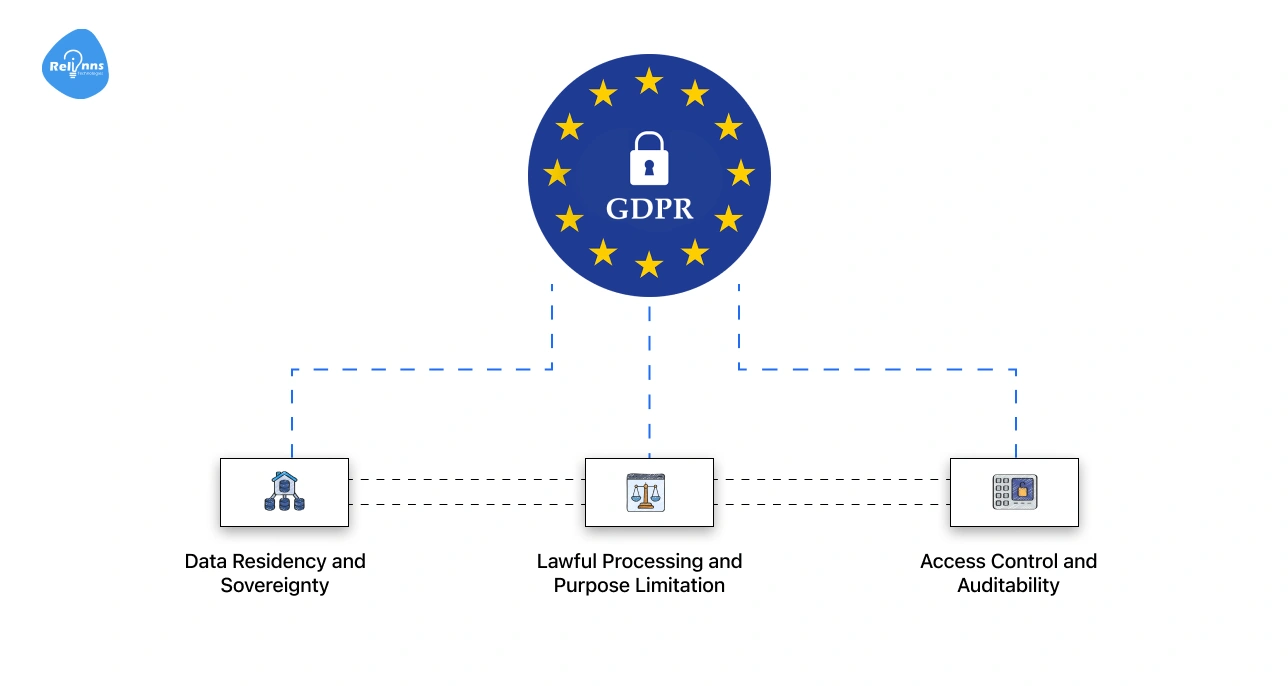
Data Residency and Sovereignty
Private RAG software keeps enterprise data within defined boundaries.
- Data is stored in an EU-based infrastructure.
- No automatic cross-border data transfers.
- Full control over where data is processed and used.
This lowers legal risk and simplifies compliance around data residency and sovereignty.
Lawful Processing and Purpose Limitation
Private RAG systems use enterprise data only for approved purposes.
- AI responses are generated from approved internal documents.
- Data is not reused for model training or product improvement.
- Usage stays aligned with clearly defined business purposes.
This directly supports lawful processing and purpose limitation under GDPR.
Access Control and Auditability
Private RAG software makes data access visible and provable.
- Role-based access limits who can view or query data.
- All interactions are logged and traceable.
- Logs support internal audits and regulator reviews.
This level of control is why private RAG software GDPR compliance is easier to maintain in regulated EU environments.
Meeting DMA Requirements with Private RAG Software
The DMA (Digital Markets Act) changes how large AI platforms operate in the EU.
For enterprises, it shifts the focus from features to dependency, control, and long-term regulatory exposure.
What the DMA is Trying to Prevent
The DMA aims to limit excessive control by major digital platforms.
It targets practices that lock businesses into closed ecosystems, restrict choice, or concentrate data and power in a few hands. This reduces unfair dependency and restores competition and transparency in digital markets.
Why Large AI Platforms Fall Under Scrutiny
Many AI providers operate at platform scale. They control models, infrastructure, and data flows.
Under the EU’s Digital Markets Act (DMA), regulators look closely at this concentration of control because it can create gatekeeper behavior, transparency, and unfair dependency.
These concerns typically fall under three areas:
- Gatekeeper Behavior: When one company controls the entire stack, it can prioritize its own products or dictate terms to everyone else.
- Transparency Gap: Large platforms often operate as “black boxes”. Without visibility into how data is handled or how models make decisions, accountability is impossible.
- Systemic Dependency: If a whole industry relies on one AI provider, a single technical glitch or policy change can cripple thousands of businesses overnight.
How Private, Enterprise-Controlled AI Avoids Gatekeeper Risks
Private RAG software is owned and controlled by the enterprise. It runs outside shared AI platforms and avoids forced dependency on a single vendor.
Data, access, and system behavior stay within enterprise boundaries.
As a result, private RAG software EU Digital Markets Act compliance is simpler. Private RAG reduces platform dependency and regulatory exposure by design.
Privacy Shield, Data Transfers, and Why Private RAG is Safer
International data transfers remain one of the hardest parts of EU AI compliance.
Even with contracts and safeguards in place, uncertainty remains. This is where private RAG changes the risk profile entirely.
Why EU-US Privacy Shield Replacements Are Still Complex
The original Privacy Shield was invalidated. Yet, what replaced it comes with conditions, reviews, and ongoing legal checks.
For enterprises, this means ongoing reviews, legal opinions, and uncertainty. Compliance is possible, but never simple or permanent.
Risk of Relying on Foreign AI Vendors
Many AI tools are built and operated outside the EU. Data may pass through foreign servers, support systems, or monitoring tools without clear visibility.
This increases exposure during audits and makes compliance dependent on vendor assurances you cannot fully verify.
How Private RAG Minimizes Transfer Issues Altogether
Private RAG software keeps data where you choose.
Enterprise documents stay in EU-controlled infrastructure, while processing happens locally.
There is no routine transfer to foreign platforms or shared models.
Hence, by removing cross-border flows, private RAG avoids many Privacy Shield questions instead of managing them.
That’s why private RAG software EU privacy shield compliance is often simpler, clearer, and easier to defend with regulators.
Streamlining the DPA Process with Private RAG
For most teams, AI adoption can slow down at the contract stage. While DPAs take weeks or even months to finalize, innovation often comes to a halt.
Private RAG software reduces this friction by simplifying how data is handled and documented.
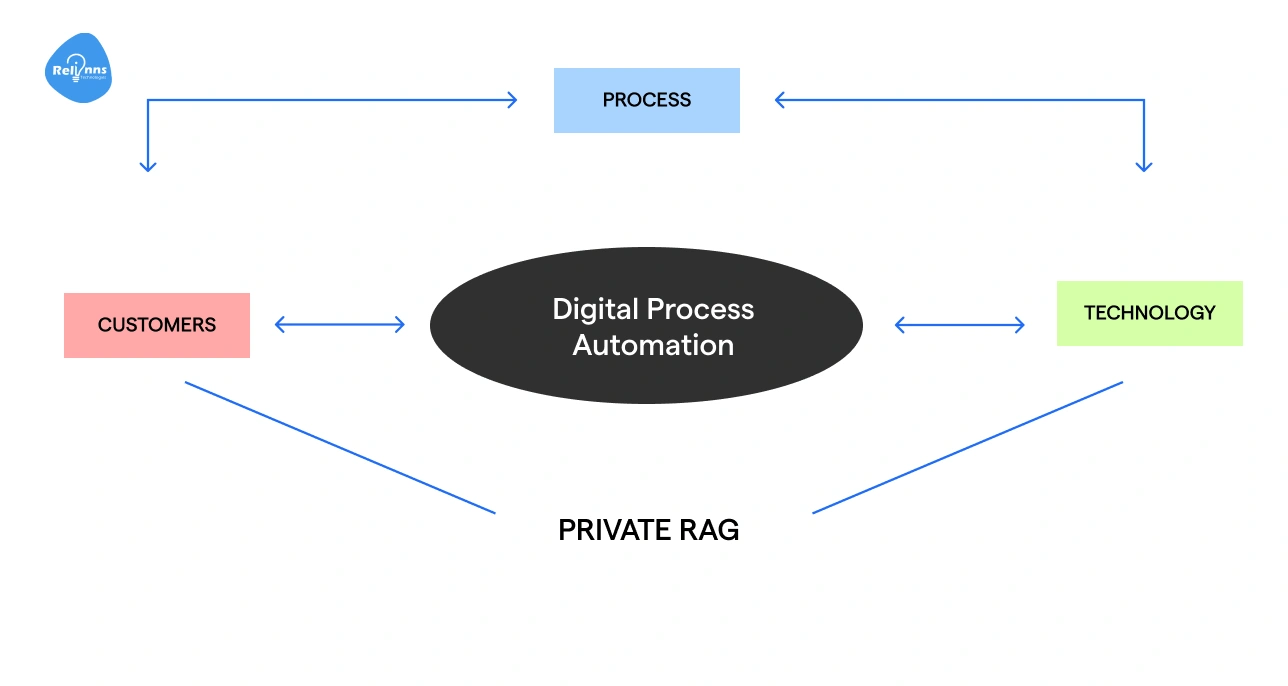
What a DPA is
A DPA, or Data Processing Agreement, defines how a vendor processes personal data on behalf of an organization.
It clarifies roles, responsibilities, and safeguards required under GDPR.
Why AI DPAs Are Painful Today
Traditional AI tools blur responsibilities.
On one hand, data flows are unclear. On the other hand, vendors act as platforms, processors, and sometimes even controllers.
This forces legal teams to dig through vague policies, layered subcontractors, and unclear data responsibilities.
How Private RAG Simplifies DPAs
Private RAG software makes data handling easy to explain.
- Vendor assessments are simpler because data stays under enterprise control.
- Legal reviews move faster with clear data boundaries.
- Controller and processor roles are clearly defined.
This is why private RAG software makes the DPA process easier for enterprise compliance.
Clear architecture leads to faster approvals and fewer compliance challenges.
Real Enterprise Use Cases Where Private RAG Makes Sense
Private RAG is most useful where sensitive data, strict access rules, and audit needs collide.
These are everyday enterprise workflows where public AI or standard RAG quickly becomes risky or unusable.
Here’s a quick look at the most common enterprise scenarios where private RAG makes sense from both a risk and compliance standpoint.
- Legal Knowledge Systems: Contracts, case law, and internal memos stay private. Lawyers get answers without exposing client data or creating discovery risks.
- HR and Employee Data: Policies, employee records, and payroll rules remain restricted. Access is role-based and fully logged.
- Financial Services Documentation: Compliance manuals, risk reports, and internal guidelines stay inside regulated infrastructure.
- Public Administration & Governance: Agencies can securely access internal policies, citizen records, and regulatory documents, ensuring audits, compliance, and data protection without delays or risk.
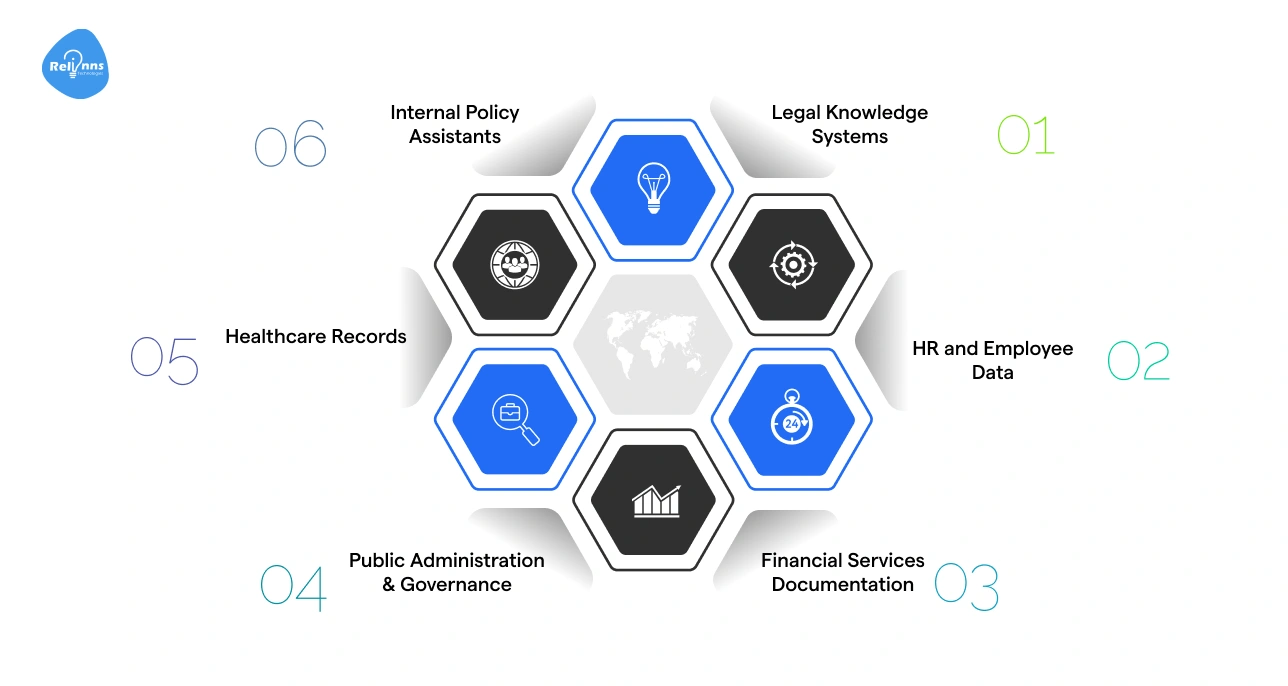
- Healthcare Records: Clinical notes and operational documents remain isolated, supporting GDPR and health data rules.
- Internal Policy Assistants: Employees get fast answers from approved internal policies, without depending on public AI tools.
In short, private RAG fits wherever data sensitivity, compliance pressure, and accountability are non-negotiable.
How to Evaluate Private RAG Software for EU Compliance
Choosing private RAG software is not just a technical decision.
In a regulatory realm as tight as the EU’s, the goal is simple: reduce risk, don't create it.
The right setup, thus, shouldn't leave your legal and security teams guessing.
It should give them a clear, defensible “yes” to every compliance question.
The EU-Ready Checklist: Is Your RAG Truly Private?
Here’s a simple checklist to evaluate whether a private RAG solution is truly EU-ready:
How to Spot a Red Flag
A true private RAG system should give clear answers to every row.
If your vendor’s answer to any of the above is “it’s in our roadmap” or “we have a policy for that”, take it as a warning.
Private RAG software designed for the EU puts control back with the enterprise.
That control is what makes audits faster, DPAs simpler, and regulatory reviews far less stressful.
Working with compliance-focused partners like Relinns Technology helps turn this checklist into a baseline, not a hurdle.
Private RAG systems are designed to answer these questions upfront, with documentation and controls that stand up to real audits.
Private RAG vs Alternatives: Quick Comparison
When teams evaluate AI options, the differences can feel blurry.
This quick comparison shows how public LLMs, hosted RAG, and private RAG stack up where EU compliance really matters.
The Bottom Line: While public LLMs optimize for speed and convenience, hosted RAG improves answers, but keeps enterprises dependent.
On the contrary, private RAG is designed for control.
Where GDPR risk, DMA exposure, and long-term readiness matter, private RAG is the safer enterprise choice.
Conclusion
In the EU, AI success is no longer just about speed or flashy features. How safely your AI handles data matters just as much.
Private RAG software gives enterprises both. It keeps sensitive data under control, supports audits, and meets GDPR and DMA requirements, without slowing down innovation.
Choosing the right architecture isn’t a technical decision alone. It’s a strategic move that reduces risk, makes regulatory reviews easier, and ensures AI can scale safely across your organization.
For EU enterprises, private RAG isn’t just safer: it’s the foundation for responsible, competitive, and compliant AI adoption.
Frequently Asked Questions (FAQs)
What is private RAG software in GDPR compliance?
Private RAG keeps enterprise data under control, prevents it from training shared models, and ensures AI responses comply with GDPR requirements.
How does private RAG support the EU Digital Markets Act (DMA) compliance?
It reduces dependency on large AI platforms, limiting gatekeeper risk and ensuring enterprises meet DMA obligations.
Can private RAG simplify Data Processing Agreements (DPAs)?
Yes. Clear data boundaries, audit logs, and defined roles make DPAs faster and easier to defend under GDPR.
Is private RAG better than public LLMs for enterprises?
Private RAG offers stronger data control, auditability, and lower compliance risk than public LLM platforms.
How does private RAG help with Privacy Shield and cross-border transfers?
Data stays in EU infrastructure, avoiding routine cross-border transfers and making regulatory compliance easier.
What compliance controls are essential for private RAG deployment?
EU-based storage, role-based access, detailed audit logs, and no secondary use of data for model training
Are popular LLMs like Perplexity or ChatGPT considered private RAGs?
No. Most public LLMs use shared infrastructure and may log or reuse user data, so they do not meet private RAG standards for GDPR or EU compliance.