AI Chatbots in Healthcare: Use Cases, Benefits, Examples
Date
Mar 24, 26
Reading Time
9 Minutes
Category
Generative AI
Share


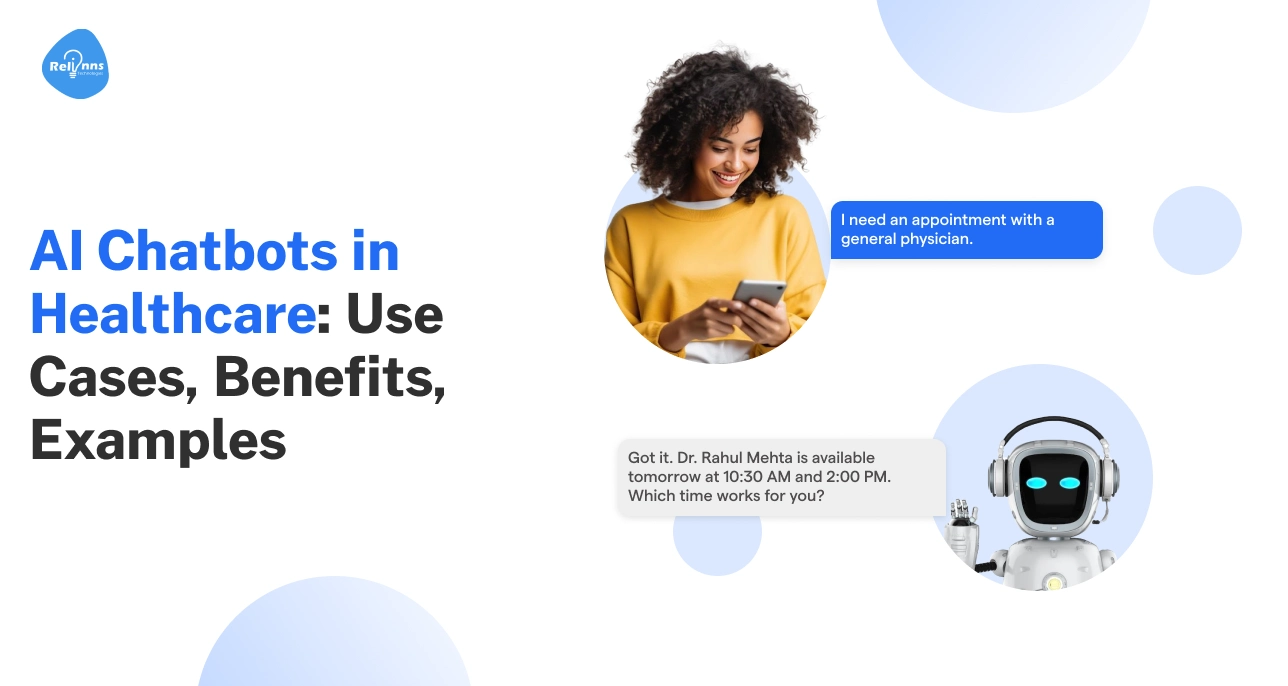
Can one AI chatbot change the way healthcare providers support patients?
Patients today expect fast answers, easy appointment booking, and constant communication with their providers. But hospitals and clinics are already overwhelmed with rising patient queries and administrative work.
To bridge this gap, many healthcare organizations are adopting AI chatbots in healthcare. These tools automate patient communication, streamline routine workflows, and provide 24/7 support.
In this guide, you’ll learn how AI chatbots are used in healthcare, the key benefits they offer, real-world examples, and best practices for successful implementation.
What Are AI Chatbots in Healthcare? A Simple Guide
AI chatbots in healthcare are software programs that interact with patients through chat or voice.
These chatbots can schedule appointments, collect symptoms, send reminders, and provide basic health information. Many hospitals use them to improve patient communication and reduce administrative workload.
As digital care grows, AI healthcare chatbots are becoming an important tool for patient support.
How AI Healthcare Chatbots Work
Healthcare chatbots use technologies like natural language processing (NLP) and machine learning to understand patient messages.
A typical healthcare chatbot interaction flow is:
- The patient asks a question through a website, mobile app, or messaging platform.
- The chatbot analyzes the message using natural language processing.
- It identifies the patient’s intent (for example: booking an appointment or reporting symptoms).
- The chatbot provides a response or guides the patient through the next step.
- If needed, the conversation is escalated to a human healthcare professional.
This step-by-step process allows chatbots to handle routine tasks efficiently while ensuring patients get help when human intervention is needed.
Types of Healthcare Chatbots (Rule-Based vs AI-Powered)
Healthcare chatbots typically fall into three categories, viz., rule-based, AI/ML-powered, and generative AI chatbots.
The table below showcases how each type works and what it is best suited for:
Each type has its strengths: rule-based bots are simple and reliable, AI/ML bots handle more varied queries, and generative AI chatbots offer natural, human-like conversations.
Where Healthcare Chatbots Are Typically Used
Healthcare chatbots are commonly used across hospitals, clinics, telehealth platforms, and mental health services.
They handle a variety of tasks, such as appointment booking and reminders, billing and insurance queries, post-treatment follow-ups, symptom collection and patient intake, mental health check-ins, and more.
Example: Instead of waiting days for a response to routine questions, a mental health provider can use a chatbot to check in with patients, provide coping resources, and schedule follow-up sessions automatically.
Thus, AI chatbots in healthcare help streamline patient communication and alleviate administrative burden.
Many healthcare providers looking to implement AI chatbots often partner with AI solutions providers like Relinns Technologies that help design and deploy solutions tailored to their workflows.
Why Healthcare Providers Are Adopting AI Chatbots in 2026
Healthcare is becoming more complex, and providers are looking for ways to keep up.
AI chatbots are emerging as a practical solution to meet growing demands and improve patient experience.
Rising Administrative Burden in Healthcare
Hospitals and clinics handle thousands of patient queries daily. Scheduling, follow-ups, billing questions, and paperwork take up valuable staff time.
Healthcare AI chatbots help reduce this workload, allowing teams to focus on clinical care.
Growing Demand for Instant Patient Support
Patients expect fast answers, 24/7 access, and personalized guidance.
Chatbots deliver instant responses, reminders, and health information without making patients wait on hold or through emails.
Expansion of Telehealth and Digital Patient Platforms
Telehealth and online care platforms are growing rapidly.
AI chatbots integrate seamlessly with these systems, automating routine tasks and supporting remote patient engagement.
With these trends, AI chatbots in healthcare are becoming essential tools for efficient, patient-centered care.
Core Use Cases of AI Chatbots in Healthcare
From symptom triage to post-op support, AI chatbots serve as the 24/7 digital pulse of modern medicine.
They bridge gaps between overloaded clinicians and patients, streamlining workflows while humanizing every step of the care journey.
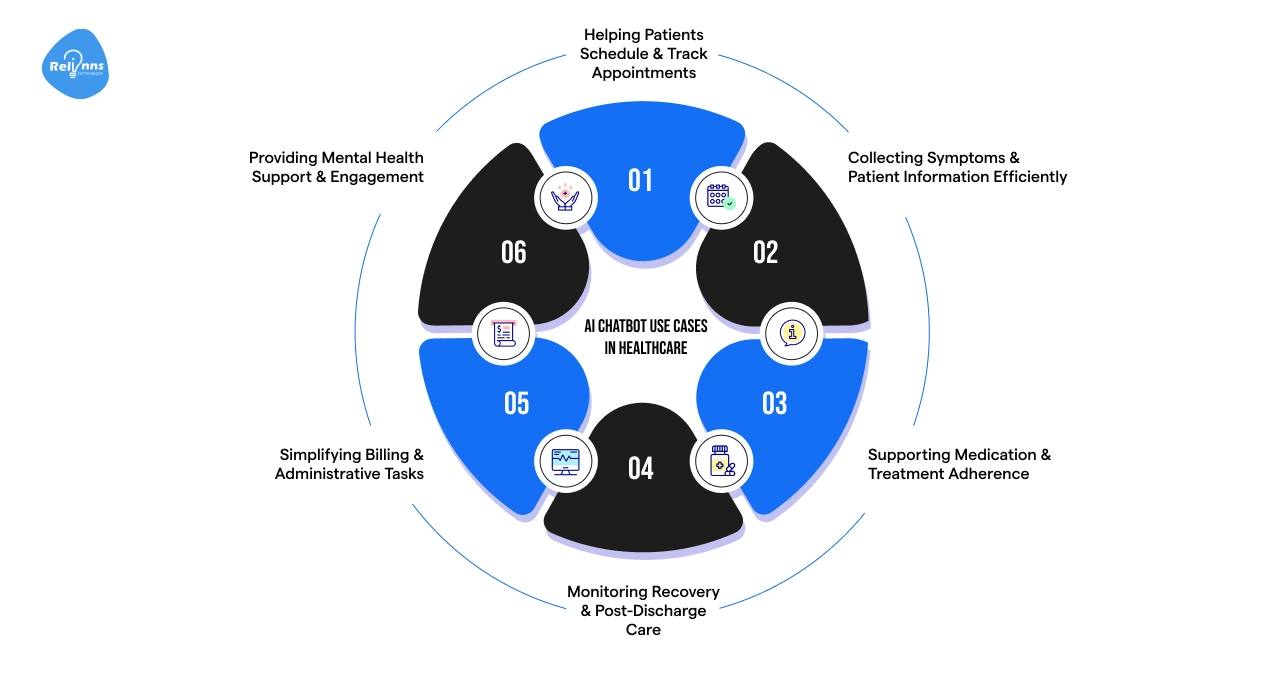
Here are the core use cases of healthcare AI chatbots driving better care outcomes:
- Appointment scheduling and reminders
- Patient intake and symptom collection
- Medication and treatment adherence support
- Post-discharge monitoring and follow-ups
- Administrative and billing assistance
- Mental health support and patient engagement
Each of these use cases is explained in detail below.
Appointment Scheduling and Patient Reminders
Chatbots let patients book, reschedule, or cancel appointments instantly.
For example, a patient can reschedule a missed check-up via the clinic’s app without calling the office. They can also send automated reminders, reducing no-shows and freeing staff from manual follow-ups.
Patient Intake and Symptom Collection
Chatbots gather patient information and symptoms before visits.
Likewise, a patient reporting flu symptoms can complete an intake form via chat, helping clinicians prioritize care and reducing time spent on paperwork.
Medication and Treatment Adherence Support
Chatbots remind patients to take medications and follow treatment plans.
For instance, a diabetic patient can receive daily insulin reminders and log glucose readings through the chatbot, improving adherence and reducing complications.
Post-Discharge Follow-Ups and Chronic Care Monitoring
After discharge, chatbots check on patient recovery and flag warning signs.
Correspondingly, a post-surgery patient can report pain or swelling via chat, triggering timely clinician follow-up and preventing readmissions.
Administrative and Billing Assistance
Chatbots answer billing questions and guide patients through forms.
For example, a patient confused about insurance coverage can get step-by-step clarification instantly, reducing administrative workload.
Mental Health Support and Patient Engagement
Chatbots offer 24/7 check-ins and evidence-based tools for emotional resilience.
When anxiety peaks, patients receive instant mindfulness prompts or journaling exercises, bridging the gap between therapy sessions and turning isolated stress into an interactive, supported recovery journey.
Exploring the Benefits of Healthcare AI Chatbots
AI chatbots are changing how patients and healthcare teams interact. They make care smoother, faster, and more personal.
Here are the top benefits of AI chatbots in healthcare:
- Quick Responses for Patients: Patients get instant answers to questions, guidance, or reminders, without waiting on hold or sending emails. Chatbots can even provide initial support in urgent situations, like mental health crises or sudden symptoms.
- Less Busywork for Staff: Chatbots handle routine tasks like scheduling, intake forms, and billing queries, giving doctors and nurses more time for actual patient care.
- Better Patient Engagement: Patients can check in, ask questions, or track progress anytime, making care feel more connected and easier to follow.
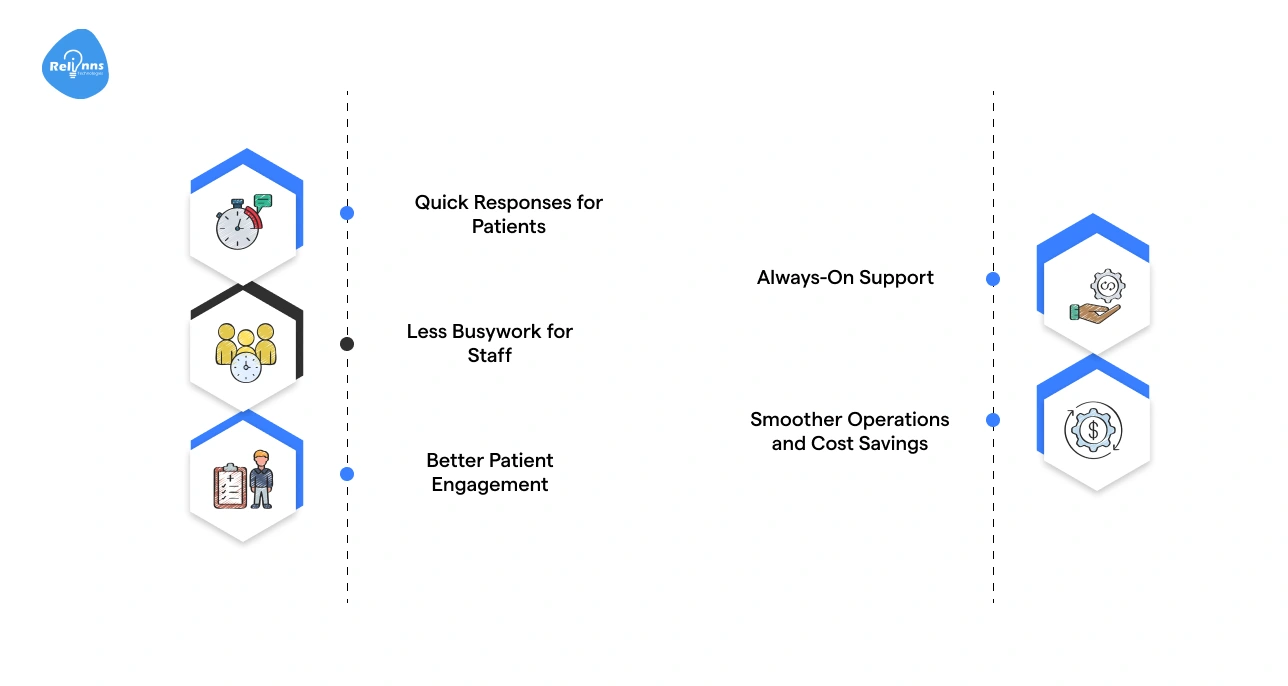
- Always-On Support: Chatbots provide help 24/7, so patients can get advice, reminders, or reassurance even after clinic hours.
- Smoother Operations and Cost Savings: Automating repetitive tasks reduces errors, saves time, and cuts operational costs, letting clinics run more efficiently.
These benefits make it clear: AI chatbots help patients get timely care while giving healthcare teams the space to focus on what matters most.
Practical Examples of Healthcare AI Chatbots Transforming Care
From guiding patients through symptoms to supporting mental health, AI healthcare chatbots improve outcomes, save staff time, and make healthcare more accessible.
Here are some real examples of how they’re being used:
These examples show that AI chatbots are not just tools; they are partners in care, supporting patients and clinicians alike while making healthcare smarter and more responsive.
Healthcare AI Chatbots: Best Practices for Safe and Effective Use
Deploying a clinical chatbot is more than a technical upgrade; it’s a commitment to patient safety and digital trust.
To move from an “experimental tool” to an “essential care partner”, healthcare organizations must balance rapid innovation with rigorous clinical safeguards.
Follow these five best practices for AI chatbots in healthcare to ensure your implementation is seamless, secure, and patient-centric:
Start With Low-Risk Administrative Workflows
It’s important to begin with simple, non-clinical tasks to build confidence and reduce risk.
- Focus on tasks like appointment booking, reminders, and FAQs.
- Let staff and patients get familiar with the chatbot gradually.
- Deliver quick wins without impacting clinical care.
At this stage, you can gather feedback and refine chatbot responses before expanding into higher-risk areas.
Maintain Human Oversight for Clinical Decisions
The next best practice is to ensure that AI suggestions do not replace professional judgment.
- Require clinician review for symptom triage or medical guidance.
- Prevent errors and maintain patient trust.
- Escalate complex cases to healthcare professionals.
This ensures that patients receive safe, accurate care, while AI handles routine tasks efficiently.
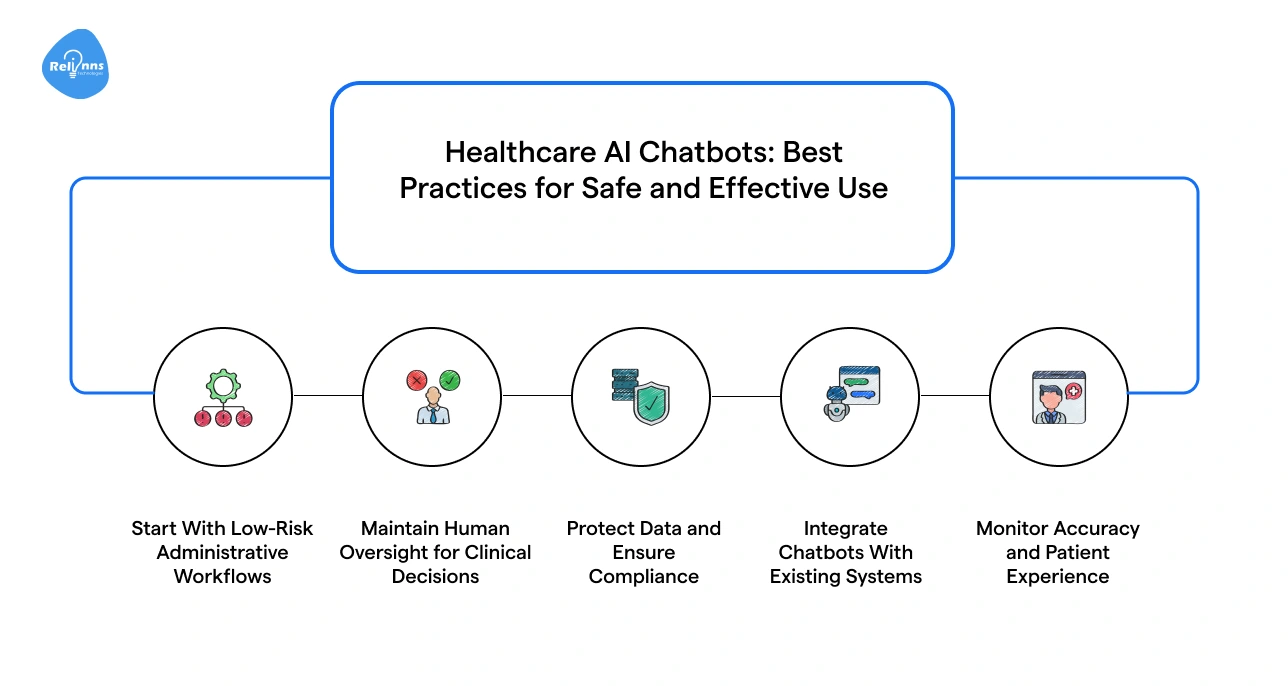
Protect Data and Ensure Compliance
An unavoidable requirement in healthcare, chatbots must handle sensitive data carefully.
- Follow HIPAA, GDPR, and local regulations.
- Encrypt all patient communications.
- Limit access to sensitive information.
Prioritizing privacy and compliance builds trust with patients and avoids costly legal issues.
Integrate Chatbots With Existing Systems
- Connect with EHRs, telehealth platforms, and scheduling tools.
- Ensure seamless workflows and accurate patient records.
- Reduce duplicate work for staff.
Integration creates smooth workflows and ensures chatbot recommendations are backed by up-to-date patient records.
Monitor Accuracy and Patient Experience
Continuously track performance, errors, and user satisfaction to improve outcomes.
- Gather patient feedback regularly.
- Review chatbot responses for accuracy and clarity.
- Update the system to fix errors or expand capabilities.
Ongoing monitoring keeps the chatbot effective, trustworthy, and aligned with both patient needs and clinical standards.
By embracing these principles, healthcare providers transform AI from a simple interface into a dependable partner in care. Through thoughtful design, human oversight, and ironclad privacy, chatbots become more than just code; they provide a safe, seamless, and deeply patient-centered bridge to better health.
Key Risks of Healthcare AI Chatbots and How to Address Them
While AI chatbots can significantly improve healthcare communication and operational efficiency, they also introduce risks that organizations must manage carefully.
Issues such as inaccurate responses, data privacy concerns, and system integration challenges can affect patient safety if not properly addressed.
Realizing and overcoming these risks helps healthcare providers deploy chatbots responsibly and maintain trust in digital care interactions.
Accuracy and Medical Reliability Concerns
AI chatbots can misinterpret symptoms or provide incomplete guidance.
Solution: Use pre-approved clinical data, integrate human oversight, and validate responses regularly. For example, symptom checker chatbots like Ada Health escalate ambiguous cases to clinicians.
Privacy and Security Risks in Patient Data
Chatbots handle sensitive health information, making them targets for breaches.
Solution: Encrypt data, follow HIPAA/GDPR regulations, and limit access to authorized personnel. Regular security audits help maintain compliance.
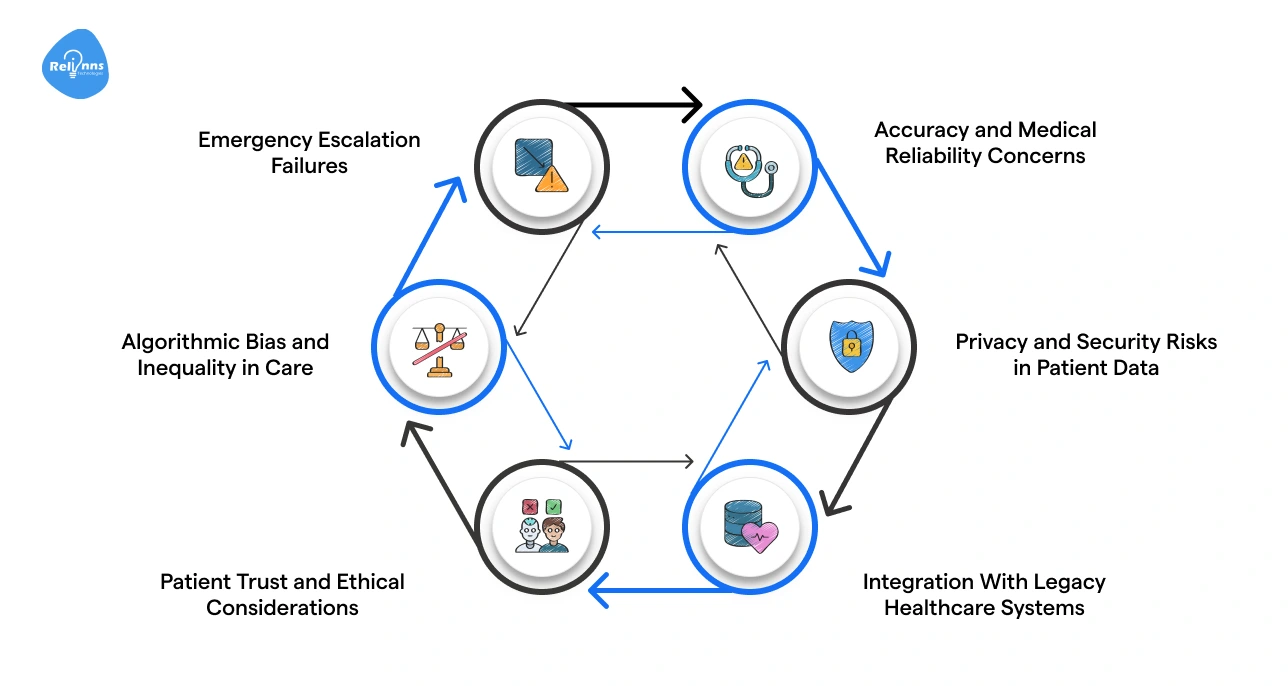
Integration With Legacy Healthcare Systems
Older EHRs or scheduling platforms may not sync easily with AI tools.
Solution: Use middleware or APIs to connect systems and ensure accurate data flow, reducing errors and duplications.
Patient Trust and Ethical Considerations
Patients may hesitate to rely on AI for health guidance.
Solution: Be transparent about chatbot capabilities, maintain clear escalation paths to humans, and communicate limitations to patients.
Algorithmic Bias and Inequality in Care
AI models may be trained on datasets that don't represent all demographics, leading to skewed or less accurate advice for certain groups.
Solution: Audit AI models for equity, use diverse training datasets, and ensure clinical teams review the bot’s logic to provide fair, unbiased care for every patient.
Emergency Escalation Failures
A patient might mention a life-threatening symptom (like sudden numbness or chest pain) that a poorly configured chatbot system could misinterpret as a routine query.
Solution: Program “Red Flag” triggering keywords that immediately bypass the AI, providing emergency instructions or an instant warm handoff to a live medical professional.
Addressing these challenges ensures chatbots are not just tech novelties, but safe, trustworthy, and effective partners in healthcare delivery.
Many healthcare providers looking to implement AI chatbots partner with experts like Relinns Technologies to design GDPR-, HIPAA-, and SOC-2-compliant solutions tailored to their workflows, ensuring accuracy, compliance, and seamless integration.
How Healthcare Organizations Can Successfully Deploy AI Chatbots
Using AI chatbots in healthcare settings effectively requires strategy, careful design, and ongoing review.
The table below breaks down essential steps in this regard:
Key Takeaways
- Start where chatbots can relieve the most pressure.
- Pick the right technology for the job (matching complexity and risk).
- Always have clear handoffs to humans, as some patients’ needs require professional attention.
- Review metrics like accuracy, response time, and patient feedback regularly to improve impact.
Thoughtful workflow selection, the right technology, clear human handoffs, and continuous monitoring ensure chatbots enhance care, support staff, and improve patient experience.
Wrapping Up
AI chatbots in healthcare are changing how patients and providers connect.
They answer questions instantly, guide care, send reminders, and offer mental health support, all without adding pressure on staff.
With human oversight, privacy safeguards, and smart escalation paths, chatbots make care safer, faster, and more personal. Hospitals and clinics using them see smoother workflows, happier patients, and fewer missed appointments.
By understanding the benefits, challenges, and best practices, healthcare organizations can deploy AI chatbots in healthcare as true partners, bridging gaps, supporting staff, and creating a more responsive, patient-centered experience for everyone.
Frequently Asked Questions (FAQs)
What are AI chatbots in healthcare?
AI chatbots in healthcare are software that interacts with patients via chat or voice, automating tasks like appointment scheduling, symptom collection, and reminders.
How do AI chatbots improve patient communication?
AI chatbots provide instant responses, reminders, and guidance, helping patients get timely care while reducing calls, emails, and wait times for staff.
Are AI chatbots in healthcare safe and reliable?
Yes, with proper design, clinical oversight, and pre-approved data, AI chatbots safely handle routine tasks while escalating complex issues to human clinicians.
Can AI chatbots handle mental health support?
Yes, mental health chatbots offer CBT exercises, mood tracking, and empathetic check-ins, complementing therapy and providing support outside clinic hours.
How do AI chatbots protect patient data?
Healthcare AI chatbots follow HIPAA and GDPR regulations, encrypt communications, and limit access to sensitive patient data to ensure privacy and compliance.
Which tasks are best for healthcare AI chatbots?
Tasks like appointment booking, symptom intake, medication reminders, billing queries, and post-discharge follow-ups are ideal for AI chatbot automation.
How can healthcare organizations deploy AI chatbots effectively?
Start with low-risk administrative tasks, integrate with existing systems, monitor accuracy, and ensure human oversight for clinical decisions.
Can AI chatbots reduce staff workload?
Yes, chatbots handle repetitive tasks, reduce manual follow-ups, and allow healthcare staff to focus on patient care and critical decisions.
Are AI chatbots in healthcare suitable for telehealth?
Absolutely, AI chatbots integrate with telehealth platforms, helping schedule virtual visits, triage patients, and send automated follow-ups seamlessly.