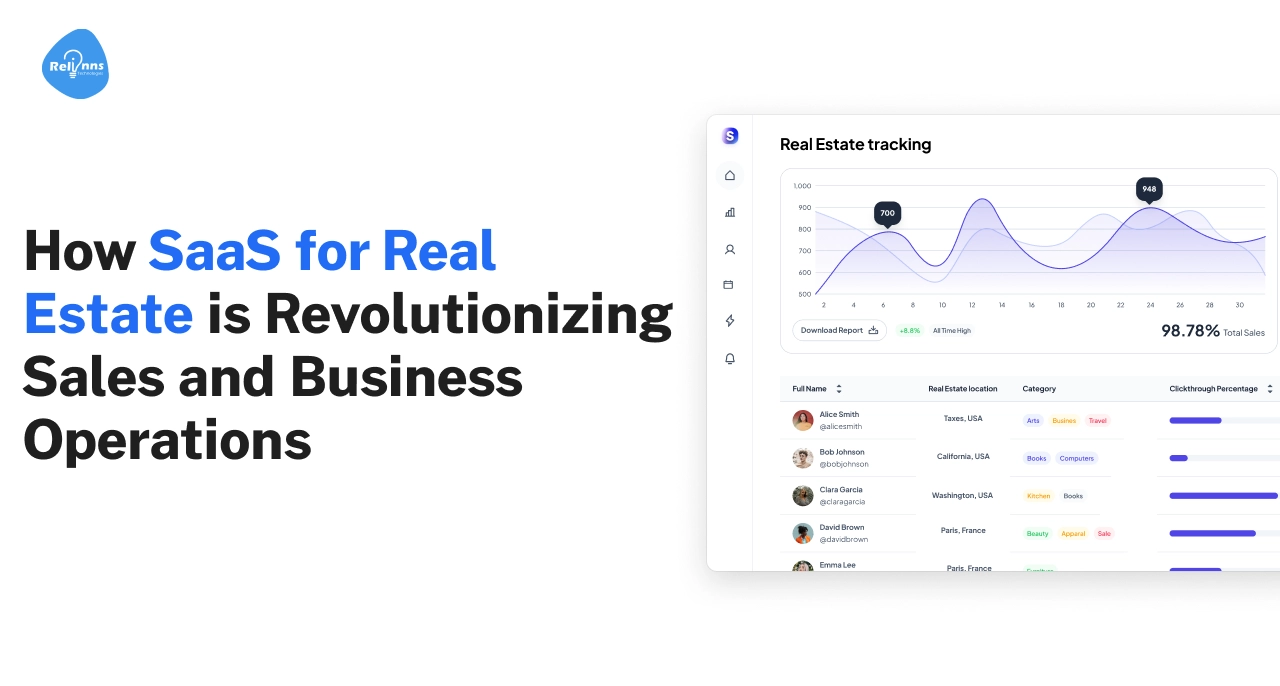
How SaaS for Real Estate is Revolutionizing Sales and Business Operations
Date
Jan 08, 26
Reading Time
12 Minutes
Category
Custom development
Share


When to Build a Custom Solution vs Using Off-the-Shelf: Complexity is skyrocketing in real estate.
Dozens of listings, scattered client data, and heavy paperwork slow down brokers and agents. Managed on spreadsheets and siloed tools, deals slip through the cracks, and marketing falls behind.
SaaS for real estate offers a cloud-based fix: one unified platform that automates sales and operations end-to-end.
This article explores how modern real estate software transforms brokerages and agencies – from new lead capture to streamlined closings – and why now is the time to adopt it.
Real estate firms face challenges such as disconnected listings, cumbersome lead tracking, slow follow-ups, and manual paperwork. Traditional workflows rely on faxed contracts, email chains, and offline calendars, costing time and revenue.
Enter real estate SaaS: cloud-hosted software built for property inventory, contacts, and transactions.
In the sections below, we’ll define SaaS for real estate, review its core features, and show how agents and managers use it to boost sales and efficiency.
What Is SaaS for Real Estate (and Why It Emerged)?
SaaS for real estate is a cloud platform that delivers property and sales tools over the internet, rather than on-premises software.
These platforms are subscription‑based and hosted remotely, allowing agents to log in from any device. Key traits include immediate updates, automatic backups, and pay-as-you-go pricing.
In practice, a SaaS real estate system handles listings, clients, transactions, and reporting in one place – no servers or IT installs required.
This model emerged because traditional brokerage tools were too rigid. For years, offices juggled multiple software licenses and manual workflows. SaaS for real estate agents and firms fixes that by centralizing everything.
In short, SaaS emerged to automate legacy paper‑heavy processes and keep pace with today’s fast‑moving real estate market.
Core Modules & Features of Real Estate SaaS Platforms

Modern real estate SaaS platforms streamline operations by unifying property listings, lead management, and automated workflows into a scalable, cloud-based ecosystem, driving efficiency and improving client experiences for growing brokerages.
1. Property Listing & Management
A centralized inventory of every property.
SaaS platforms enable agents to create a single database for all listings, including photos, pricing, and status updates.
Every team member sees the same live listing information.
This eliminates duplicate entries and errors caused by old spreadsheets. Mobile apps and web portals let agents update listings in real time from showings or the office.
70% of property managers now rely on cloud tools for leasing, maintenance, and tenant communications. This mirrors our industry’s shift: most listings are managed online today.
Automated workflows trigger alerts when listing status changes (e.g., sold, rented), so clients and agents always have up-to-date information.
Uploading photos and floor plans is streamlined; some systems automatically tag images and match them to the correct listing, reducing manual effort.
2. Lead Management & Real Estate CRM
Every contact, lead, and deal in one place.
Modern SaaS CRM modules capture inquiries from websites, email, and ads, and automatically link them to specific listings.
Agents can track prospects through the sales funnel – from first contact to closing – using a single dashboard. The platform records calls, meetings, and notes, so no lead is ever lost in a mailbox.
The first responder wins 35–50% of sales. SaaS automates fast follow-ups: 90% of inquiries get automated email or text replies within seconds, making capture easier.
Responding to a lead in 5 minutes is 10× more likely to result in contact. The built-in CRM accelerates response times by sending reminders and templated messages, driving conversions.
Sophisticated dashboards show lead sources (referrals, web ads, walk-ins) and conversion rates. Agents see which channels attract the hottest buyers, and managers can automatically reallocate marketing spend.
3. Sales Automation & Workflow Automation
Turn repeating tasks into automated actions.
SaaS for real estate sales automation means the software handles routine steps that used to tie up agents.
For example, when a new lead signs up, the system can automatically assign it to an agent, create a task to schedule a tour, and log every email sent. As the deal progresses, status changes are published automatically (e.g., from “Offer Made” to “Under Contract”).
This ensures consistency and frees agents to focus on clients rather than clerical work.
By automating invoice entry, approvals, and communications, firms report saving 15–20 hours per week in admin labor.
Intelligent automation reached 70–80% autonomy in just a few months at some firms, meaning most workflows run without manual steps.
Manual data entry was slashed by 50%. One builder reduced invoice processing time from 2 minutes to 1 minute, effectively doubling productivity.
Suggested Reading: How Project Tracking Automation Elevates Real Estate Development
4. Multi-Channel Communication & Scheduling
Reach clients on their preferred channel.
SaaS platforms enable agents to email, text, call, or chat with leads from a single interface. Many systems include built-in email/SMS templates, and some integrate WhatsApp or social chat.
Scheduling tools sync with agents’ calendars and client availability – even handling requests for virtual tours or open houses. This omnichannel reach means no matter how a customer wants to communicate, the team responds fast.
82% of customers expect a reply within 10 minutes. By combining phone, email, and messaging into a single SaaS platform, brokers meet that demand.
Integrated scheduling reduces no-shows: clients see agents’ live calendars when requesting appointments, and reminders are sent automatically.
Virtual tour scheduling and online showings are built in. Agents can create booking links that prospects use to view the calendar and select viewing times.
5. Analytics & Reporting Dashboards
Real-time insights to guide decisions.
The platform continuously collects data on listings, leads, and sales, then displays it in intuitive dashboards. Managers see which neighborhoods or types of properties are hottest, and how agents are tracking toward quotas.
Custom reports can automatically send daily or weekly updates to leadership. With this intelligence, brokers can adjust pricing, marketing and staffing faster than ever.
Key performance metrics (lead response times, conversion rates, and pipeline velocity) are updated live.
Data centralization breaks silos: all listings, client interactions, lease terms, and financials feed into unified charts.
Long-term trends help forecast revenue. By analyzing past sales cycles and current inventory, SaaS tools can even suggest pricing changes.
6. Scalability & Multi-User Access
Grows as your business grows.
SaaS platforms support teams of any size, from a single broker to national brokerages. New users and branches can be added in a few clicks, without purchasing additional servers.
Role-based permissions ensure that sales agents only see their own leads, while managers can access data firm-wide. Because it’s cloud-based, teams in different cities (or countries) can collaborate seamlessly.
There are no infrastructure limits: offices can add hundreds of agents in minutes. Enterprise SaaS solutions handle thousands of concurrent users automatically.
All data is replicated and backed up by the provider. If one office experiences an outage, staff in other regions remain online and can pick up extra work without downtime.
Multi-user editing of shared records is built in. For instance, two agents can work on the same client profile or listing at once, and the system merges updates in real time.
7. Data Centralization & Unified Management
One source of truth for everything.
By design, SaaS consolidates all property, client, and transaction data into a single database. Gone are the days of separate Excel sheets for leads, a Word doc for contracts, and a legacy app for accounting.
Everyone – sales, finance, maintenance, and marketing – works in the same system. This unified architecture means data updates propagate automatically: change a listing price in one place, and it’s updated everywhere (website, apps, reports).
Business Benefits of Implementing SaaS for Real Estate

SaaS for real estate is more than a software upgrade; it’s a performance multiplier.
It improves how agents sell, how teams collaborate, and how businesses grow. With real estate software, firms reduce costs, increase lead conversions, and deliver better client experiences.
In this section, we’ll focus on the practical returns that SaaS delivers across operations, sales, and customer engagement.
- Cost-Effective and Low Investment: Agencies pay a monthly fee instead of investing in servers or licenses.
- Accessible and Flexible: Agents can work from anywhere using any internet-connected device.
- Improved Operational Efficiency: Automation reduces manual work and saves up to 20 hours per week.
- Seamless Scalability: New users and offices can be added instantly without technical setup.
- Centralized Data Management: All property, client, and sales data is unified in a single real-time system.
- Better Sales Conversions: Fast responses and automated follow-ups help close more deals consistently.
- Enhanced Client Experience: Buyers and owners get instant updates, online access, and digital document handling.
Types of Real Estate SaaS Use Cases / Segments

Real estate SaaS suits many industry niches. Its flexibility allows modules to be mixed and matched across different segments.
1. Residential Agencies & Brokers
These firms need strong lead conversion, MLS/inventory integration and digital marketing tools.
SaaS platforms centralize buyer/seller databases and automate online listing syndication. Agents benefit from built-in CRM features tailored to home sales.
2. Property Developers & Builders
Developers selling new projects use SaaS to manage pre-sales, booking inventories, and construction milestones.
They often require features for bulk pricing, quotation tools, and connectivity to financial modules. Cloud platforms enable multiple sales offices to track a development’s progress in a single system.
3. Rental Property Managers / Landlords
For rental management, SaaS offers tenant portals, automated lease renewals, and maintenance tracking.
Landlords use integrated payment collection (rent automation) and expense reporting to run properties efficiently. Portfolio managers can onboard new properties and tenants in minutes, all under one roof.
4. Commercial Real Estate Firms
Commercial brokers use SaaS to handle complex leases, co-working space allocations, and investor reporting.
These firms rely on robust data segmentation (by asset class or geography) and advanced analytics. SaaS helps them conduct pro-forma financial modeling and manage property value optimization.
5. Hybrid Brokers (Sales & Rentals)
Many brokerages handle both the sale and leasing of homes.
SaaS suits these mixed desks by supporting both purchase and rental workflows side-by-side. One agent’s dashboard tracks sales contracts, while another’s monitors rent payments – all in the same software family.
6. Multi-Branch/Franchise Agencies
Larger networks of offices find SaaS ideal for franchising. Each branch can customize its sales pipeline and branding, yet corporate still oversees company-wide standards.
SaaS makes it easy to share best practices and personnel across cities, while keeping data separated by office.
Across all these segments, SaaS excels by being configurable to focus on the needs that matter.
The same platform can serve a single-agent real estate agent with basic listing and CRM tools, or a multinational developer with multi-currency accounting – simply by choosing relevant modules and integrations.
This adaptability is why B2B SaaS for real estate is expanding into niche solutions (such as student housing SaaS or vacation rental platforms).
Trends & Innovations in Real Estate SaaS

Real estate SaaS is evolving quickly as new demands reshape the industry. Technology is advancing, and platforms are becoming more innovative, mobile, and specialized.
This section highlights the key innovations driving change in real estate software and their implications for the industry's future.
Niche and Vertical Platforms
Niche SaaS platforms target specific property segments.
Vendors tailor tools for faster market adoption.
Mobile-First SaaS
Most agents rely on mobile devices daily.
SaaS platforms now prioritize mobile-first access.
AI and Machine Learning
AI tools suggest pricing and forecast demand.
Predictive analytics helps accelerate deal closure.
Immersive Tech
Virtual tours and 3D tools are integrated.
Consumer demand is driving the adoption of immersive tech.
Wider Adoption by SMBs
Small and midsize firms are now adopting SaaS.
Over 75 percent use cloud-based software.
IoT and Smart Buildings
SaaS platforms now integrate with IoT sensors.
IoT enables automated property maintenance triggers.
These trends mean SaaS for real estate isn’t just a fad; it’s rapidly improving and aligning with new buyer expectations.
Early adopters gain a competitive edge in efficiency and customer experience.
SaaS?
Why Build Custom: If your brokerage or developer has very unique workflows or regulatory needs, a custom cloud system may be justified.
For example, a commercial firm handling complex financing structures might need specialized data fields or integrations that generic real estate software lacks.
When Off-the-Shelf Works: Many real estate operations can be served by existing SaaS solutions. Small agencies or standard residential brokerages typically benefit more from proven platforms than from new development.
If your needs are everyday – for example, simple MLS integration, lead capture, basic accounting – a SaaS product will cover it out of the box.
Situation | Use Custom SaaS | Use Off-the-Shelf SaaS |
| Business has unique workflows or regulatory constraints | Yes – build to match your exact needs | No – limited flexibility may not support custom rules |
| You need fast deployment and low upfront cost | No – development takes longer and costs more | Yes – quick to implement and affordable to start |
| Team uses specialized data fields or complex sales models | Yes – tailor the platform to fit your processes | No – standard fields may not meet all requirements |
| Business operations are standard and industry-aligned | No – custom build is unnecessary | Yes – proven templates work well for typical workflows |
| Flexibility and control over the software is a priority | Yes – you own the logic, features, and updates | No – vendor controls roadmap and limitations |
| You expect frequent scaling or integrations | Yes – scalable architecture with full integration control | Yes – scalable within the platform’s structure |
| Need to reflect strong branding and custom UI | Yes – full control over interface and user journey | No – limited branding customization options |
| Budget is tight, or the internal team is small | No – not ideal due to higher costs and maintenance | Yes – minimal setup with vendor-led support |
Choosing Your Path: Evaluate your pain points versus your budget. If no SaaS solution matches critical workflows, or if brand uniqueness is a top priority, custom development makes sense. Otherwise, leverage off-the-shelf tools to accelerate results.
In practice, some hybrid approach often works: start with a core SaaS platform and customize around it (via integrations or low-code extensions) rather than building everything from scratch.
How to Evaluate & Choose the Right Real Estate SaaS Platform (or Build Custom)?
Evaluating these criteria will help you determine if a known SaaS solution fits or if a custom approach (perhaps built on a low-code SaaS framework) is needed.
The goal is to align technology with your business strategy, not the other way around.
- Core Functionality: Does the system handle listings, CRM, lead tracking, sales workflow, and property management? Ensure it covers all necessary modules for your segment.
- Scalability & Multi-User Support: Can it grow with your team? Verify multi-branch permissions and the ability to add unlimited users without performance loss.
- Mobile & Remote Access: A top SaaS platform should have full mobile apps or a responsive web design. Agents sometimes need to work offline, so look for robust mobile features and synchronization.
- Customization & Flexibility: How many custom fields, reports, or workflow rules can you define? Some SaaS solutions offer tailored pipelines; others are rigid. If you have unique data needs, check how extensible it is.
- Integration Potential: Can you connect the SaaS to your other tools (marketing automation, ERP, payment gateways, MLS services)? Look for open APIs and pre-built connectors.
- Cost Model: Understand the pricing – per user per month, per seat, or tiered features? Also factor in one-time setup fees or training costs. Remember that while SaaS avoids large upfront capex, total subscription spend over the years can add up.
- Security & Compliance: Real estate data includes sensitive personal information. Review the vendor’s security measures: encryption, backups, and compliance certifications.
- User Experience: The platform should have an intuitive UI – agents should spend minutes learning it, not months. Poor UX leads to low adoption.
- Support & Training: Check what customer support is offered (24/7 support, dedicated account rep). Also, ensure there are training resources. Smooth onboarding is crucial, so a SaaS vendor that offers implementation support may be worth the premium.
- Future Readiness: Can the platform easily add modules later (like advanced analytics, AI pricing, or IoT integrations)? A modular SaaS with a growing partner ecosystem will better adapt to future real estate tech trends.
Challenges and Limitations to Consider with SaaS for Real Estate
By planning for these challenges up front, training teams, ensuring connectivity, and carefully mapping data flows, firms can avoid the common pitfalls of SaaS rollout.
In many cases, the long-term benefits still far outweigh the initial effort.
Internet Dependence
- Cloud platforms need strong and stable internet access
- Poor connectivity can disrupt agent productivity
- Offline mobile access is essential for remote areas
Data Security & Privacy
- SaaS platforms handle sensitive client and property data
- 45% of firms worry about data security risks
- Use encryption, 2FA, and regular backup systems
Less Customization (Off-the-Shelf)
- Packaged SaaS may not fit unique workflows
- Agencies often adjust processes to match software
- Niche needs may require custom-built SaaS modules
Migration Effort
- Data migration from old systems needs planning
- Cleaning and mapping legacy data is challenging
- Teams may face early dips in productivity
Staff Adoption & Training
- Teams may resist switching to digital tools
- Agents need training to adopt new software
- Strong leadership improves adoption and team buy-in
Ongoing Costs
- SaaS subscriptions create ongoing monthly or yearly costs
- Long-term spend may exceed traditional software expenses
- Track licenses to avoid paying for unused seats
Conclusion: SaaS for Real Estate: A Smarter Way to Scale
Adopting SaaS for real estate is not just about staying current.
Cloud-based platforms unify operations, automate sales, and equip agencies to grow faster and serve clients better.
Whether you are a small brokerage or a nationwide firm, the right SaaS solution turns complexity into clarity and drives measurable results.
Why Choose Relinns for Real Estate SaaS?
Relinns helps real estate businesses move faster with custom SaaS platforms built to match your workflows, not the other way around.
With expertise in low-code development and real estate operations, we deliver flexible, scalable systems tailored to your growth.
- Platforms built with 90% fewer manual workflows through automation and intelligent routing
- Clients report a 50% reduction in listing-to-closure timelines after implementation
- Up to 40% higher lead conversion rates using integrated CRM and follow-up tools
- 95% system uptime across distributed teams using mobile-first architecture and cloud hosting
Frequently Asked Questions (FAQ's)
How can SaaS for real estate agents improve client retention?
SaaS for real estate agents enables personalized follow-ups, automated reminders, and transparent deal tracking, helping agents stay responsive, build trust, and strengthen long-term relationships with buyers and sellers.
What should B2B SaaS for real estate include for enterprise teams?
B2B SaaS for real estate should support multi-branch operations, custom role-based permissions, integrations with CRMs and ERPs, and reporting features aligned with enterprise KPIs and sales pipelines.
Does SaaS for real estate sales automation work for rental properties as well?
Yes, real estate software with sales automation can also streamline rental processes by automating viewings, generating lease documents, and sending timely rent-collection and renewal reminders.