SaaS Compliance for Financial Services: Ensure End-to-End Regulatory Readiness
Date
Dec 15, 25
Reading Time
7 Minutes
Category
Custom development
Share


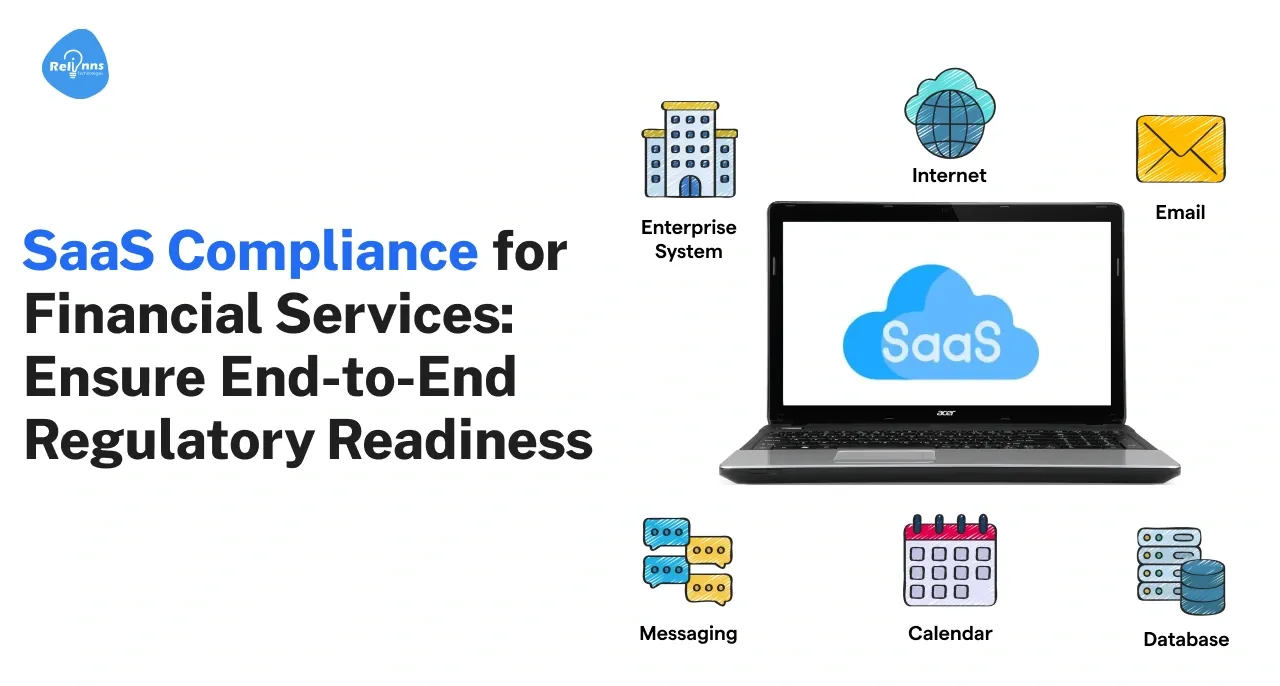
Regulatory compliance in banking is no longer a back-office concern; it’s a boardroom imperative.
In an era of evolving global regulations, financial institutions must manage compliance not as a one-time check but as a continuous, auditable process. Yet legacy systems and manual workflows fall short.
That’s where custom SaaS compliance platforms emerge as a game-changer.
SaaS Compliance for Financial Services isn’t just about meeting legal requirements. It’s about automating, securing, and scaling compliance across borders and business units with agility.
In this article, we’ll explore how secure SaaS-based automation platforms for financial services compliance modernize banking workflows. We’ll break down the architecture, key features, and use cases.
What is Regulatory Compliance in Banking?
Regulatory compliance in banking refers to a financial institution’s adherence to laws, regulations, and guidelines issued by regulatory bodies such as the RBI, SEC, and Basel Committee.
These compliance standards ensure transparency, prevent financial crimes, protect consumer data, and maintain the stability of the global economic system.
In today’s digital-first world, compliance isn’t just a legal obligation; it’s a strategic imperative.
Non-compliance can result in hefty fines, reputational damage, and even operational shutdowns.
Therefore, banks and financial institutions are increasingly turning to digital solutions, particularly custom SaaS (Software-as-a-Service) platforms, to proactively manage their regulatory obligations with greater speed, accuracy, and auditability.
When and Why to Use Custom SaaS Compliance Solutions?
Traditional banking systems are often siloed, legacy-bound, and ill-equipped to keep pace with dynamic regulatory changes. The introduction of region-specific compliance acts has made it essential for banks to adopt modular, agile tools that can rapidly adapt to new rules.
Custom SaaS compliance solutions offer precisely that.
By centralizing rule management, automating compliance workflows, and integrating real-time audit trails, these solutions enable banks to operate safely and confidently in an ever-changing regulatory environment.
Financial services firms deploy SaaS-based compliance solutions when
- Regulations frequently change and must be updated in real time.
- Multiple teams and departments must align with compliance reporting.
- There’s a need to integrate compliance directly into day-to-day operations.
What are the Implementation Approaches for SaaS Compliance in Banking
Implementing SaaS Compliance for Financial Services requires a structured strategy that ensures both regulatory accuracy and operational efficiency.
The right approach helps banks automate oversight, simplify audit trails, and maintain compliance across jurisdictions.
Below are three scalable models banks use to effectively deploy secure SaaS-based automation platforms (such as Joget) for financial services compliance.
Banks can implement SaaS compliance in three key ways.
1. Horizontal Compliance SaaS Platforms: These platforms (like Joget) provide general-purpose compliance and workflow automation modules that can be customized based on each bank’s specific needs.
2. Verticalized Regulatory Solutions: These cater specifically to domains like anti-money laundering (AML), Know Your Customer (KYC), or loan origination compliance. Vendors like NICE Actimize and Fenergo offer specialized platforms.
3. Hybrid or Modular Platforms: Some banks opt for hybrid setups where general compliance workflows are handled by low-code/no-code tools, while critical modules integrate with third-party RegTech APIs.
A best-fit approach typically combines custom SaaS infrastructure with domain-specific modules for maximum control and agility.
Implementation Steps for Custom SaaS Compliance in Banking
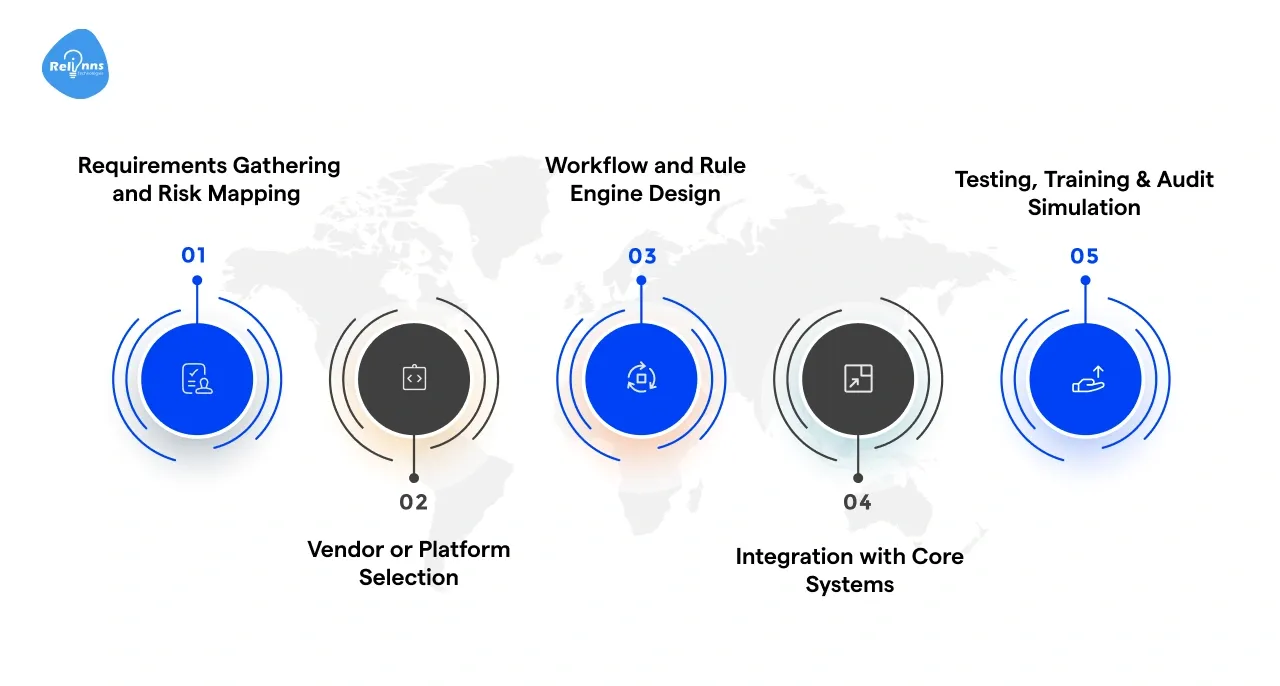
Rolling out a custom SaaS compliance system in the banking sector requires a sequential, well-governed approach.
Each step should align with key regulatory frameworks and business needs, particularly when automating processes such as loan approvals, fraud detection, and risk monitoring.
Below are the essential phases that financial institutions follow to ensure a smooth, compliant SaaS adoption.
Successfully launching a regulatory compliance SaaS system involves structured planning and cross-functional buy-in. Here’s a typical 5-step process.
1. Requirements Gathering and Risk Mapping
Banks must first audit all applicable laws (local and international) and identify internal risk areas. This includes data storage, transaction tracking, user privacy, reporting obligations, and more.
Suggested Reading: The Role of AI Risk Management in Modern Finance
2. Vendor or Platform Selection
Whether building on a low-code platform or partnering with a SaaS vendor, the selection should prioritize flexibility, scalability, and integration capabilities. Solutions like Joget offer a modular design that fits compliance goals.
3. Workflow and Rule Engine Design
Teams then build business rules for validation, escalation, alerts, and task assignment. Custom dashboards, form validations, and audit logs are configured to reflect regulatory checkpoints.
4. Integration with Core Systems
The SaaS solution is then integrated with the bank’s core systems (CRM, transaction engine, audit logs, etc.) using APIs. This ensures compliance automation is embedded within every banking workflow.
5. Testing, Training & Audit Simulation
Finally, banks must simulate real-world audits using dummy data and train compliance and IT staff. Post-launch reviews and periodic updates are crucial for long-term success.
What re the Key Benefits of SaaS in Regulatory Compliance
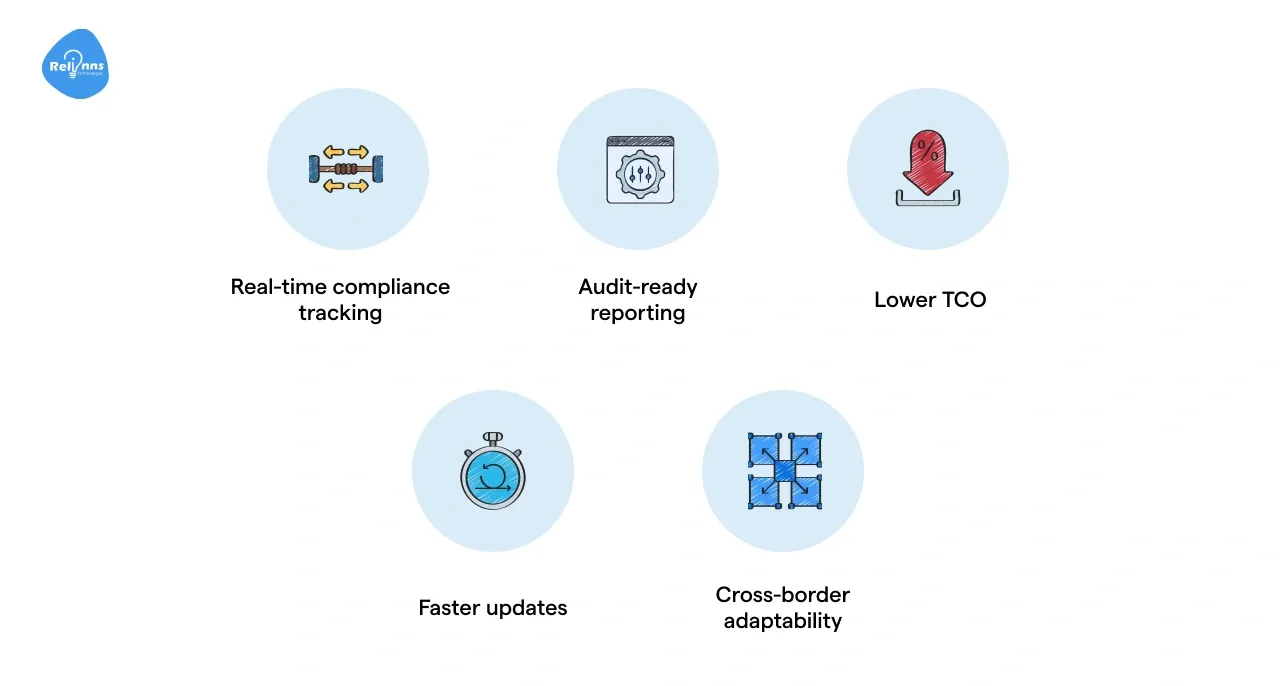
SaaS-based solutions have transformed compliance from a reactive burden into a proactive competitive advantage.
Let’s explore why more banks are investing in them.
Before diving into the bullet points, it’s important to highlight that traditional compliance operations involve manual audits, fragmented reporting, and delayed alerts, all of which increase the risk of non-compliance.
SaaS automates and unifies these tasks.
Benefits Include
- Real-time compliance tracking: Always-on monitoring of key compliance indicators, reducing manual overhead.
- Audit-ready reporting: Generate customizable compliance logs for internal or external audits within minutes.
- Lower TCO: Cloud-native architecture cuts infrastructure and workforce costs.
- Faster updates: New laws and regulations can be coded into workflows instantly.
- Cross-border adaptability: Adapt workflows to match regulatory requirements across geographies.
These advantages make SaaS compliance a strategic investment, not just a legal necessity.
What are the Disadvantages of Legacy Compliance Systems
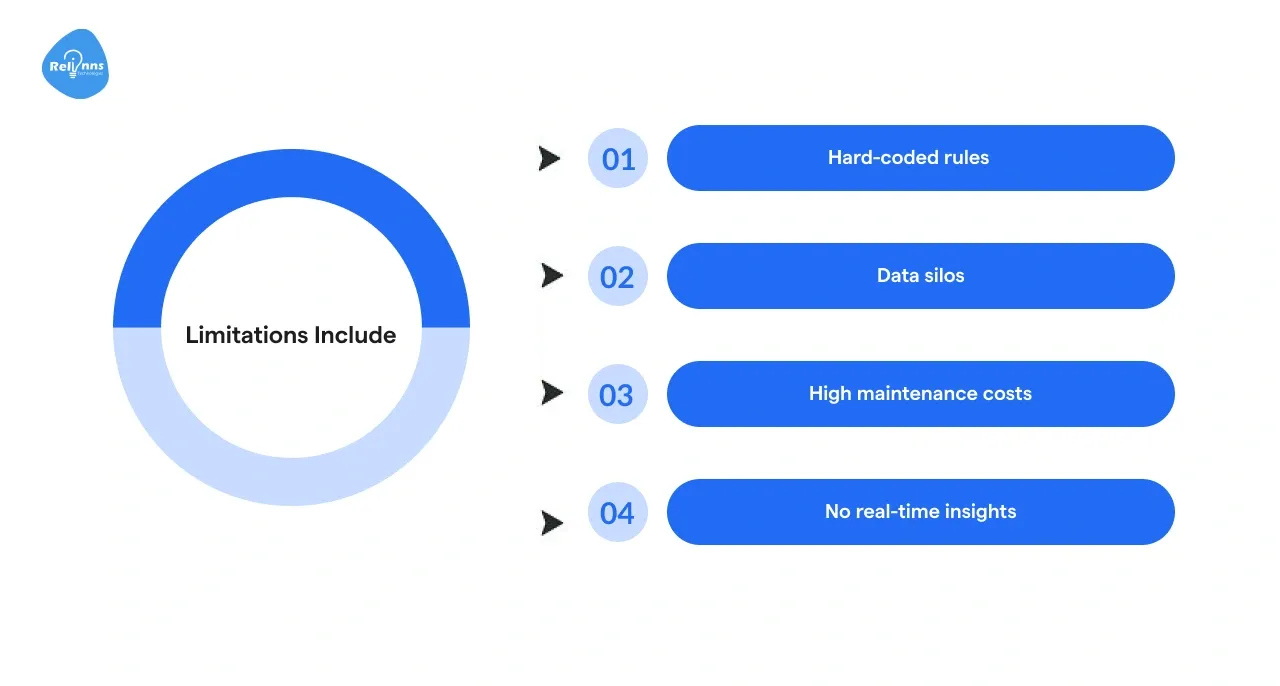
Despite their prevalence, legacy systems present serious challenges in today’s regulatory environment.
They are often incompatible with evolving fintech ecosystems and require heavy customization for every regulatory change.
Before we list the limitations, it’s essential to understand why banks are actively replacing or supplementing their legacy systems with custom SaaS.
Limitations Include
- Hard-coded rules: An inflexible architecture delays the implementation of new laws.
- Data silos: Disconnected departments prevent unified compliance reporting.
- High maintenance costs: Custom patches and manual fixes inflate IT budgets.
- No real-time insights: Delayed alerts expose the institution to operational and legal risks.
Replacing these systems with agile SaaS solutions ensures proactive and cost-effective compliance operations.
Banking SaaS Compliance Case Studies
Let’s see real-world banking institutions apply SaaS automation at scale to address compliance bottlenecks and prove that platforms deliver measurable operational results.
1. McKinsey Insight — Agentic AI for Compliance and AML/KYC Automation
A global universal bank deployed AI-driven automation across its KYC/AML lifecycle, moving from manual tasks to more autonomous, software-enabled workflows that integrate data extraction, customer profiling, screening, and reporting into a single automated chain.
Impact:
- Manual data processing and analyst workload significantly reduced as AI components automated extraction, classification, and consistency checks across unstructured data sources.
- Compliance workflows moved from periodic to more continuous, digital-first review cycles (e.g., real-time risk screening and evidence generation).
- Productivity gains cited ranged from 200 % to 2,000 % of traditional manual output in targeted compliance teams (i.e., human analysts supervising multiple AI agents).
Reference: McKinsey & Company
2. Industry Example — Deutsche Bank & JPMorgan Chase RegTech Implementation
Context: In a RegTech trend overview (banking industry focus), two top global institutions integrate advanced automated systems for fraud risk and compliance workflows:
- Deutsche Bank partnered with an AI-driven real-time screening tool for fraud and risk evaluation embedded into core payment systems, improving fraud detection and compliance coverage.
- JPMorgan Chase implemented machine learning models for real-time transaction monitoring and anomaly detection, minimizing false positives and enhancing compliance resolution speed.
Impact:
- Real-time evaluation of high-risk transactions enabled faster compliance action and reduced manual-review bottlenecks.
- Both banks reported measurable improvements in false-flag rates and operational efficiency through automation.
Reference: bankingfrontiers.com
3. American Bankers Association Reporting — AI for Compliance at Community Banks
Community and regional banks such as American National Bank piloted AI tools to help compliance teams manage third-party risk and documentation-intensive compliance processes.
Impact:
- Document review times dropped from multiple days to minutes when automated tools were deployed for risk document analysis.
- Banks gained broader oversight over compliance gaps without significant incremental headcount, allowing compliance teams to focus on strategic risk assessment rather than manual checks.
Reference: ABA Banking Journal
SaaS vs Traditional Compliance Software
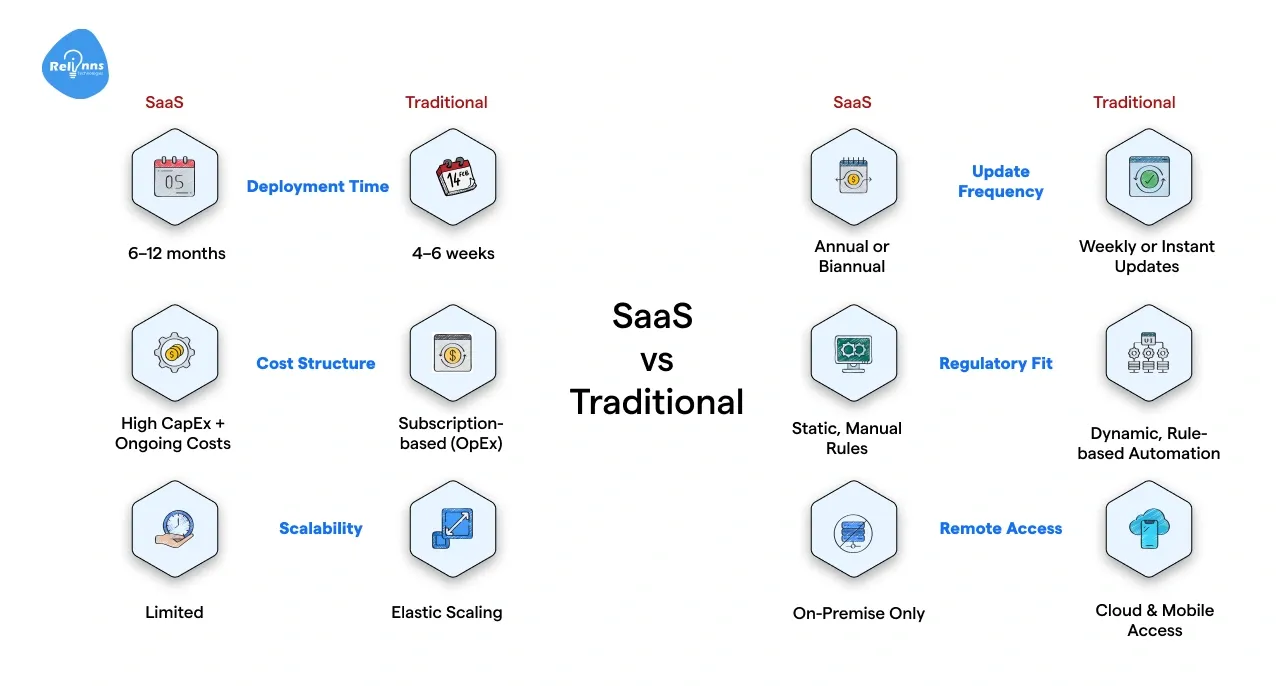
Understanding the differences between SaaS and traditional systems helps stakeholders make informed investment decisions. Below is a comparison.
Feature | Traditional Compliance Software | SaaS Compliance Solution |
Deployment Time | 6–12 months | 4–6 weeks |
Cost Structure | High CapEx + Ongoing Costs | Subscription-based (OpEx) |
Scalability | Limited | Elastic Scaling |
Update Frequency | Annual or Biannual | Weekly or Instant Updates |
Regulatory Fit | Static, Manual Rules | Dynamic, Rule-based Automation |
Remote Access | On-Premise Only | Cloud & Mobile Access |
Clearly, the SaaS model aligns better with agile and scalable compliance needs.
SaaS Compliance for Financing: Tools and Technologies
Modern compliance stacks integrate multiple technologies, from rule-based engines and low-code workflow builders to AI-driven screening and risk-intelligence platforms, to create resilient, audit-ready operations.
At the heart of this transformation is automation of routine compliance tasks and the integration of compliance logic into everyday banking workflows. AI and machine learning models help parse unstructured data, reduce false positives in screening, and generate contextual insights for risk teams.
Similarly, industry analyses show that AI- and automation-powered compliance tools shift compliance from a cost center to a strategic asset, enabling continuous regulatory monitoring, real-time alerts, and faster reporting.
Key Technologies in the Compliance Toolkit
- Low-Code Workflow Automation: Platforms that let compliance architects define, deploy, and iterate business rules visually. These tools accelerate build-times and reduce reliance on traditional development teams.
- AI-Driven Screening and Monitoring: Systems that use machine learning and natural language processing for customer due diligence, sanctions screening, and anomaly detection, lowering false positives and enhancing risk visibility.
- Regulatory Change and Risk Platforms: Tools that continuously ingest regulatory updates, map obligations to internal controls, and drive policy and process adjustments, helping institutions stay ahead of evolving rules.
- Document, Reporting, and Audit Automation: Solutions that automate the creation of compliance evidence, reports, and audit trails, ensuring consistent governance and faster examination readiness.
Why This Matters?
By embedding compliance automation into core processes, organizations can improve accuracy, reduce cost, and shift compliance teams toward higher-value oversight and strategy.
Why Choose Relinns for SaaS Compliance?
Relinns Technologies is a trusted development partner for BFSI clients looking to accelerate compliance modernization using the Joget platform.
With deep expertise in custom workflow design and low-code development, Relinns has helped global banks build audit-ready, regulatory-compliant systems faster and more cost-effectively than traditional approaches.
Relinns offers
- 60% faster time-to-compliance using low-code Joget modules.
- 40% cost savings compared to full-stack builds.
- Modular architecture that supports easy updates.
- Experience across GDPR, PCI DSS, CCPA, and local banking norms.
By leveraging Joget with Relinns, banks turn compliance into a strategic edge.
Conclusion: Embracing SaaS Compliance for Financial Services
Custom SaaS solutions are redefining how banks approach regulatory compliance, shifting the narrative from reactive defense to proactive strategy.
With benefits such as faster deployment, dynamic rule configuration, and cross-border adaptability, SaaS platforms provide a future-ready foundation for financial governance.
Whether you’re a legacy bank looking to modernize or a fintech startup scaling rapidly, SaaS-driven compliance is no longer optional; it’s inevitable.
Platforms like Joget, backed by Relinns’ expertise, ensure your institution stays compliant, agile, and audit-ready, no matter what changes tomorrow brings.
Frequently Asked Questions (FAQ's)
What is SaaS compliance in banking?
SaaS compliance in banking refers to using cloud-based platforms to manage, monitor, and automate adherence to financial regulations, including AML, GDPR, CCPA, and Basel norms.
How does custom SaaS help in loan processing automation?
It ensures data accuracy, supports automatic validation and document tracking, and integrates compliance checks directly into the loan lifecycle, reducing approval time.
Can SaaS platforms handle multi-jurisdictional banking laws?
Yes. SaaS platforms like Joget support modular workflows that can be dynamically tailored to meet different regional compliance standards.
Are SaaS-based solutions secure enough for financial data?
Absolutely. Enterprise-grade SaaS tools offer role-based access controls, data encryption, audit trails, and secure APIs to ensure maximum data protection.
What’s the cost advantage of using SaaS for compliance?
SaaS reduces capital expenditure and operational overhead by offering scalable subscriptions, reducing the need for large IT teams and infrastructure.