Port Management Software: The Complete Guide to Modern Port Operations
Date
Aug 24, 26
Reading Time
12 Minutes
Category
Custom development
Share


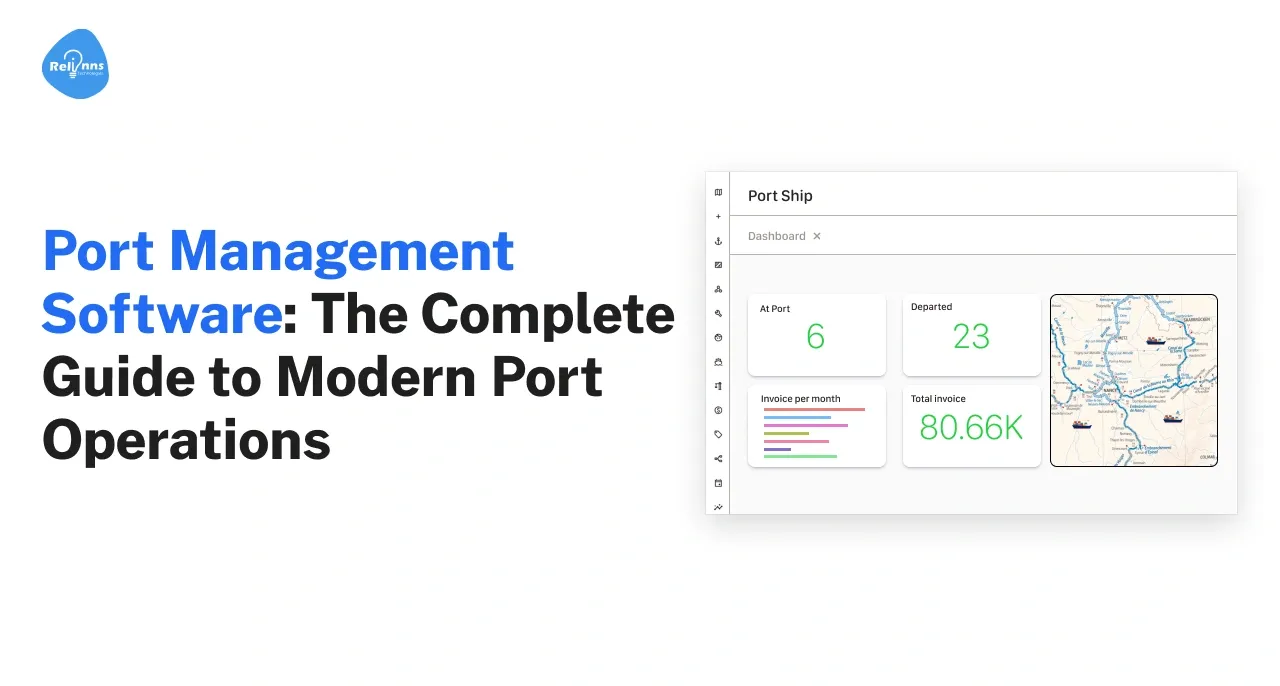
Port operations have become more complex as global trade expands, vessel sizes grow, and turnaround expectations tighten. Traditional workflows built on paper, phone calls, and fragmented systems can no longer support the scale or speed modern ports require.
Delays in vessel scheduling, slow cargo coordination, limited visibility, and siloed data create costly bottlenecks that impact every stakeholder in the maritime supply chain.
To overcome these challenges, ports worldwide are shifting toward port management software also known as seaport management software, port optimization software, or a Port Management Information System (PMIS). These digital platforms replace disconnected processes with unified, real-time coordination across vessels, terminals, equipment, and regulatory authorities.
Smart port software takes this further by enabling automated workflows, IoT integration, AI-driven predictions, and digital twins. This gives ports real-time insight into berth occupancy, cargo movement, environmental metrics, and equipment health, allowing faster decisions, safer operations, and improved service quality.
As global standards move toward intelligent, data-driven port ecosystems, adopting a modern software port operations management solution is no longer optional. It is essential for ports aiming to operate efficiently, meet compliance demands, support rising cargo volumes, and stay competitive in a rapidly evolving maritime landscape.
What is Port Management Software / PMIS / Smart Port Software?
Port management software, also known as a Port Management Information System (PMIS) or seaport management software, is a centralized digital platform that manages every operational, administrative, and regulatory task within a port. It replaces manual processes and disconnected systems with real-time coordination across vessel traffic, berth allocation, cargo handling, yard activities, billing, and compliance.
A PMIS connects all major stakeholders: port authorities, terminal operators, pilots, shipping lines, logistics providers, customs agencies, and harbor regulators, through a unified data and communication network.
This eliminates redundant data entry, reduces errors, and ensures that every decision is based on accurate, live operational information.
Smart port software enhances traditional PMIS capabilities using IoT sensors, AI-powered predictions, digital twins, and automated workflows. These tools enable Just-In-Time vessel arrival planning, optimised berth and crane assignments, proactive equipment maintenance, and real-time environmental monitoring.
Similarly, port optimization software focuses on analytics, simulation, and performance insights to help ports maximize throughput, reduce congestion, and improve resource utilization. “Harbor operations software” typically emphasizes safety, marine traffic control, pilotage, VTS integration, and secure navigational workflows.
In essence, all these terms describe a modern software port operations management solution designed to provide a single operational view. It consolidates vessel schedules, cargo locations, equipment status, gate movements, financial transactions, and compliance documents, making port operations faster, safer, and more predictable.
What are the core features & modules of modern port management software?
Modern port management software is modular and covers a wide range of functions. Each module is designed to streamline a specific area of operations.
Below are eight core features, each explained with key strengths.
1. Vessel Traffic & Scheduling Management
Port management software provides precise real-time vessel tracking and berth scheduling. Using live AIS and radar feeds, it assigns berths and pilots efficiently and automatically updates schedules.
This automated scheduling ensures that ships are serviced on time while minimizing idle time in anchorage.
- Real-time vessel tracking provides 24/7 visibility into arrivals, reducing average wait times by ~20%.
- Automated berth planning improves dock utilization by ~25%.
- Predictive ETA alerts (+90% accuracy) let port staff anticipate delays and proactively reassign resources.
2. Cargo Handling & Inventory Management
This module offers a bird’s-eye view of all cargo flows, from unloading to warehousing.
It integrates with Terminal Operating Systems (TOS) and gate systems to track containers, bulk, and breakbulk cargo throughout the port.
With cargo tracking and predictive analytics, port management software reduces bottlenecks and slashes container dwell times.
- Real-time cargo tracking provides complete visibility of each container, reducing dwell time by up to 30%.
- Automated yard planning optimizes storage, increasing yard efficiency by ~20%.
- Electronic manifests and barcoding cut paperwork errors by >50%, speeding up customs clearance.
3. Asset & Maintenance Management
Ports depend on cranes, vehicles, and infrastructure. The asset management module keeps digital inventories of all equipment and schedules maintenance.
By leveraging IoT sensors and predictive maintenance, it minimizes equipment failures and extends asset life.
Scheduled service alerts and mobile work orders ensure high equipment uptime.
- IoT-enabled condition monitoring on cranes and trucks prevents breakdowns (20% fewer unscheduled stops).
- Automated work orders ensure 100% of planned maintenance tasks are logged.
- Mobile inspections enable technicians to update asset data on the fly, improving responsiveness.
4. Financial & Billing Automation
This feature handles port tariffs, wharfage, pilotage fees, and customer invoicing.
It automates billing cycles and collects fees (port charges, demurrage, etc.) with full audit trails.
Financial modules integrate accounts receivable/payable so that every cargo movement automatically generates the correct charges.
- Automated billing for port services and tariffs reduces invoicing time by ~50%.
- Integrated AR/AP enables ports to process payments faster, reducing days sales outstanding by ~30%.
- Real-time ledgers and dashboards provide instant clarity on revenue and outstanding fees.
5. Compliance & Regulatory Documentation
Ports must comply with customs, immigration, and environmental regulations.
Compliance modules automate document filing (e.g., eManifests, permits) and ensure all data is validated.
Alerts flag missing documents or expired certifications before they cause fines. By digitizing safety checks and audits, the software maintains 100% regulatory adherence.
- Automated customs and clearance processes meet regulations with 100% accuracy.
- Generates reports for IMO, customs, and environmental agencies instantly.
- Audit trails for all documents eliminate penalties for missed filings.
6. Analytics & Reporting
Advanced dashboards and analytics give port managers the data they need.
The software aggregates key performance indicators (KPIs) such as berth occupancy, vessel turnaround times, crane productivity, and yard utilization.
Customizable reports and visualizations help spot trends and forecast demand. Data-driven insights enable continuous improvement of port processes.
- Built-in analytics track KPIs (e.g., turnaround time and dwell time) to support data-driven decisions.
- Custom dashboards alert managers to anomalies (e.g., congestion or delays).
- Automated reporting saves ~90% of the time previously spent manually compiling metrics.
7. Collaboration & Port Community Integration
A port doesn’t operate in isolation. This module acts as a Port Community System, connecting terminal operators, shipping lines, pilots, customs, and logistics providers on a single platform.
All stakeholders share a common data hub for notices, schedules, and documentation.
Collaboration tools (messaging, shared updates) break down silos and keep everyone working with the same real-time information.
- Centralized stakeholder platform dismantles information silos.
- Real-time notifications to all parties reduce miscommunication by 40%.
- Secure document sharing (e.g. charter party, bills of lading) expedites approvals.
8. Terminal & Gate Operations
This module links the port management system with terminal and gate automation. It handles container yard planning, gate entry/exit, and rail/truck integrations.
By syncing with the Terminal Operating System (TOS), it provides end-to-end visibility from quay to yard.
Features like RFID gate scanning and automated truck appointments further streamline traffic flow.
- Integrates seamlessly with TOS for complete cargo chain visibility.
- Automates gate check-ins and yard allocation, reducing gate turnaround by ~25%.
- Syncs vessel arrival data with terminal ops to schedule cranes and trucks in advance.
Why do ports and terminals need port management software? And what are the top business benefits?
Ports face immense pressure to move cargo faster, cut costs, and increase safety. Port management software addresses these challenges with measurable business benefits.
By digitizing operations, ports achieve:
Operational Efficiency & Reduced Delays
Automated vessel scheduling, berth allocation, pilotage coordination, and tug dispatch reduce turnaround times and anchorage delays. By replacing manual workflows with smart port software, ports maintain continuous flow across marine operations and minimize bottlenecks.
Higher Throughput & Resource Utilization
Optimized berth plans, yard strategies, crane assignments, and equipment scheduling help ports increase cargo throughput without expanding physical space. Port optimization software improves resource use, reduces congestion, and enhances multi-terminal performance.
Cost Savings & Lower Overhead
Digitizing paperwork and automating communication eliminates unnecessary labor, fuel waste, and administrative errors. Seaport management software reduces redundancy across marine, yard, and gate operations, lowering overall operating costs.
Transparency & Real-Time Visibility Across Stakeholders
A unified operational view ensures that port authorities, terminal operators, shipping lines, logistics providers, and customs teams have access to the same real-time data. Harbor operations software synchronizes vessel ETAs, cargo readiness, yard capacity, and equipment status, reducing conflicts and improving coordination.
Compliance, Safety & Governance
Automated regulatory workflows support ISPS compliance, customs integration, environmental monitoring, and digital audit trails. Ports can track safety checks, emissions, and certifications in real time using a consolidated PMIS environment.
Scalability & Adaptability
Modular architecture enables ports to scale from single-terminal setups to multi-port ecosystems. As trade volumes grow, port management software adapts by adding new modules, integrating new systems, and supporting larger stakeholder networks without disrupting existing processes.
Better Decision-Making & Strategic Planning
Dashboards and analytics consolidate berth occupancy, crane productivity, dwell times, and yard utilization KPIs. Historical and predictive insights help port authorities and terminal leaders plan capacity, allocate budgets, and optimize long-term investments.
Each of these gains – from 10–20% faster ship calls to millions in operational cost savings – translates into more substantial competitiveness and revenue growth for a port.
Who benefits from port management software?
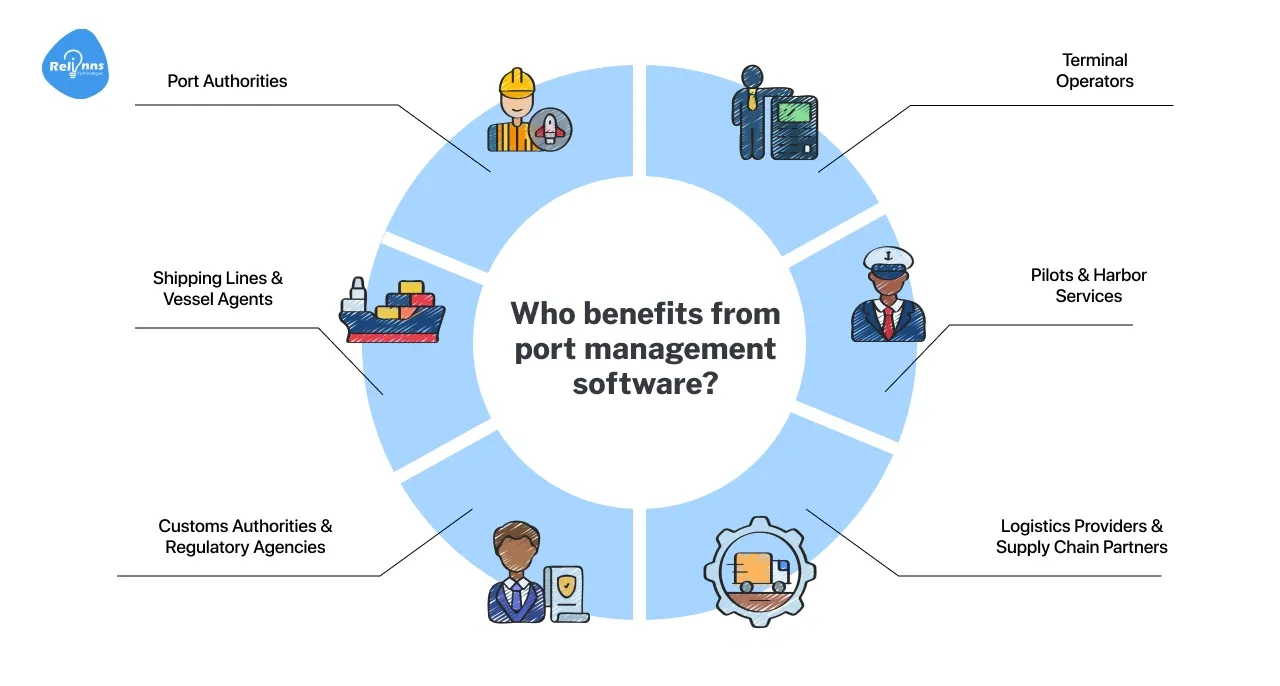
Modern port management software, whether implemented as harbor operations software or as a full port management information system (PMIS), supports all stakeholders involved in marine, yard, terminal, and regulatory operations.
It replaces scattered systems with a single, connected platform that enables faster decision-making, smoother cargo movement, stronger compliance, and consistent collaboration among all parties involved in port operations.
Port Authorities
With PCS-powered PMIS, port authorities get a unified control center that combines berth scheduling, VTS- and AIS-based vessel tracking, pilotage coordination, and marine services dispatch.
Such integration reduces paperwork, speeds up authorizations, and improves safety and compliance across terminals. Ports reported major gains in competitiveness and supply-chain resilience.
Terminal Operators
Terminal operators leverage integrated harbor operations software + TOS + PMIS to manage cranes (ship-to-shore, RTG, RMG), yard planning, gate automation, rail/truck interfaces, and cargo stacking.
Real-time visibility into operations reduces gate congestion, streamlines container handling, eliminates redundant manual tasks and improves throughput often without new physical infrastructure.
Shipping Lines & Vessel Agents
Shipping companies and agents benefit from accurate ETAs, berth assignment updates, cargo readiness notifications, and synchronized scheduling via smart port software. This reduces anchorage waiting times, eliminates communication delays, and improves predictability of ship calls and turnaround times.
Pilots & Harbor Services
Pilots, tug operators, and VTS teams benefit from coordinated traffic management, automated tug scheduling, and real-time vessel tracking through AIS/VTS integrations. This enhances navigational safety, reduces marine-traffic conflicts, and improves operational reliability during high-density or complex traffic scenarios.
Customs Authorities & Regulatory Agencies
Customs and other regulators get access to digitized cargo manifests, EDI/API-based data exchange, and environmental and security compliance records via PMIS.
This accelerates inspections, simplifies clearances, and ensures regulatory adherence (including security protocols and ecological reporting), increasing transparency and reducing administrative delay.
Logistics Providers & Supply Chain Partners
Freight forwarders, trucking firms, rail operators, and inland carriers gain end-to-end visibility, from vessel arrival to cargo handling to gate-in/gate-out, through PCS connectivity. Automated notifications, synchronized scheduling, and unified data sharing enable smoother multi-modal logistics, reduce idle time, and improve reliability of supply chain planning.
Together, these stakeholders form the interconnected Port Community System (PCS). A well-implemented PCS/PMIS connects port authorities, terminal operators, shipping lines, pilots, customs/regulators, logistics providers, and hinterland carriers. This “community-wide” integration reduces duplication, cuts delays, improves data accuracy, and enhances overall port competitiveness and resilience.
Real-world use case: how Vizag Seaport accelerated dispatch and vessel coordination?
Port management software delivers measurable improvements when applied in real operational environments. Real ports use these systems to reduce vessel waiting times, improve yard efficiency, strengthen compliance, and streamline communication among stakeholders.
These examples show how digital transformation creates reliable, scalable, and cost-efficient port operations supported by accurate data and automated workflows.
One of India’s major bulk terminals, Vizag Seaport Pvt. Ltd., faced rising pressure to improve dispatch timelines, eliminate manual errors, and streamline vessel coordination. Their teams relied heavily on paper-driven approvals and siloed communication channels, which slowed cargo movement and impacted berth efficiency.
To address these gaps, the terminal implemented a Joget-powered port management software solution developed by Relinns Technologies. The system unified vessel data, delivery orders, approvals, dispatch workflows, and financial validations into a single, real-time operational platform. This replaced manual processes with automated, audit-ready, and role-based digital workflows.
The Transformation at a Glance
- 72% faster delivery approvals after automating multi-level workflows
- 95% accuracy in cargo balance calculations using real-time dispatch tracking
- 80% reduction in manual calls, emails, and follow-ups
- 30% decrease in vessel idle time due to improved visibility and coordination
- 99.9% uptime during peak operations under a scalable, low-code deployment
These outcomes were achieved by syncing vessel tracking, DO creation, finance approvals, and dispatch logging through a single software port operations management solution, eliminating delays that previously occurred due to fragmented information.
What Relinns Delivered
Relinns engineered a modular, scalable system that supported real-time port operations while remaining easy to adapt and expand. Key capabilities included:
Centralized Vessel Management: Live vessel data arrivals, movement status, cargo type, IMO details fed directly into dispatch workflows, ensuring consistent and accurate information across teams.
Intelligent Delivery Order Processing: Digitized DO creation removed manual entry errors and aligned every request with vessel cargo balances, shift details, and customer data.
Smart Approval Engine: Predefined rules routed approvals to vessel, commercial, and finance teams with automated escalations for critical quantities.
Finance & Compliance Monitoring: A structured layer validated cargo quantities, audit logs, approvals, and compliance records before dispatch.
Dispatch Officer Workspace: On-ground staff received mobile-responsive tools to manage dispatch entries, track movement timelines, and print approved slips instantly.
Real-Time Dashboards & Analytics: Vessel-wise and shift-wise dashboards improved visibility into pending approvals, cleared DOs, cargo balances, and movement logs supporting faster decisions.
This foundation mirrors the architecture expected of modern smart port software and is structured to integrate with ERP platforms, PCS ecosystems, and future IoT/VTS/AIS data streams.
What are the trends & the future of port management software?
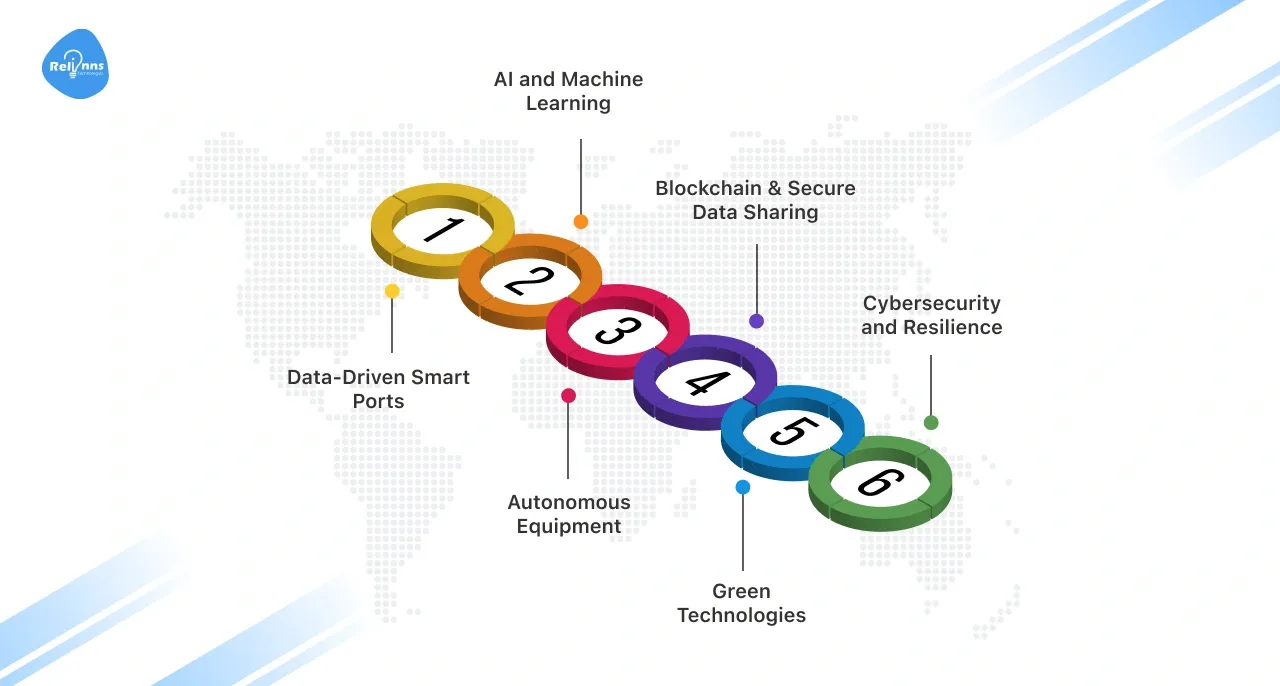
Port management is rapidly evolving under new technologies and business trends. Looking ahead, major forces shaping this sector include.
Data-Driven Smart Ports
- Digital twins simulate port operations for accurate predictive planning.
- IoT sensors provide real-time data across critical port activities.
- Analytics optimizes berth usage and crane allocation for efficiency.
AI and Machine Learning
- AI predicts failures early and improves planned maintenance activities.
- Intelligent algorithms adjust berth allocations for smoother vessel flow.
- Machine learning enhances yard planning and overall cargo movement.
Autonomous Equipment
- Autonomous vehicles enable safer, faster yard operations.
- Automated cranes improve accuracy and reduce operational workload.
- Drones inspect structures efficiently and enhance maintenance planning.
Blockchain & Secure Data Sharing
- Blockchain secures cargo records with verified digital entries.
- Tamper-proof documentation increases trust between port stakeholders.
- Reduced paperwork improves processing speed and operational transparency.
Green Technologies
- Shore power reduces emissions during vessel port stays.
- Electrified equipment lowers fuel use in daily operations.
- AI routing optimizes ship speed for greener performance.
Cybersecurity and Resilience
- Cybersecurity tools protect port systems from digital threats.
- Encryption safeguards sensitive operational and cargo information.
- Resilient architectures maintain uptime during unexpected disruptions.
In summary, port management software is moving into an era of intelligence and connectivity.
Ports are no longer isolated terminals but data hubs in global supply chains. Industry reports emphasize that adopting cloud, IoT, and AI is no longer optional – it’s essential for competitiveness.
Over the next decade, ports that leverage these trends can expect major leaps in efficiency, safety, and sustainability.
How to evaluate & implement port management software?
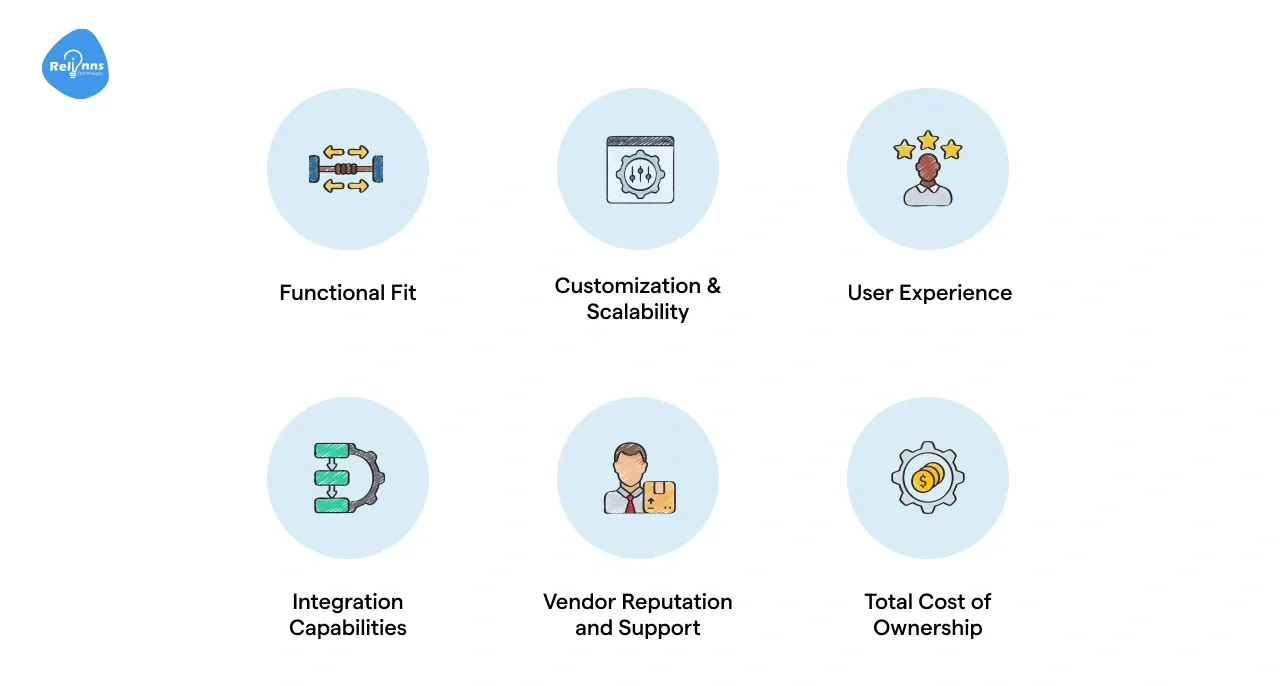
Selecting the right port management system requires thorough evaluation. Key considerations include the following.
Functional Fit
- Confirm real-time tracking supports vessel and cargo visibility.
- Check TOS integration improves yard planning and scheduling accuracy.
- Ensure analytics and e-Manifest tools strengthen compliance visibility.
Customization & Scalability
- Modular tools adapt easily to changing operational requirements.
- Configurable workflows let ports customize processes without complexity.
- Cloud platforms scale features smoothly as port needs grow.
User Experience
- Intuitive design helps staff learn faster with confidence.
- Mobile access supports field teams during busy operations
- Clear dashboards improve decision-making and response speed.
Integration Capabilities
- System integrations ensure smooth communication across existing platforms.
- Standards like EDI enable reliable multi-system data exchange.
- RFID and billing connections simplify automated operational workflows.
Vendor Reputation and Support
- Experienced vendors understand complex maritime operational requirements.
- Proven case studies confirm reliability and successful deployments.
- Strong support teams maintain uptime and resolve issues.
Total Cost of Ownership
- Evaluate total costs, including hardware and long-term maintenance.
- Consider customization needs based on operational complexity.
- Assess ROI to ensure efficiency gains justify investment.
Implementation is as important as selection. It should be phased and piloted. Typically, ports start with high-impact modules (e.g., traffic control or billing) and gradually roll out others.
Training and change management are critical: staff need to trust the new system.
With the proper evaluation and implementation plan, ports can transform operations with minimal disruption.
Challenges & limitations: what ports should be aware of?
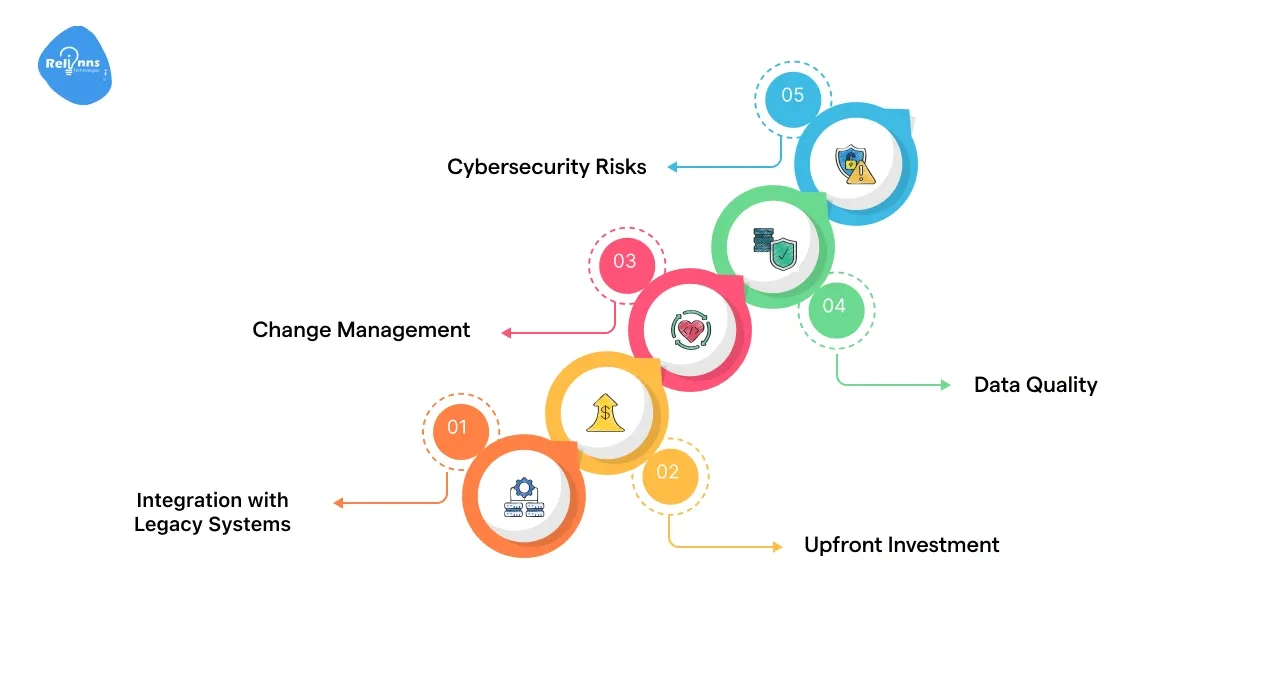
While port management software offers significant improvements, several operational and organisational challenges must be considered before it can be fully adopted.
Integration with Legacy Systems
- Many ports have older equipment or software.
- Ensuring new solutions seamlessly integrate can be complex and costly.
- Data migration from legacy databases often requires careful mapping.
Upfront Investment
- The initial cost of software licenses, servers, sensors, and training can be high. Ports must secure budget and leadership commitment.
- However, the long-term ROI typically justifies this spend.
Change Management
- Shifting from manual to digital workflows can face resistance.
- Staff need training and time to adapt.
- Effective communication of benefits helps overcome inertia.
Data Quality
- Software is only as good as its data inputs.
- Inaccurate or incomplete data can lead to suboptimal outcomes.
- Ports must establish data governance practices.
Cybersecurity Risks
- Digitization opens new vulnerabilities.
- A breach could disrupt port operations.
- Ongoing cybersecurity measures are essential.
Connectivity Issues: Reliable network coverage throughout the port (including remote docks) is crucial. Dropouts or latency can hinder real-time features. Solutions often require redundant networks or satellite links in challenging environments.
Despite these challenges, careful planning and partnering with experienced vendors can mitigate risks.
Many hurdles are common to any large IT project and are manageable with proper governance.
Conclusion: The future of port operations runs on modern port management software
Ports today operate under increasing pressure larger vessels, tighter schedules, growing cargo volumes, and stricter compliance requirements. Relying on paper files, manual updates, and siloed systems creates delays, errors, and operational risks. Modern port management software, whether deployed as a port management information system (PMIS) or smart port software, gives ports the real-time visibility and automation needed to operate efficiently and competitively.
Unified workflows, automated approvals, integrated vessel and cargo tracking, and predictive insights allow ports to reduce turnaround time, improve throughput, and make faster, data-driven decisions. As global trade expands, digital systems are no longer optional they form the foundation of future-ready, high-performance port ecosystems.
Why choose Relinns for port digitalization?
Relinns Technologies delivers enterprise-grade port solutions built for mission-critical environments. Our platforms combine low-code flexibility with deep maritime expertise, enabling ports to modernize quickly without operational disruption.
Here’s what sets Relinns apart:
- Custom-built PMIS solutions tailored for multi-terminal, high-throughput operations
- Scalable architecture ready for PCS, TOS, VTS, AIS, IoT, and ERP integrations
- Low-code speed with enterprise reliability for faster rollouts and lower TCO
- ISO, SOC, and VAPT-ready engineering practices for secure, compliant deployments
- Real-time dispatch, vessel, and cargo automation that reduces delays and improves accuracy
- Deep domain knowledge in harbor operations, approvals, billing, and compliance workflows
- Ongoing support & user training to ensure smooth adoption across all port departments
Relinns supports ports moving toward intelligent, automated, and integrated operations, helping them improve throughput, reduce costs, enhance compliance, and build long-term resilience.
Frequently Asked Questions (FAQ's)
What is port management software, or Port Management Information System (PMIS)?
A PMIS is a centralized digital platform that connects port stakeholders: authorities, terminals, ships, customs, logistics, integrating vessel scheduling, cargo, gate, and compliance operations into one real-time, collaborative system.
How does port management software improve port operations?
It coordinates ship and cargo movements, automates scheduling and approvals, reduces manual error, and enables real-time visibility boosting efficiency and minimizing vessel or truck idle time.
What modules are essential in port management software?
Core modules include vessel scheduling, cargo & terminal operations, gate/yard management, asset maintenance, billing, compliance, and analytics dashboards, covering every major port operation.
Can port software handle both cargo and vessel scheduling / berth allocation?
Yes. Integrated PMIS solutions manage vessel ETA/ETD, berth assignment and cargo handling workflows together, ensuring smooth coordination between ship arrival, berth space and cargo operations.
What type of ports benefit most (small terminals vs large commercial ports)?
Both benefit, but large, multi-terminal and high-volume ports gain most, PMIS scales to complex operations, high throughput, and multiple stakeholder coordination.
Is a smart-port software worth it for older ports with legacy infrastructure?
Yes, if phased carefully. A modular PMIS can integrate with existing systems, bringing improved scheduling, cargo tracking, and compliance though success depends on data quality, connectivity and integration readiness.
How does software help with compliance, customs, and environmental regulations?
PMIS modules automate manifest submission, customs documentation, environmental reporting and audit trails , simplifying complex regulatory workflows and improving traceability and transparency.
What integration capabilities should we check before choosing port software?
Ensure support for AIS/VTS data, TOS and ERP integration, EDI or API-based customs connectivity, gate automation, and modular architecture for future expansion.
What is the typical ROI / cost-benefit for a port adopting software?
Typical gains include significant reductions in idle times, paperwork, manual labor and delays leading to higher throughput, lower operating costs, and better asset utilization (depending on port size and volume).
Are there risks or limitations to port digitalization we should anticipate?
Yes, integration complexity with legacy systems, data quality issues, cybersecurity risks, infrastructure and connectivity constraints, and organizational resistance can hinder full benefits.