Fleet Management Automation in 2026: Complete Guide, Use Cases & ROI
Date
Dec 13, 25
Reading Time
12 Minutes
Category
Custom development
Share


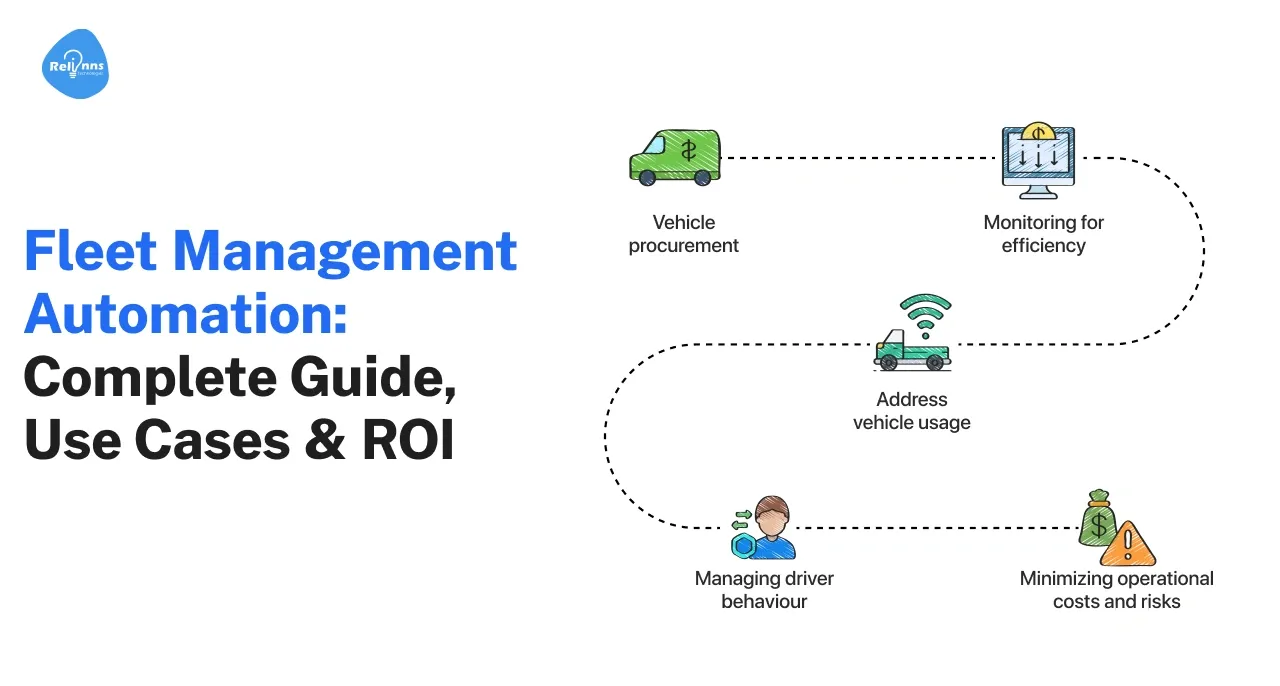
Most fleets still struggle with fragmented tools, manual data entry, and unpredictable downtime, which drive up costs and frustrate drivers.
When maintenance slips or routes underperform, the ripple effects hit fuel spend, service levels, and safety. The answer is end-to-end fleet management automation that turns disconnected tasks into orchestrated workflows.
In this guide, we unpack automated fleet management capabilities, 2025 market data, and fleet management best practices you can apply now, plus real use cases and a practical path to value.
What Is Fleet Management Automation?
Fleet management automation leverages connected telematics, maintenance software, routing engines, compliance tools, and workflow automation to eliminate manual steps throughout the vehicle lifecycle.
It connects sensors, drivers, shops, and back-office systems so data flows once and triggers the right action every time. The result is fewer spreadsheets, faster decisions, and measurable gains in uptime, fuel, safety, and compliance.
In 2025, market growth reflects this shift: Technavio projects the global fleet management market will expand by USD 52.23B during 2025–2029 (CAGR ~15.6%), driven by e-commerce and last-mile delivery.
Core outcomes
- Single source of truth across maintenance, routing, and finance.
- Automatic task creation from diagnostics, inspections, and odometer thresholds.
- Faster repair approvals through pre-authorized parts and labor workflows.
- Fewer errors via standardized data capture and validations everywhere.
- Better decisions with predictive insights surfaced at the right moment.
Why Fleet Management Automation Matters in 2026?
Adoption is accelerating because data silos and manual steps cost real money.
Industry research shows the global fleet management software market is expanding rapidly, with the segment projected to grow from about $24.04B in 2024 to $28.24B in 2025 at ~16.6% CAGR. Despite widespread adoption of telematics and maintenance tools, 32% of fleet managers still cite integration with back-office systems as a key technology priority, underscoring persistent workflow fragmentation and manual data entry.
Business case
- Reduce avoidable downtime by automating preventive and predictive maintenance triggers.
- Lower fuel costs using optimized routing, coaching, and idling controls.
- Enhance safety with event-based coaching and video telematics workflows.
- Strengthen compliance through automated logs, expiries, and evidence trails.
- Scale operations without proportional headcount, using orchestration and templates.
Key Concepts: Automated Fleet Management, End-to-End
Automated fleet management spans tracking, maintenance, routing, fuel, safety, compliance, analytics, and finance. Each domain generates data that should automatically kick off tasks, approvals, and communications.
When APIs bind telematics, WMS/TMS/ERP, and shop systems together, the fleet runs on rules, not reminders.
This is the backbone of fleet management best practices: standardize, instrument, and automate.
Automation pillars
- Instrument everything with sensors, diagnostics, inspections, and driver inputs.
- Normalize data, apply rules, generate tasks, and automatically escalate exceptions.
- Integrate systems using APIs, webhooks, and low-code automation builders.
- Govern identity, roles, and approvals for audit-ready execution.
- Monitor outcomes, close loops, and continuously tune automations.
Feature Map of Fleet Management Automation
Well-implemented fleet management automation touches every lifecycle stage.
The following features explain the value, followed by sub-features that buyers and operators commonly evaluate. Use these as a blueprint and align them with your KPI targets.
1. Real-Time Tracking and Asset Visibility
Live location, engine status, and utilization underpin every decision.
Without accurate visibility, maintenance is reactive, routing is blind, and fuel is wasted. GPS, CAN-bus diagnostics, and connected sensors provide the context to automate downstream tasks, from shop work orders to customer ETAs.
Commercial vehicle telematics is a fast-growing backbone market, projected to grow at a 12.9% CAGR (2025–2034).
Sub-features
- Continuous GPS, ignition, and geofence events reliably drive task automation.
- Engine fault codes automatically trigger diagnostic trees and repair orders.
- Asset utilization reports inform rightsizing and redeployment at scale.
- Temperature and load sensors validate SLA compliance for perishables.
- Unified map and timeline rebuild trip narratives for investigations.
2. Maintenance & Lifecycle Orchestration
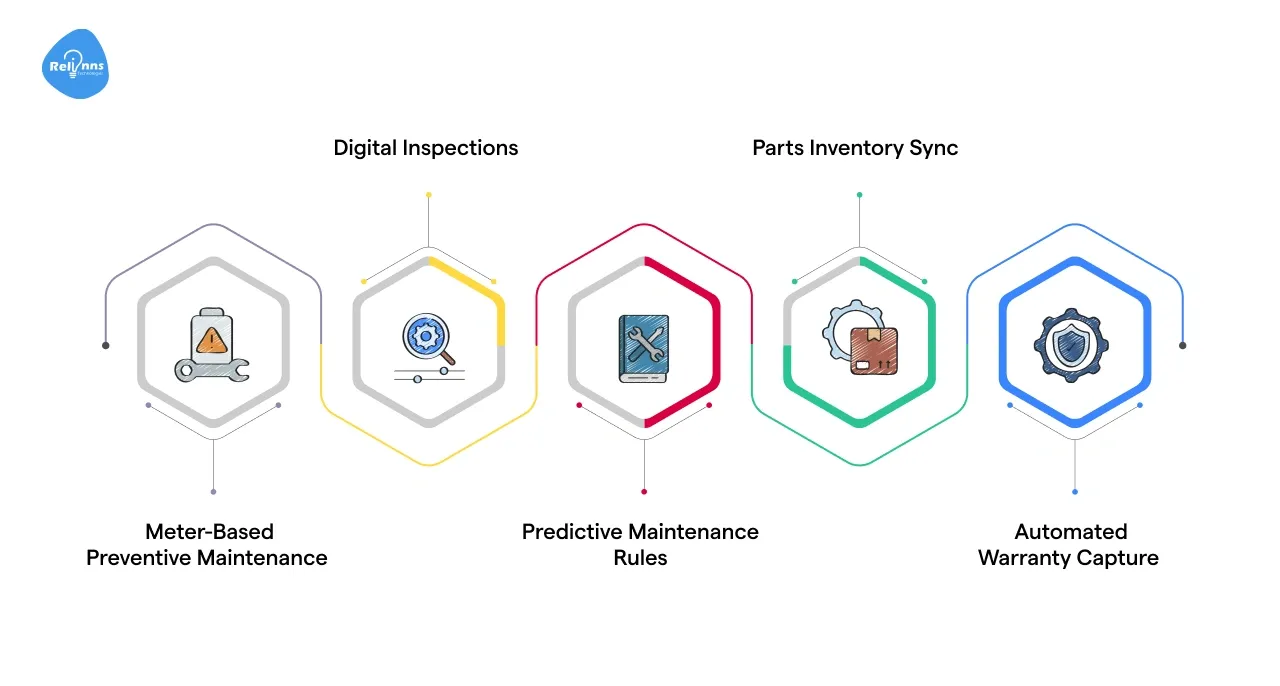
Unplanned downtime is expensive, so fleet management best practices prioritize preventive scheduling and predictive models.
Automation eliminates missed intervals and shortens shop time by pre-staging parts and approvals.
Sub-features
- Meter-based PMs create schedules and notify drivers and shops.
- Digital inspections generate issues, photos, and instant work orders.
- Predictive rules estimate remaining life for critical components proactively.
- Parts inventory sync reduces delays and rework during repairs.
- Warranty capture automates claims and recovers eligible costs.
3. Route Planning, Dispatch, and Driver Assignment
Routing engines turn constraints into optimized plans, and automated fleet management keeps those plans up to date as the world changes.
Weather, traffic, and window violations can trigger replans and prompt customer notifications.
The payoff is predictable service and happier drivers.
Sub-features
- Auto-assign drivers and vehicles by skills, hours, and proximity.
- Multi-stop optimization minimizes distance, time, and fuel spend.
- Live re-routing on incidents maintains promised ETAs and SLAs.
- Yard-to-door orchestration reduces congestion and queue times.
- Customer notifications mirror ETA shifts, limiting WISMO calls.
4. Fuel, Idling, and Cost Controls
Fuel remains the most significant variable operating cost. Analyses suggest that fuel accounts for 25–35% of fleet costs.
Telematics-driven coaching and eco-routing can meaningfully reduce fuel and CO₂; eco-driving can yield up to 15% fuel savings (LVM Track).
Sub-features
- Automated idling alerts and coaching curb avoidable fuel burn quickly.
- Fuel-card integrations flag anomalies and fraud in real time.
- Eco-routing reduces grades, stops, and exposure to congestion.
- The EV-readiness checks model routes based on charging availability.
- Benchmark dashboards compare vehicles, routes, and drivers.
5. Safety, Video-Telematics, and Event Coaching
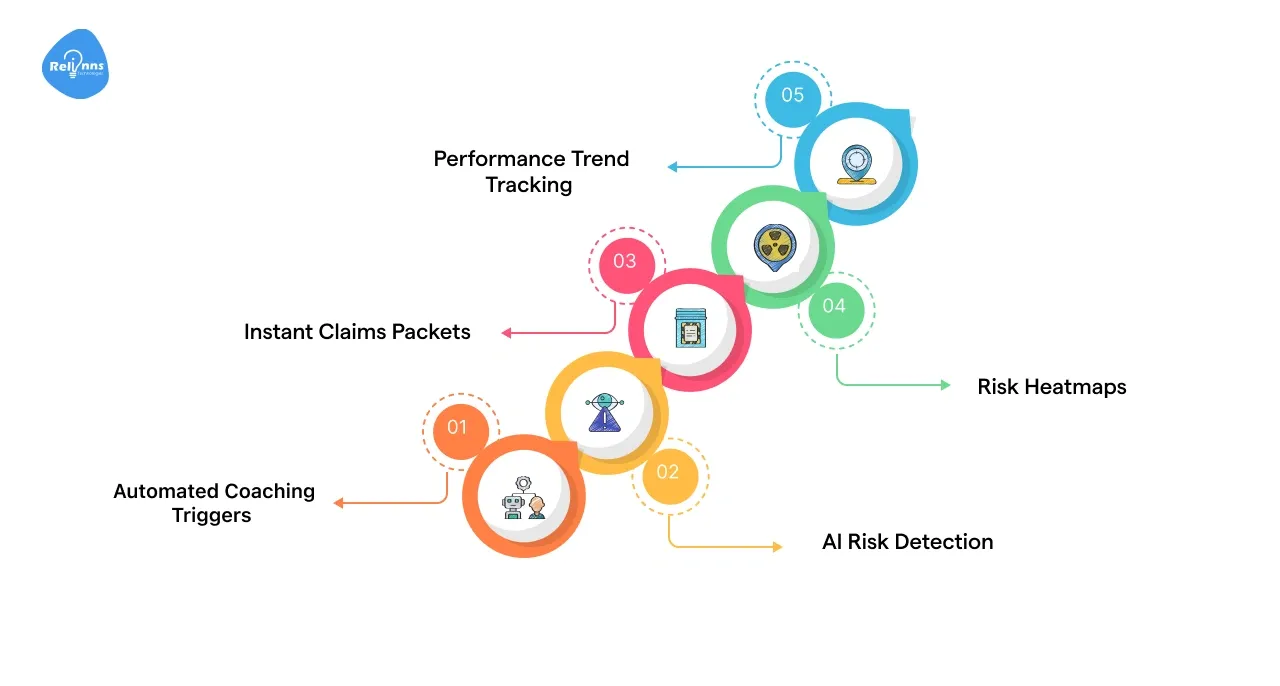
Dashcams, ADAS, and sensor fusion transform safety from reactive to proactive.
Automation captures events, scores risk, and launches coaching and claims workflows. The win: fewer collisions, faster exoneration, and lower premiums.
Sub-features
- G-force and camera events automatically create coaching tasks.
- AI flags distraction, tailgating, and following-distance violations.
- Claims packets assemble video, telematics, and location evidence.
- Risk heatmaps steer targeted interventions and rider policies.
- Trend lines track improvement and insurer negotiations.
6. Compliance and Risk Management
Audits are unforgiving.
Expiries, hours-of-service violations, and DVIR gaps result in penalties and downtime. With automation, compliance becomes a by-product of good operations, not a scramble for forms.
Sub-features
- License, medical, and permit expiries generate renewal tasks.
- ELD/HOS violations trigger alerts, coaching, and scheduler updates.
- DVIR issues route to shops with severity and photos attached.
- Policy attestation renewals ensure that signed, up-to-date acknowledgements are provided.
- Audit reports compile chain-of-custody evidence automatically.
7. Analytics, AI, and Continuous Improvement
Advanced analytics convert data exhaust into forecasts and recommendations.
Market outlooks indicate the fleet management software market will expand strongly through 2026, driven by demand for insights that drive action, not dashboards that gather dust.
Sub-features
- Failure probability models schedule maintenance before breakdowns occur.
- Cost-per-mile drivers are analyzed at the asset, route, and vendor levels.
- What-if scenarios test redeployments, replacements, and capex timing.
- Auto-generated KPI reviews summarize weekly exceptions and actions.
- Benchmarks compare performance against peer fleets and industry averages.
8. Integration and Low-Code Workflow Builders
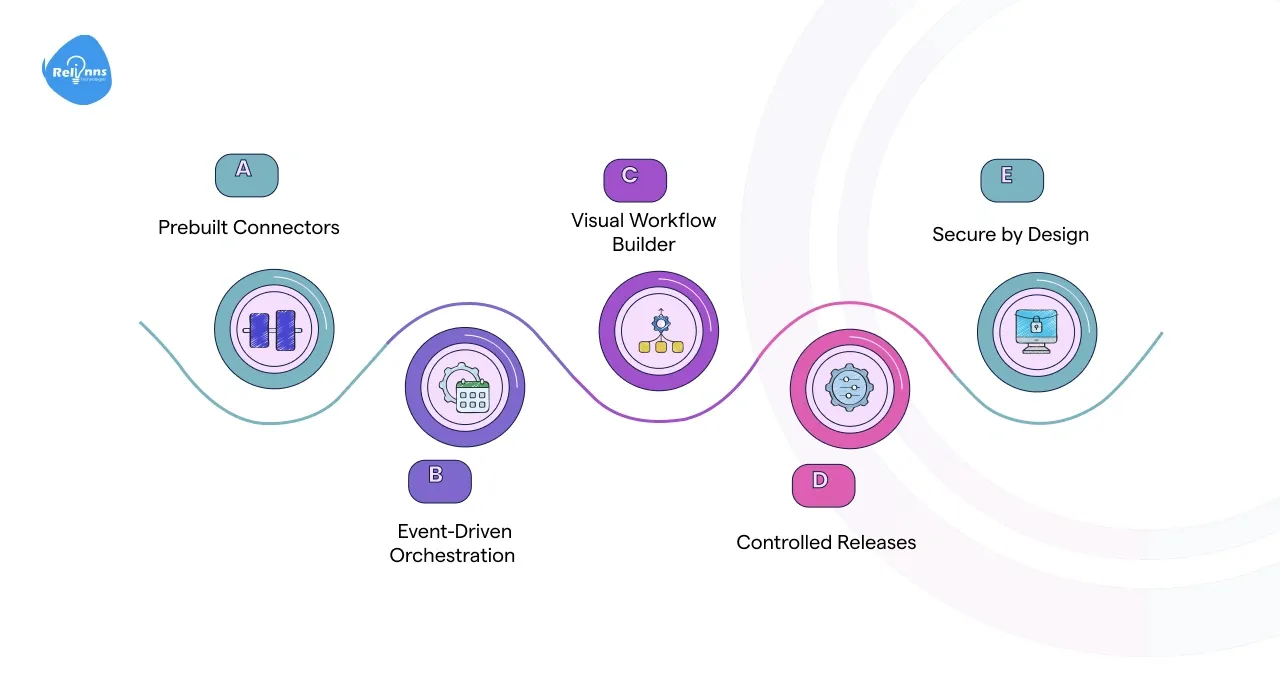
Fleet management automation is only as strong as its integrations.
Low-code builders let ops teams orchestrate approvals, escalations, and notifications without vendor tickets. The aim is fast change and governed reuse.
Sub-features
- Prebuilt connectors for TMS, WMS, ERP, and accounting.
- Event bus and webhooks drive near-real-time orchestration.
- Visual workflow editors safely expose rules to non-developers.
- Versioning, testing, and rollout controls prevent production surprises.
- Centralized secrets and identity keep integrations secure.
Implementation Steps for Automated Fleet Management
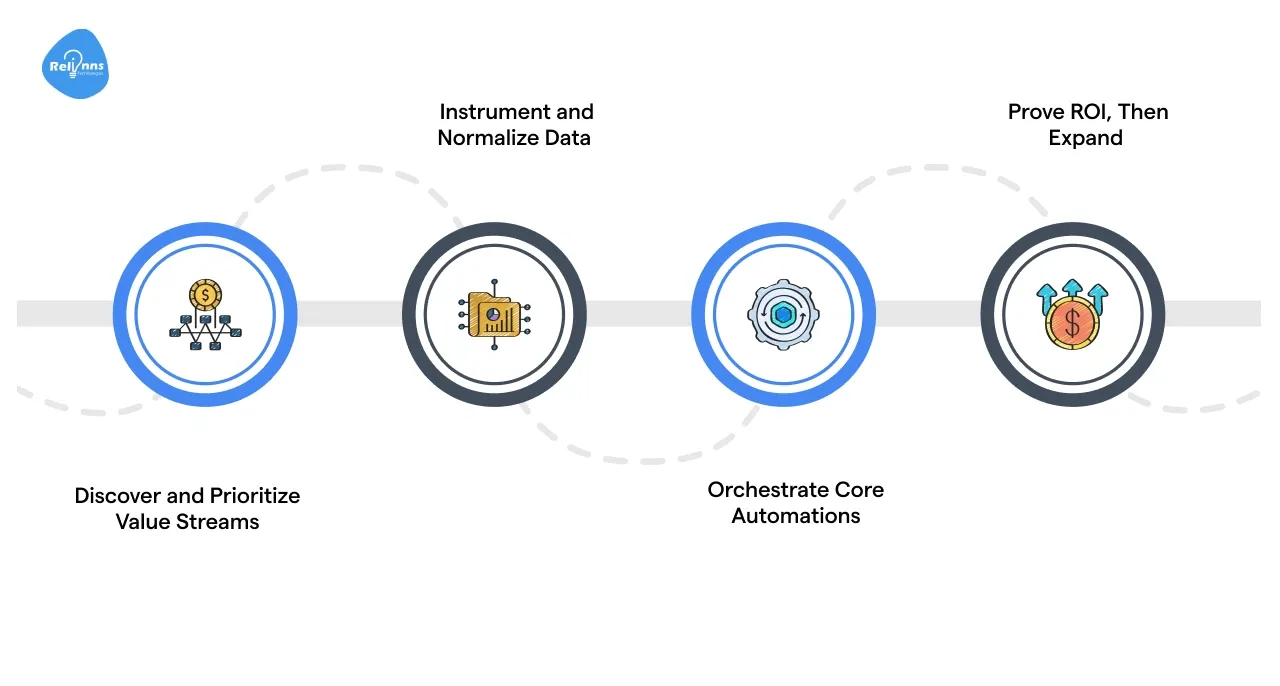
Rolling out automated fleet management is a process, not a purchase.
Treat it like an operations program with change management, not just an IT project. The sequence below reduces risk while proving value early.
1.) Discover and Prioritize Value Streams
Start with a baseline of costs, downtime patterns, and bottlenecks.
Map workflows for maintenance, routing, fuel, safety, and compliance. Quantify pain points, such as manual entry time and multi-platform rekeying.
Industry research shows that 57% of fleet professionals still rely on manual data entry and fragmented systems to consolidate key performance data, while only 14% leverage truly unified platforms, underscoring persistent integration debt and workflow inefficiencies across maintenance, routing, fuel, safety, and compliance.
Pick one or two high-leverage streams to automate first, e.g., PM scheduling or idling control.
- Calculate annual costs for downtime, rentals, and missed SLAs.
- Rank pain by impact, feasibility, and stakeholder urgency now.
- Define measurable KPIs, owners, and weekly review cadence.
- Create a one-page automation charter and share widely to ensure alignment.
- Lock a 90-day pilot scope with executive sponsorship.
2.) Instrument and Normalize Data
Great automations require clean, timely data.
Standardize vehicles, meters, parts, and vendors. Connect telematics, fuel cards, and shop systems. Decide your record-of-truth per entity and remove duplicate entry points.
This alone can eliminate hours of weekly rework and set the stage for fleet management best practices.
- Pick canonical IDs for assets, drivers, and locations.
- Map field names and units, enforce validation everywhere.
- Stream meters and faults continuously into a single integration layer.
- De-duplicate vendors and parts lists before go-live.
- Log lineage for audit, privacy, and troubleshooting.
3.) Orchestrate Core Automations
Automate the obvious first: PMs, inspections, fault-to-work-order, route exceptions, and idling alerts.
Use templates and checklists to standardize workflows while allowing adjustments. Early wins build trust and free up capacity for more formidable challenges, such as predictive models and dynamic dispatch.
- Convert PM calendars to meter-based triggers for accuracy.
- Auto-create work orders from DVIR issues with photos.
- Raise idling alerts after configurable thresholds per asset type.
- Link ETA changes to customer notifications in real time.
- Require digital approvals for costly repairs or rentals.
4.) Prove ROI, Then Expand
Make results visible every week: track cost-per-mile, compliance rates, idle minutes, and MTBPM (miles between PM).
Use control-group comparisons. GlobeNewswire and TBRC project strong 2026 software growth because buyers measure and expand after pilots show gains. That pattern should guide your scale-out.
- Publish a weekly scorecard to leadership and shop leads.
- Hold blameless reviews for exceptions, fix systemic causes quickly.
- Add one new automation per sprint, reuse proven patterns.
- Train champions at each depot to build on-the-ground momentum.
- Tie incentives to measurable uptime and safety improvements.
Quantifying the Upside: 2025 Stats You Can Use
Decision-makers want numbers. Below are recent findings you can cite when building your fleet management automation business case.
These come from 2025-dated market trackers and reputable industry sources.
- Market growth: Global fleet management market to add USD 52.23B during 2025–2029, ~15.6% CAGR.
- Software segment: Fleet management software to $28.24B in 2025, up from $24.04B in 2024. TBRC cites a similar ramp (to $28.03B).
- Telematics backbone: Commercial vehicle telematics market 12.9% CAGR forecast for 2025–2034.
- Fuel and eco-driving: Fuel often accounts for 25–35% of costs (Fynd digest); eco-driving can save up to 15% on fuel.
Fleet Management Best Practices: Operating Model
Fleet management best practices are about consistent habits that sustain gains. Treat workflows as living products. Assign ownership, cadence, and improvement pipelines.
Balance central standards with depot-level flexibility so local teams can adapt without divergence.
Practice pointers
- Write playbooks for PM, routing, compliance, and claims workflows.
- Review KPIs weekly, automate follow-ups, and celebrate incremental improvements.
- Standardize data dictionaries across vendors and business units globally.
- Train champions, rotate responsibility, and avoid single points of failure.
- Share wins and templates, build a reusable automation library.
Vendor and Tooling Landscape, 2025 Snapshot
The landscape spans telematics, dashcams, shop systems, routing engines, and low-code orchestration. The fleet management automation winners pair robust APIs with strong workflows.
Market trackers like GlobeNewswire and Technavio reflect continued consolidation and category growth. Use procurement criteria that emphasize integration, governance, and time-to-value.
- Verify prebuilt connectors for telematics, fuel, ERP, and accounting.
- Request sandbox access and test automations before committing to the long term.
- Require admin guardrails: roles, approvals, versions, and change control.
- Prioritize observability: logs, metrics, lineage, and audit reporting.
- Evaluate TCO, including data egress, storage, and support tiers.
Real-World Use Cases of Automated Fleet Management
Fleet operations today face escalating costs, fragmented tools, and a constant race to stay compliant and efficient.
Managers struggle to balance uptime, fuel spend, and safety across decentralized systems.
A. Global Logistics Provider – Real Time Shipment Coordination at Scale (Joget SCM System)
Problem: Fragmented shipment tracking across multiple carriers and tools slowed updates and increased customer escalations. Dispatching was manual, route planning lacked real-time adjustments, and 3rd-party data could not be consolidated into a single view. As shipment volume grew, performance lagged, and teams lacked real-time exception alerts and a unified role access model.
Solution: Relinns built a Joget-based supply chain platform with modular development, real-time GPS sync, AI route optimization, instant exception alerts, role-based dashboards, and scalable infrastructure. The system unified tracking signals from tools such as Google Maps, FourKites, PlaneFinder, Roambee, and FleetMon into a single operations panel with KPIs and carrier statistics.
Results
- 54% faster shipment processing, significantly reducing planning and fulfillment time.
- 95% on-time delivery accuracy, supported by proactive alerts and exception tracking.
- 20% reduction in SLA breaches, due to predictive alerts and faster resource reassignment.
- 18% increase in perfect order rate and 25% decrease in backorder rate after workflow automation.
- 41% improvement in first attempt delivery and 28% reduction in agent downtime with unified dashboards.
Learn More: Supply Chain Management Case Study
B. Vizag Seaport – Dispatch Approval Automation and Cargo Accuracy (Port Management System)
Problem: Delivery orders were processed through manual verification, resulting in delays and data errors. Teams lacked real-time visibility into vessel movements, cargo balance tracking was manual, and roles were siloed across disconnected systems. Multi-level approvals stalled without alerts or escalation; reporting errors created revenue risk; and vessel turnaround suffered from slow coordination and reconciliation.
Solution: Relinns built a Joget-powered port management system that enables centralized vessel management, structured DO creation and validation, intelligent approval routing with escalations, finance clearance workflows, a dispatch operations interface, role-based dashboards, automated notifications, audit logs, and nested vessel-to-delivery cargo tracking with real-time balance calculations. Relinns
Results:
- 72% faster delivery approvals, cutting cycles from almost two days to under thirteen hours.
- 95% cargo balance accuracy, aligning dispatch with manifests and improving reconciliation confidence.
- 80% reduction in manual coordination time, replacing calls, emails, and spreadsheets with workflows.
- 30% reduction in vessel idle time, using live status, dispatch queues, and berth utilization views.
- 99.9% system uptime maintained and 40% fewer data-entry errors through validations and role-based access.
Learn More: Port Management System Case Study
C. Regional Construction Fleet – Predictive Maintenance at Scale
Problem: Mixed yellow-iron and on-road assets suffered frequent, costly breakdowns. PM schedules were calendar-based, ignoring usage variability. Parts stockouts elongated repairs, and rentals spiked. Supervisors spent hours reconciling meters and work orders across tools, with little confidence in replacement timing or lifecycle economics.
Solution: Normalized meters across OEMs with gateway devices and data standards. Predictive failure models forecast component wear and schedule interventions. Work orders are auto-created with labor, parts, and warranty checks. Vendor SLAs and shop loads are balanced via dispatch automation. Executive dashboards linked downtime to cost per mile and project margins.
Results:
- 19% downtime reduction; predictive triggers caught issues before they cascaded into failures.
- 16% decrease in rental spend; better planning matched capacity with forecasted commitments.
- 11% of parts rush fees were avoided, and stocking algorithms and SLAs improved availability.
- 19% TCO improvement, lifecycle decisions guided by accurate usage and reliability data.
Use Case Reference: Research and Markets Fleet Software Analysis
Common Challenges and How to Avoid Them when Streamlining Fleet Management with Custom Workflow Automation
Even the best fleet management automation projects stumble without change management. Anchor plans to KPIs, document standards, and empower depot champions.
Challenges to avoid
- Start small, expand after proving value with clear KPIs.
- Clean the data first, then automate; never in reverse order.
- Involve drivers early, explain scoring, and share feedback transparently.
- Build guardrails: approvals, roles, and rollback procedures.
- Budget ownership for integrations, not only license subscriptions.
Cost, ROI, and Funding Fleet Management Automation
CFOs want defensible math. Tie savings to downtime, rentals, fuel, insurance, and admin hours. Technavio’s 2025 outlook and GlobeNewswire’s 2025 software estimates support robust growth, as buyers see returns quickly from automated fleet management rollouts
ROI levers
- Prevent breakdowns, extend component life, and protect schedules.
- Reduce idling, improve routing, and curb aggressive driving behaviors.
- Compress cycle times for approvals, repairs, and dispatch readiness.
- Lower incidents with coaching, evidence, and fast adjudication.
- Eliminate duplicate entries and automatically reconcile systems.
Governance, Security, and Compliance in Fleet Management Automation
Security is integral to fleet management best practices. Lock down secrets, rotate credentials, and audit access.
Treat workflows as code with testing, staging, and versioning. Archive evidence for regulators and insurers. Automations should enhance compliance, not create new risks.
Controls checklist
- Role-based access control with least privilege enforced across the board.
- Encrypted data in transit and at rest across vendors.
- Central secrets vault, rotation, and revocation procedures are standardized.
- Immutable logs, lineage, and tamper-evident audit trails.
- Data retention aligned to legal and insurer requirements.
Conclusion: Implementing Fleet Management Automation with the Right Partner
Fleet success in 2026 depends on seamless connectivity, predictive insights, and operational agility. But implementing fleet management automation at scale requires a partner who can unify people, processes, and platforms.
That’s where Relinns Technologies comes in. With years of expertise in automated fleet management and low-code workflow design, Relinns helps organizations modernize logistics, reduce costs, and adopt fleet management best practices tailored to their operations.
Why Choose Relinns?
Relinns enables enterprises to modernize fleet operations by unifying maintenance, routing, fuel, safety, and compliance into automated, data-driven systems. Its approach replaces fragmented tools with structured workflows, integrated intelligence, and scalable platforms designed for long-term operational control.
- Workflow-First Fleet Design: Fleet systems are structured around real operational processes, eliminating ad hoc workarounds and disconnected task execution.
- Unified Operational Data Layer: Data from telematics, ERP, GPS, and maintenance systems flows into a single, consistent operational source.
- End-to-End Process Automation: Routine approvals, inspections, dispatch actions, and exception handling operate through standardized, automated workflows.
- Predictive Operational Intelligence: Usage signals and real-time inputs enable proactive maintenance planning and earlier detection of operational risks.
- Enterprise Governance and Compliance: Role-based access, audit logs, validations, and controls are embedded to support compliance and operational accountability.
- Modular and Scalable Architecture: Fleet capabilities are deployed incrementally, supporting expansion without disrupting existing systems or workflows.
Relinns delivers structured, automated fleet systems that support consistency, visibility, and operational performance at scale.
Frequently Asked Questions (FAQ's)
How do small fleets start without big budgets?
Start with fuel and preventive maintenance automations to demonstrate value quickly, then expand using low-code tools, templates, and phased fleet management automation investments to drive growth.
Where do predictive models deliver the quickest returns?
Predictive models deliver the fastest ROI by focusing on high-failure components and chronic routes first, while automated fleet management prevents downtime and repeat service disruptions.
How should we measure success across depots?
Measure success by publishing weekly KPIs, benchmarking depots, and applying standardized remediation playbooks aligned with fleet management best practices across locations for consistent operational improvement.
What if drivers resist new scoring and cameras?
Address resistance by co-designing coaching programs, transparently sharing improvements, rewarding progress, and positioning scoring and cameras as fleet management automation tools, not surveillance initiatives.
What integrations are most important on day one?
Prioritize telematics, maintenance systems, fuel cards, accounting, and payroll integrations to establish comprehensive visibility and a reliable foundation for fleet management automation across early operational stages.