How Custom SaaS in Manufacturing Is Reshaping Production, Productivity, and Profitability
Date
Dec 01, 25
Reading Time
10 Minutes
Category
Enterprise Solutions
Share


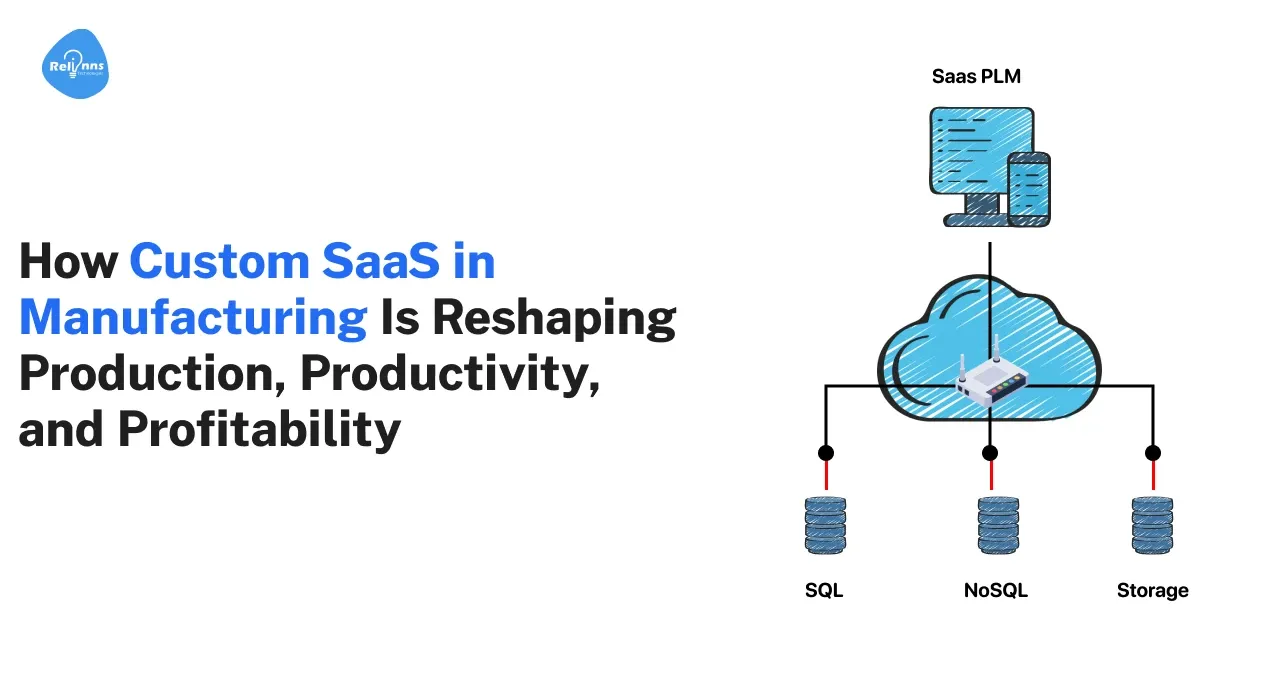
Manufacturers today face constant pressure to produce more, waste less, and move faster. Off-the-shelf software often fails to support these unique needs.
This is where custom SaaS in manufacturing comes into play. It is built to reflect the exact processes, systems, and goals.
These solutions connect machines, teams, and data into one live system. They improve output, reduce errors, and make operations more predictable.
In this article, we will examine how custom SaaS solutions in manufacturing are transforming production, enhancing quality, enabling predictive maintenance, driving growth, and achieving long-term cost savings.
Why Manufacturing Companies Are Embracing Custom Manufacturing Software Solutions
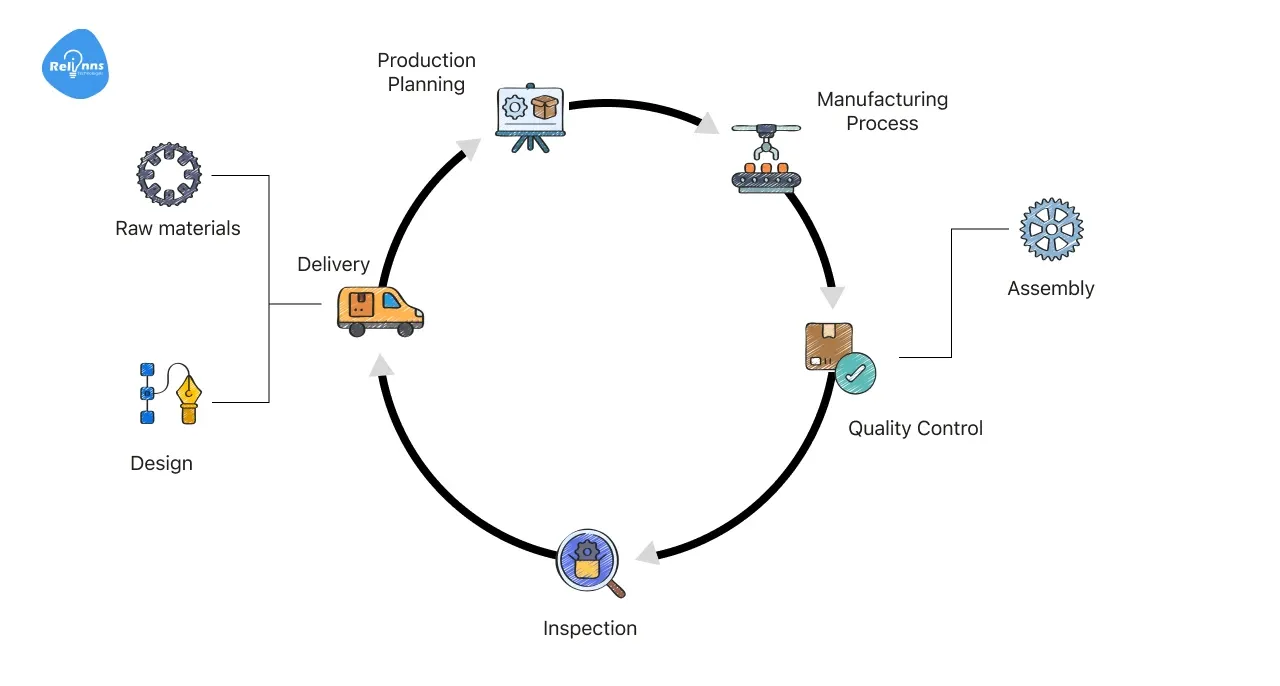
In short, traditional systems can’t keep up with modern manufacturing demands.
Unlike one-size-fits-all software, custom solutions are built around a factory’s unique processes and needs.
In the manufacturing sector, the SaaS market alone is projected to exceed $19 billion by 2026.
Businesses are turning to custom manufacturing software solutions for a host of reasons. These bespoke platforms solve pain points that generic software often can’t address. Below are some key drivers behind this shift:
- Legacy systems are too rigid and siloed for today’s complex production lines.
- Real-time data and analytics have become mission-critical on the shop floor.
- Labor shortages and skill gaps push manufacturers toward automation.
- Competitive pressure is rising to cut costs and innovate faster.
Custom SaaS in manufacturing isn’t a luxury; it’s a direct response to pressing operational needs.
Custom SaaS vs Off-the-Shelf Software in Manufacturing
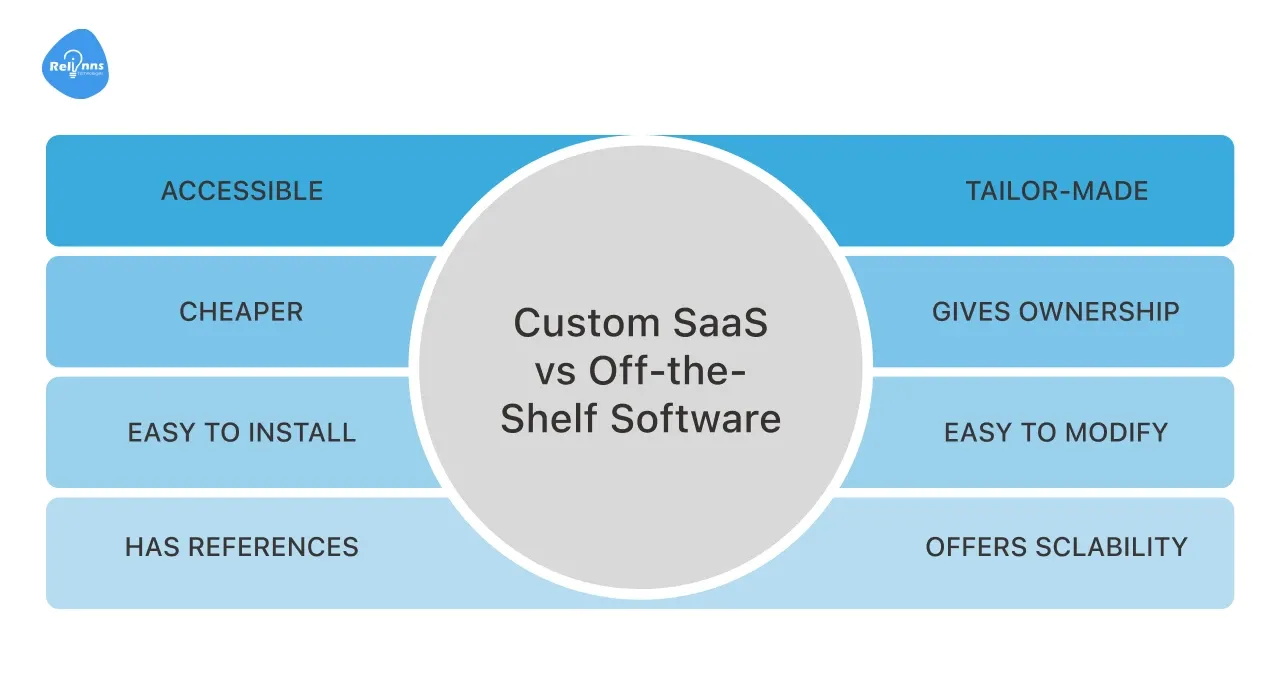
Manufacturers evaluating custom SaaS often compare it to off-the-shelf tools. While ready-made platforms are quick to deploy, they rarely match specialized workflows or legacy environments found on factory floors.
Takeaway: Off-the-shelf software may suit manufacturers with simple workflows and standard operations, but for organisations with unique processes, legacy equipment, compliance needs, or plans to scale, custom SaaS in manufacturing delivers flexibility, integration, scalability, and long-term value that generic tools cannot match.
Let’s explore how these tailored SaaS solutions are revolutionizing manufacturing processes, one benefit at a time.
1. Tailored Solutions: Custom Manufacturing Software Development for Unique Needs
Every factory is different. Custom manufacturing software development ensures your software fits like a glove.
Instead of forcing generic tools onto specialized workflows, custom SaaS is built around your exact production processes. This means every feature is relevant and every integration is seamless.
Off-the-shelf platforms often fail to address real needs.
- May lack essential modules for quality and compliance tracking
- Often, it cannot integrate older legacy production line equipment
- Misses factory-specific rules, roles, and operational variations
Custom solutions solve these gaps with precision. They integrate smoothly with your machinery, support unique workflows, and grow with your operations.
This tailored approach delivers significant results.
According to McKinsey, manufacturers using custom-built Industry 4.0 software experience:
- 30% to 50% reductions in unplanned machine downtime
- 15% to 30% improvements in labor output and productivity
In the custom SaaS manufacturing space, flexibility becomes a built-in advantage. New tools or workflows can be added without waiting for third-party updates. The result is continuous improvement across the shop floor.
2. Process Automation and Efficiency Gains with Custom SaaS in Manufacturing
Replacing manual, error-prone tasks with automation is one of the clearest ways custom SaaS in manufacturing drives efficiency. Traditional factories rely heavily on manual data entry and basic scheduling, which slows production and increases errors.
Custom SaaS automates these workflows, enabling faster cycles, fewer mistakes, and more focus on skilled tasks.
- Intelligent scheduling optimizes production runs using real-time conditions.
- Robotic automation handles tasks without fatigue or human error
- Live recalibration updates orders and resources instantly during delays
According to WillDom, 57% of manufacturers saw productivity gains with automation.
In short, automation through custom manufacturing software solutions boosts speed, reduces waste, and supports responsive operations.
3. Real-Time Visibility and Analytics with Custom Manufacturing Software Solutions
Custom manufacturing software solutions provide real-time insights across your entire operation. No more waiting for end-of-day reports to understand performance or problems.
Live dashboards display machine health, output levels, and inventory status across plants. This transparency enables faster, more intelligent decisions.
- Only 9% of firms have accurate supply chain visibility
- SaaS adoption in manufacturing is rising to 88%
- Custom dashboards highlight hourly output and yield rates
These systems transform raw data into insights you can act on. Executives and supervisors gain complete control, whether managing one site or many.
With cloud integrations and unified analytics, custom SaaS solutions for manufacturing bring clarity to every corner of the factory floor.
4. Predictive Maintenance: Cutting Downtime via Custom Manufacturing Software Solutions
Unexpected breakdowns lead to production losses and unplanned overtime. Custom manufacturing software solutions prevent this through predictive maintenance powered by real-time sensor data.
Instead of fixing after failure, systems forecast issues in advance and notify maintenance teams proactively.
- Sensors monitor vibration, temperature, and equipment load shifts
- AI analyzes behavior patterns to detect wear or faults early
- Repairs are scheduled before breakdowns interrupt production flow
McKinsey confirms predictive tools can cut breakdowns in half.
With custom SaaS in manufacturing, uptime becomes predictable, and productivity stays high even under pressure.
5. Supply Chain Integration with Custom SaaS in Manufacturing
Manufacturing depends on strong connections between suppliers, distributors, and customers. Custom SaaS in manufacturing unifies these systems by integrating ERP, CRM, procurement, and warehouse systems into a single, connected network.
This integration ensures complete visibility from material sourcing to customer delivery, reducing communication gaps and bottlenecks.
- Centralized dashboards align production, procurement, and delivery in real time.
- Alerts flag delays and dynamically reschedule resources or suppliers
- Automated workflows handle purchase orders and shipment notifications
Custom platforms ensure faster collaboration, better transparency, and fewer supply disruptions.
Custom manufacturing software development ensures every department shares the same live data, improving accuracy and customer satisfaction across the supply chain.
6. Scalability and Flexibility through Custom Manufacturing Software Development
Manufacturing demand can shift rapidly, whether from new contracts, seasonal spikes, or global disruptions. Custom manufacturing software development delivers scalable, adaptable solutions that grow with the business.
Because these tools are cloud-based, scaling operations is faster, simpler, and cost-effective.
- New facilities and lines can be added within days, not months
- Workflow changes update instantly without long configuration delays
- Modular system design supports adding new features as needed
Cloud deployment takes weeks rather than months for on-premises systems. (Source: Relinns)
This agility enables manufacturers to seize opportunities without technology holding them back.
In custom SaaS manufacturing, scalability becomes a competitive advantage that enables operations to evolve with minimal downtime.
7. Cost Reduction and ROI of Custom SaaS in Manufacturing
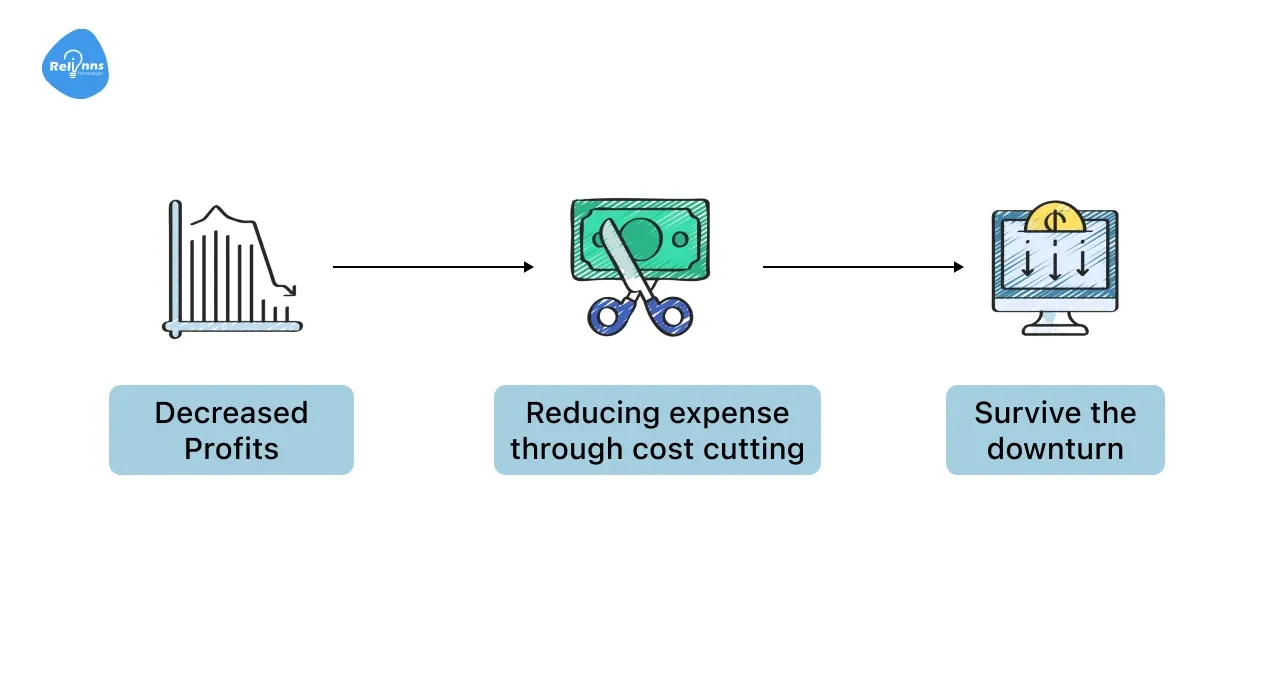
Controlling costs is vital in any factory setting. Custom SaaS in manufacturing delivers measurable savings by targeting inefficiencies and reducing recurring software and maintenance expenses.
It aligns processes, automates key operations, and removes redundant systems.
- Cloud systems cut server costs and hardware upgrades entirely
- Automation reduces material waste and costly production rework
- Inventory analytics prevent excess stock and minimize urgent orders
Businesses adopting tailored systems achieve long-term operational cost reductions.
Ultimately, custom manufacturing software solutions improve profit margins while enabling smarter reinvestment for sustainable growth.
8. Enhanced Quality Control with Custom Manufacturing Software Solutions
Quality defines reputation in manufacturing. Custom manufacturing software solutions embed inspection and traceability at every production stage to ensure consistency and compliance.
These tools reduce the risks of defects and improve regulatory reporting.
- Automated checkpoints detect deviations before products move forward
- Integrated sensors monitor key production variables in real time
- Audit trails track defects to machines, materials, or operators
By strengthening quality, custom SaaS in manufacturing helps reduce waste, protect brand value, and build long-term trust.
9. Empowering Workers with Custom SaaS in Manufacturing
Manufacturing efficiency depends on empowered employees. Custom SaaS solutions in manufacturing simplify complex processes, support collaboration, and provide digital tools that make jobs easier.
These systems improve communication and skill development across the workforce.
- Intuitive mobile dashboards reduce training time and operator errors
- Cloud access enables remote collaboration and faster issue resolution
- Built-in learning modules accelerate onboarding and digital skill growth
Custom solutions make factory roles more efficient and rewarding.
Through better design and real-time support, employees stay productive and confident on the job.
10. Data-Driven Decision Making with Custom Manufacturing Software Development
Decision-making in manufacturing must rely on precise, up-to-date data. Custom manufacturing software development transforms operational data into insights that guide strategic and daily actions.
With data integrated across the supply chain, production, and sales, leaders can make informed, fast decisions.
- Dashboards highlight performance, downtime, and capacity utilization trends.
- Predictive analytics forecasts demand and optimizes production planning
- Custom reports align KPIs with operational and business goals
In essence, custom SaaS in manufacturing empowers leaders with real intelligence, turning data into a daily performance advantage.
Manufacturing SaaS Integration Ecosystem Overview: Why It Matters & How It Works
Modern manufacturing doesn’t rely on a single system. To deliver full value, custom SaaS must work within an integrated ecosystem that connects multiple functional layers from the shop floor to enterprise management. Integration is what enables transparency, automation, and real-time responsiveness.
What Gets Integrated:
- ERP (Enterprise Resource Planning): handles finance, procurement, inventory, HR, and overall business operations.
- MES (Manufacturing Execution System): bridges the shop floor and the ERP, managing production scheduling, machine activity, labor, and quality tracking.
- IIoT / IoT & Sensor Systems: provide real-time data on machine health, usage, vibration, temperature, energy consumption, and other operational variables.
- Legacy Machinery & PLCs: through custom APIs or middleware, older equipment can be bridged into the digital ecosystem, preserving investment while bringing them into Industry 4.0 workflows.
- WMS / SCM / CRM / Procurement Systems: ensuring inventory, warehouses, supplier orders, procurement, and shipping tie into production and sales data for unified supply-chain visibility.
Why Integration Matters:
- Real-time visibility across operations: Once systems are connected, management gets up-to-the-minute data on inventory, machine health, production output, and supply-chain status, rather than waiting for end-of-day or weekly reports.
- Better quality and compliance control: MES + IoT integration helps enforce quality checkpoints, automatically track production and inspection data, and maintain traceability, reducing defects and improving regulatory compliance.
- Automation, fewer manual interventions: Data flows automatically between ERP, MES, IoT sensors, and other modules, eliminating manual data entry, reducing human error, and streamlining workflows.
- Scalability and flexibility: As production lines expand or new facilities are added, integrated custom SaaS supports modular growth; new machines, locations, or supply-chain partners can be plugged in without rebuilding the system.
By framing custom SaaS in manufacturing as part of an integration ecosystem rather than a standalone tool, you illustrate how it becomes a foundational, long-term enabler rather than a stopgap solution.
Risks in Manufacturing and How Custom SaaS Reduces Them
Manufacturing operations, especially in complex or legacy-heavy environments, carry several risks. Custom SaaS, when properly designed and integrated, helps mitigate many of these risks, making operations more reliable, predictable, and efficient.
Common Risks in Manufacturing
- Unexpected machine breakdowns leading to production halts and costly delays.
- Quality issues, defects, or non-compliance due to manual inspection or insufficient traceability.
- Inventory mismanagement: overstocking, stockouts, or excess scrap due to lack of real-time visibility.
- Human error from manual data entry, scheduling, or reporting.
- Operational inefficiencies and bottlenecks caused by disconnected systems (ERP, MES, procurement, warehouse).
- Data silos, inconsistent reporting, and lack of unified oversight limiting decision-making.
How Custom SaaS Mitigates These Risks
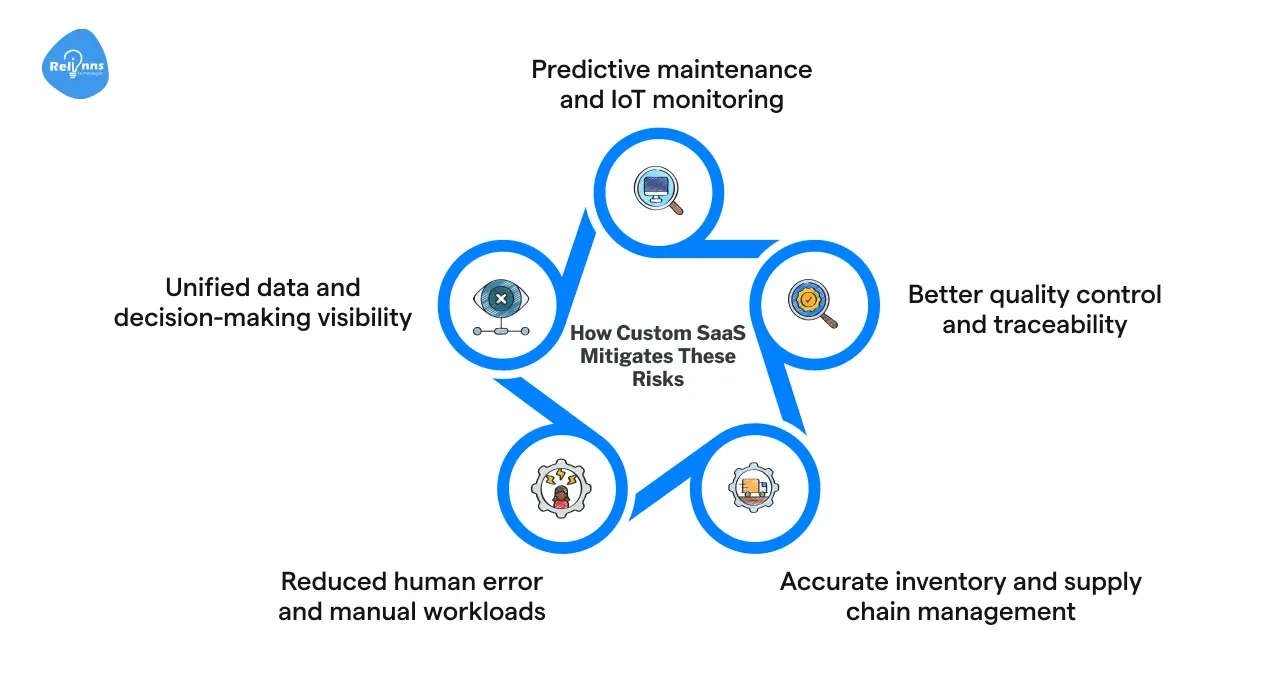
- Predictive maintenance and IoT monitoring: Custom SaaS solutions that integrate IoT sensors and analytics detect early warning signs (e.g. vibration, temperature shifts, load anomalies). Maintenance can be scheduled proactively, reducing unplanned downtime and extending equipment longevity.
- Better quality control and traceability: Embedded inspection modules, automated data capture, and audit-ready trace logs help catch defects early and maintain consistent quality throughout production. Integration with MES and ERP ensures full process traceability.
- Accurate inventory and supply chain management: Real-time data from IoT sensors, ERP systems, and warehouse systems track raw materials, work-in-progress, and finished goods. This reduces excess inventory or urgent stock orders, optimizing working capital and reducing waste.
- Reduced human error and manual workloads: Automation of scheduling, maintenance alarms, production tracking, and reporting cuts down manual tasks, lowering the risk of mistakes and freeing staff for higher-value work.
- Unified data and decision-making visibility: With a fully integrated software ecosystem, decision-makers get a centralized view of production, maintenance, inventory, supply chain, and quality. This reduces data silos and enables informed, timely decisions.
Real-World Wins from Digitally Enabled Manufacturing
Across industries, manufacturers that adopt custom SaaS and predictive-maintenance systems report significant improvements, including reduced downtime, improved production efficiency, and cost savings.
Digital-First Factories See 30-50% Drop in Machine Downtime.
Global studies by McKinsey show that factories embracing analytics, IoT, and Industry 4.0 practices, including custom SaaS integration, regularly achieve 30 to 50 percent reductions in machine downtime. Alongside this, many factories report 10 to 30 percent increases in throughput and 15 to 30 percent improvements in labor productivity.
Large Food Producer: Scaling Digital Transformation Across 40+ Plants
In a documented case by McKinsey, a large food-manufacturing company rolled out standardized digital systems across its network: within a year, it transformed 20 factories and significantly boosted production line efficiency and overall operational performance.
Mixed-Equipment Manufacturer: Predictive Maintenance Cuts Downtime & Costs
Manufacturers using custom predictive-maintenance software with IoT sensors and analytics report dramatic gains: reduced unplanned downtime, longer asset life, and lower maintenance costs, often achieving payback within months.
Conclusion: Custom SaaS – A New Era for Manufacturing
The manufacturing sector is experiencing a digital renaissance, and custom SaaS in manufacturing is at the heart of this revolution. From the factory floor to the corner office, these tailor-made software solutions are transforming how things get done.
Adopting custom SaaS solutions is no longer just an option – it’s fast becoming a competitive necessity. Manufacturers that leverage these tools are enjoying significant boosts in productivity, quality, and responsiveness, translating to happier customers and a healthier bottom line.
It’s telling that industry investment in such technologies continues to skyrocket, with manufacturing cloud and software spend reaching record highs.
In short, custom SaaS solutions are revolutionizing manufacturing processes by enabling companies to work not harder, but smarter. Those who embrace this change position themselves for sustained growth and innovation, while those who don’t risk being left behind in a rapidly evolving industrial landscape.
Why Choose Relinns for Custom Manufacturing Software Solutions
Relinns is a proven development partner for manufacturing businesses seeking bespoke software. With a focus on tangible results and client success, Relinns delivers end-to-end custom manufacturing software solutions that drive efficiency and innovation. Here’s what sets Relinns apart:
- 8+ years of custom manufacturing software development experience.
- 150+ custom software projects delivered across 193+ countries with success.
- 100+ in-house experts across software, AI, cloud, and IoT technologies.
- Strong partnerships: 140+ tech partners ensure cutting-edge solutions and capabilities.
- Efficiency gains: up to 50% in downtime cut, 30% in productivity boost.
Frequently Asked Questions (FAQ's)
What industries can benefit most from custom SaaS in manufacturing?
Custom SaaS solutions for manufacturing improve traceability, scheduling accuracy, and production control across multiple plants for the automotive, electronics, food processing, and heavy equipment sectors.
How long does it take to implement custom manufacturing software development?
Implementation depends on scope, integrations, and data migration needs. On average, custom manufacturing software development projects take 10–16 weeks with staged rollouts to minimize downtime.
Are custom manufacturing software solutions compatible with older machinery?
Yes. Most custom manufacturing software solutions include APIs and IoT bridges that connect with legacy machines, extending their usability and adding real-time monitoring capabilities without replacing existing equipment.
Can custom SaaS in manufacturing support sustainability goals?
Absolutely. These systems track energy consumption, reduce material waste, and optimize supply chains, helping manufacturers lower carbon emissions and meet sustainability targets effectively.
How do custom manufacturing software solutions ensure cybersecurity?
Developers follow strict compliance protocols, such as ISO 27001, and use encrypted data management. Regular audits and secure APIs protect manufacturing systems from cyber threats and unauthorized access.
Are small and medium enterprises eligible for custom manufacturing software development?
Yes. Many providers now offer modular packages that make custom manufacturing software development affordable and scalable for SMEs aiming to automate and compete globally.